
What Types of Imaging Technologies Will You Learn in a BSc Radiology Program?
What Types of Imaging Technologies Will You Learn in a BSc Radiology Program?
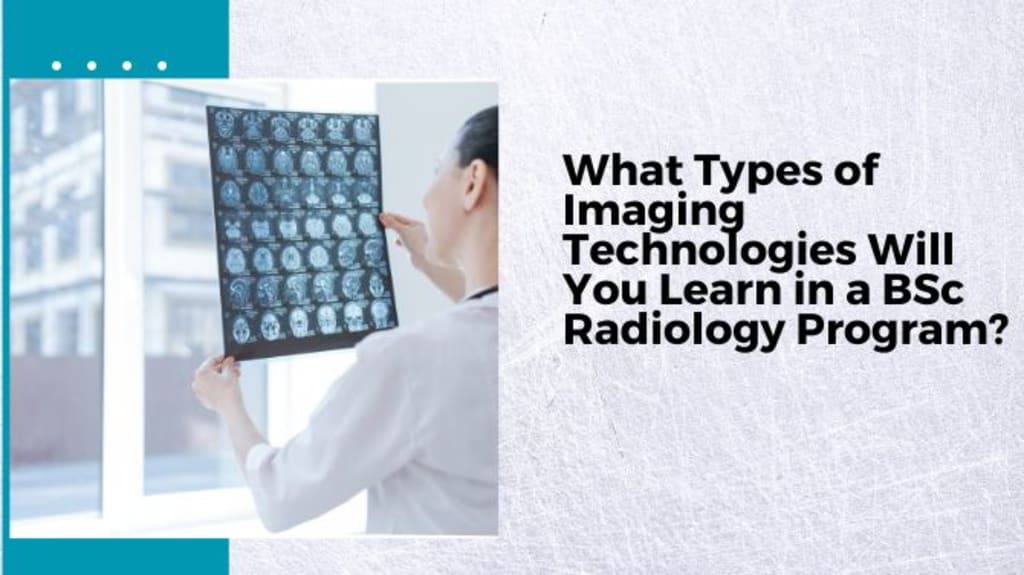
Radiology is a vital field in modern medicine, playing a crucial role in the diagnosis, treatment, and management of various health conditions. A Bachelor of Science in Radiology program equips students with the knowledge and skills necessary to operate advanced imaging technologies that are essential for patient care. Throughout their studies, students delve into a variety of imaging modalities, each offering unique advantages and applications in healthcare. In this dynamic program, students will learn about core imaging technologies such as X-ray, Magnetic Resonance Imaging (MRI), and Ultrasound.
From mastering the principles of radiation and sound waves to understanding the intricacies of advanced imaging techniques and patient safety protocols, education in these areas is critical for aspiring radiology professionals. By blending theoretical knowledge with practical skills, a BSc in Radiology prepares graduates to contribute effectively to diagnostic teams, ensuring accurate imaging for improved patient outcomes. This introduction serves as a gateway to explore the specific imaging technologies that are integral to a comprehensive radiology education
X-ray Imaging Techniques
Radiology is a transformative field in modern medicine, with X-ray imaging serving as one of its foundational technologies. The utility of X-rays spans across various medical applications, from diagnosing fractures to visualizing soft tissues. This essay explores the principles of X-ray production and their interaction with tissues, the various modalities employed in X-ray examinations, and essential practices for radiation safety and patient care.
Principles of X-ray Production and Interaction with Tissues
X-rays are a form of electromagnetic radiation, similar to visible light but with much shorter wavelengths. The production of X-rays typically occurs in a controlled environment, such as an X-ray tube, where high-voltage electricity accelerates electrons towards a target material, often tungsten. Upon striking the target, two primary processes generate X-rays: characteristic radiation and bremsstrahlung radiation. Characteristic radiation occurs when the incoming electrons displace inner-shell electrons in the tungsten atoms, leading to a cascade of energy releases by outer-shell electrons filling the vacancies. Bremsstrahlung, or "braking radiation," occurs when electrons are deflected by the electric field of the positively charged nucleus of the tungsten atoms, resulting in the emission of X-ray photons.
Once produced, X-rays penetrate the body and interact with various tissues based on their density and atomic composition. Dense tissues, such as bones, absorb more X-rays, appearing white or light on the radiograph (X-ray image). In contrast, less dense tissues, such as muscles or fluids, allow more X-rays to pass through, rendering them darker on the image. This differential absorption produces the contrast necessary for accurate diagnostics, allowing radiologists to visualize the structures and identify abnormalities within the body.
Types of X-ray Exams
The versatility of X-ray imaging is evident in the various modalities used in clinical practice. The three primary types of X-ray examinations include conventional radiography, fluoroscopy, and computed tomography (CT).
Conventional Radiography: This is the most widely recognized form of X-ray imaging, involving the direct exposure of X-ray film or a digital receptor to X-rays that pass through the body. Conventional radiographs are commonly used for diagnosing fractures, infections, and certain diseases. The images are quick to obtain and require minimal preparation, making them accessible for urgent care situations.
Fluoroscopy: Unlike conventional radiographs, fluoroscopy provides real-time imaging using continuous X-ray beams. This modality is particularly useful for examining the gastrointestinal tract, visualizing movement, and guiding certain interventions. During a fluoroscopy exam, patients may ingest a contrast medium such as barium to enhance the visibility of internal structures. The dynamic imaging capability allows for the observation of physiological functions, offering detailed insight for both diagnostics and therapeutic procedures.
Computed Tomography (CT): CT scans utilize a rotating X-ray device to create cross-sectional images of the body. This advanced imaging modality enhances the diagnostic capabilities of traditional X-rays by providing detailed images of soft tissues, organs, and vascular structures. CT is invaluable in trauma settings and for diagnosing cancers, providing precise anatomical information that is often crucial for treatment planning. While CT scans involve higher radiation doses compared to conventional radiography, they offer unparalleled detail, significantly enhancing clinical decision-making.
Radiation Safety and Patient Care
As beneficial as X-ray imaging is, it introduces concerns regarding patient safety, particularly related to radiation exposure. Therefore, adherence to best practices in radiation safety is critical to minimize risks while maximizing diagnostic value.
The concept of ALARA (As Low As Reasonably Achievable) is paramount in radiology. This principle encourages practitioners to limit radiation exposure by using the lowest possible dose required to achieve sufficient image quality. Techniques such as optimizing exposure settings, utilizing shielding devices, and employing advanced imaging technologies with lower dose capabilities enhance patient safety.
Patient care extends beyond just minimizing radiation exposure. Ensuring patient comfort and education throughout the imaging process is vital. Radiologic technologists play a key role in communicating procedures, preparing patients for what to expect, and addressing any concerns they may have. Proper positioning, managing anxiety, and providing clear instructions can improve patient cooperation and the overall quality of the images produced.
Magnetic Resonance Imaging (MRI)
Magnetic Resonance Imaging (MRI) is a sophisticated imaging technique that employs powerful magnetic fields and radiofrequency (RF) pulses to generate detailed images of the internal structures of the body. The fundamental principle behind MRI relies on the magnetic properties of hydrogen nuclei, abundant in the human body due to its high water content. When a patient is placed inside an MRI scanner, the scanner generates a strong magnetic field, typically ranging from 1.5 to 3.0 Tesla, which aligns the hydrogen protons in the body. Following this alignment, a radiofrequency pulse is delivered, which temporarily disrupts this alignment. The protons absorb some of the energy from the RF pulse and, upon release of this energy, return to their original alignment within the magnetic field. This relaxation process emits signals, which are detected by the MRI scanner and converted into images.
There are two primary relaxation processes that MRI exploits: T1 (longitudinal) and T2 (transverse) relaxation. T1 relaxation is the time it takes for protons to realign with the magnetic field after the RF pulse, while T2 relaxation measures the time it takes for protons to lose phase coherence among the spins in the transverse plane. These inherent differences in relaxation times are leveraged to create varying contrasts in images, allowing for distinct tissue characterization.
MRI Techniques
Different MRI sequences are essential for obtaining the best possible images of specific tissues and pathologies. Among the most common techniques are T1-weighted and T2-weighted imaging, each possessing unique characteristics suited for particular clinical situations. T1-weighted images provide excellent anatomical detail and are especially useful for visualizing fat-containing structures, making them ideal for evaluating brain anatomy, certain tumors, and abdominal organ structures. T1-weighted scans are particularly beneficial when contrast agents are administered, as they can highlight vascular structures and lesions more distinctly.
In contrast, T2-weighted images are more sensitive to fluid content, making them invaluable for detecting edema, inflammation, and cystic lesions. For example, T2 sequences are commonly employed in the assessment of brain pathologies such as multiple sclerosis, where lesions often appear brighter due to increased water content. Another important sequence, Fluid-Attenuated Inversion Recovery (FLAIR), is a specialized T2-weighted technique that suppresses the signals from cerebrospinal fluid (CSF). The result is enhanced visualization of lesions within the brain's periventricular areas, a common site for multiple sclerosis plaques or other pathologies.
These sequences allow radiologists to tailor their imaging approach based on the clinical question at hand, providing detailed insights into various conditions ranging from neurological disorders to musculoskeletal problems.
Advanced Imaging
Beyond standard practices, advanced MRI techniques have expanded the horizons of medical imaging, enabling the assessment of complex physiological functions and disease states. Functional MRI (fMRI) is one of the most significant advancements, measuring changes in blood flow related to neuronal activity. By detecting variations in the levels of oxygenated and deoxygenated blood, fMRI can help map brain activity, providing crucial information for surgical planning, understanding neurological conditions, and even cognitive neuroscience.
Diffusion-weighted imaging (DWI) is another innovative approach, focusing on the movement of water molecules within tissues. By assessing the diffusion of water, DWI is particularly valuable in detecting acute ischemic strokes, where the movement of water is restricted due to cellular edema. This technique allows for the early diagnosis and potentially improved outcomes for patients experiencing a stroke. Moreover, MRI plays a pivotal role in oncology, allowing for precise characterization of tumors, assessment of treatment response, and monitoring of recurrence. Advanced tools like dynamic contrast-enhanced MRI (DCE-MRI) provide additional insight into tumor vascularity, offering critical information for therapeutic decision-making.
In the field of musculoskeletal imaging, MRI excels in visualizing soft tissues, cartilage, ligaments, and tendons, making it the modality of choice for sports injuries and various musculoskeletal disorders. Techniques such as optimized fat-suppression and arthrographic MRI enhance the diagnostic capabilities in these areas.
Ultrasound Imaging
Ultrasound imaging, also known as sonography, is a widely used diagnostic tool that employs high-frequency sound waves to create images of the internal structures of the body. This non-invasive technique has become essential in the medical field due to its safety, versatility, and effectiveness.
Fundamentals of Ultrasound
The mechanics of ultrasound imaging are rooted in the principles of sound wave propagation. Ultrasound equipment generates sound waves at frequencies typically between 2 and 18 megahertz (MHz), which are higher than the audible range for humans. These sound waves are produced by a device called a transducer, which serves two primary functions: transmission and reception. When activated, the transducer emits sound waves that travel through the body and encounter various tissues and organs. As these sound waves encounter different interfaces, such as the boundary between fluid and soft tissue or between soft tissue and bone, they are reflected back to the transducer. The amount of sound that is reflected depends on the density and composition of the tissues it encounters. The returning echoes are then converted by the transducer into electrical signals, which a computer processes to create real-time images on a monitor.
Ultrasound imaging is particularly beneficial because it does not involve ionizing radiation, making it a safer alternative to techniques such as X-rays or CT scans, especially for sensitive populations such as pregnant women and children. Furthermore, ultrasound provides real-time imaging, allowing for dynamic assessments of anatomical structures and physiological functions.
Clinical Applications
Ultrasound imaging finds extensive use across numerous medical specialties due to its adaptability and effectiveness in diagnosing a variety of conditions. One of the most recognized applications is in obstetric imaging, where it plays a critical role in monitoring fetal development during pregnancy. Obstetric ultrasound allows healthcare providers to assess the gestational age, detect multiple pregnancies, and identify potential complications, thereby ensuring timely intervention when necessary. Beyond obstetrics, ultrasound is invaluable in abdominal assessments. It is commonly used to evaluate abdominal organs such as the liver, gallbladder, pancreas, and kidneys. Biliary blockages, gallstones, and liver cirrhosis are just a few examples of conditions that can be diagnosed through abdominal ultrasound. Additionally, ultrasound has proven useful in renal evaluation, such as assessing kidney size, detecting abnormalities, and diagnosing conditions like hydronephrosis.
Vascular studies represent another essential application of ultrasound. Doppler ultrasound, a specialized form of ultrasound, evaluates blood flow through arteries and veins. This technique can identify blockages, assess the severity of vascular disease, and help diagnose conditions such as deep vein thrombosis (DVT) or carotid artery stenosis. Vascular ultrasound not only aids in diagnosis but also assists in planning interventional procedures, such as angioplasties.
Interventional Techniques
The role of ultrasound extends beyond mere diagnostic imaging; it has also transformed interventional procedures. Ultrasound-guided interventions, such as biopsies and injections, leverage the real-time imaging capabilities of ultrasound to enhance accuracy and safety. During a biopsy, for example, the ultrasound allows the clinician to visualize the tissue being sampled, ensuring that the needle is placed precisely in the target area. This is particularly significant in instances where lesions are small or located near critical structures. In addition to biopsies, ultrasound-guided injections are routinely employed to deliver medications directly into joints, muscles, or cysts. By using ultrasound for guidance, healthcare providers can minimize damage to surrounding tissues and enhance the efficacy of the treatment. This method is widely used in conditions such as shoulder bursitis, tendonitis, and osteoarthritis.
The real-time feedback provided by ultrasound during these interventions is paramount. It allows clinicians to make adjustments on-the-fly, enhancing precision and improving patient outcomes. Furthermore, the minimally invasive nature of ultrasound-guided procedures typically results in reduced recovery times and complications, making them an attractive option for both patients and healthcare providers.
About the Creator
Creating a Safer Future: Essential Occupational Health & Safety Practices
A safe workplace is a strong workplace. When you protect your employees, you also protect your business's future. Injuries, stress, and unsafe working conditions can damage morale and lower productivity. In contrast, a strong focus on occupational health and safety builds trust, boosts motivation, and shows your team that their well-being truly matters.
By Dr. Todd Young8 days ago in Education
Leading With Care Under Pressure
Healthcare systems depend on strong leaders to guide teams, protect patients, and manage change. Today, healthcare leadership challenges are growing fast in medical settings of every size. Hospitals, clinics, and care centers face pressure from staffing shortages, rising costs, and rapidly advancing technology. Leaders must respond with skill, empathy, and clear thinking while keeping care safe and humane.
By Evyatar Nitzany7 days ago in Education


Comments
There are no comments for this story
Be the first to respond and start the conversation.