
What is the role of self-compassion in good mental health?
Self-compassion in good mental health
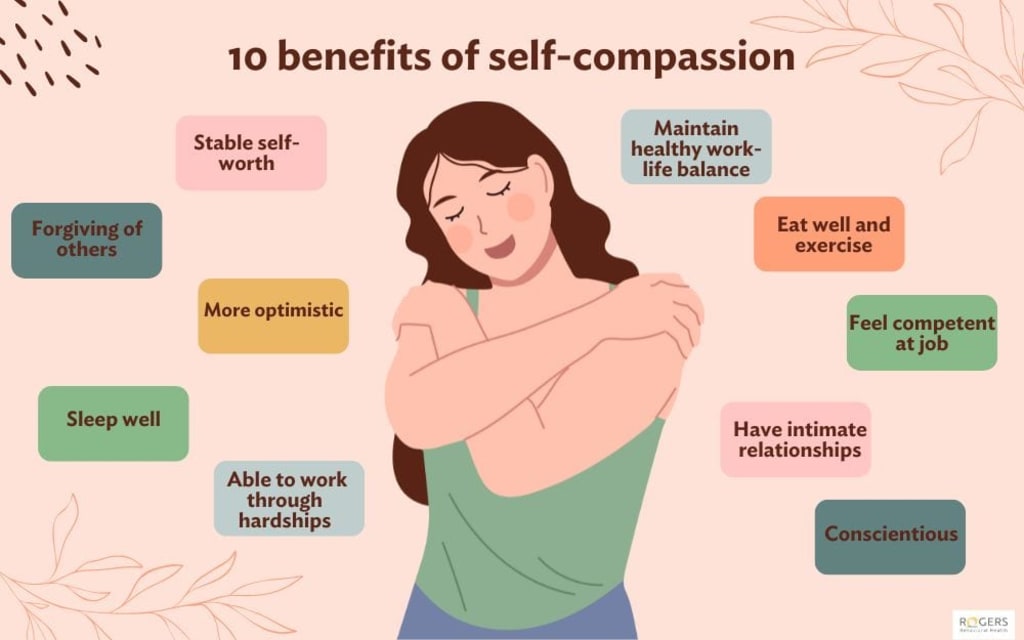
In regard to mental health, most individuals prioritize external measures such as stress reduction, therapy, or changing their lifestyle. These are all necessary, but too often a very influential but underused asset is self-compassion. In a culture that too frequently promotes perfectionism, accomplishment, and comparison, self-compassion helps people to accept their flaws, admit when they are struggling, and be kind to themselves instead of self-critical.
Studies in the last two decades have repeatedly established that self-compassion is significantly associated with improved mental health. It decreases anxiety, depression, and stress but increases resilience, motivation, and satisfaction with life.
What is Self-Compassion?
Self-compassion, as psychologist Dr. Kristin Neff puts it, is being kind, caring, and understanding with yourself in the same way you would to a good friend. It has three components:
Self-Kindness vs. Self-Judgment – Instead of criticizing yourself for mistakes or failures, self-kindness entails speaking with yourself in a supportive and encouraging manner.
Common Humanity vs. Isolation – The understanding that everybody fails and has difficulties. Difficulties are the shared fate of mankind and not personal failure.
Mindfulness vs. Over-Identification – Noticing negative emotions and thoughts without exaggerating them and not identifying with them.
The Connection Between Self-Compassion and Mental Health
1. Decreases Anxiety and Depression
Self-critical persons become entangled in negative spirals of self-blame for failure. Self-compassion interrupts the cycle with acceptance and healthy thinking. This shift calms anxiety and protects against depressive illness.
2. Protects Against Burnout
In high-stress settings—work, school, or caregiving—perfectionism and self-blame can accelerate burnout. Self-compassion provides emotional relief and reduces guilt when taking necessary breaks.
3. Builds Resilience
Resilience is not the absence of challenge but how you recover when things become challenging. People who practice self-compassion are more likely to regard errors as chances to learn rather than as signs of inadequacy, so they recover emotionally more quickly.
4. Encourages Healthy Motivation
Some people think that self-compassion makes you lazy, but studies prove otherwise. Individuals who are kind to themselves following errors are more likely to correct the mistakes because they're not overwhelmed with the fear of failure.
5. Enhances Relationships
Being kinder to yourself means you're less defensive and more compassionate toward others. Self-compassion fuels patience, forgiveness, and understanding in relationships and working environments.
How to Practice Self-Compassion
1. Alter Your Inner Dialogue
Notice what you say to yourself when you are doing something incorrectly. Instead of hurtful words like "I'm useless" or "I always fail," speak to yourself gently: "I did my best," "Mistakes help me grow," or "I deserve understanding."
2. Write a Self-Compassion Letter
Write a letter to yourself as though you were comforting an upset close friend. Be empathetic, concerned, and supportive. This exercise shifts perspective and diminishes self-blame.
3. Practice Mindful Awareness
Mindfulness enables you to see negative emotions without judgment. Instead of suppressing them or overreacting, observe feelings with statements like: "This is a difficult moment, but it will pass."
4. Acknowledge Common Humanity
Keep in mind that imperfection is human. Everyone makes mistakes and trips up; you are no exception.
5. Create Self-Care Rituals
Self-compassionate behaviors aren't only in your head—reality can be concrete. Taking the time to rest, nourishing your body with wholesome foods, setting boundaries, or being creative all affirm friendliness towards yourself.
Breaking Down Barriers to Self-Compassion
In spite of its benefits, individuals avoid self-compassion due to misconceptions or deep-rooted assumptions.
Myth 1: Self-compassion is selfish.
In fact, self-compassion fills your emotional tanks, and you become more present to serve others.
Myth 2: Self-compassion makes you weak.
Research shows it develops resilience by allowing individuals to face challenges head-on with kindness instead of denial.
Myth 3: Self-compassion reduces motivation.
Research proves that self-compassion actually enhances motivation because individuals perform their best due to compassion for themselves, not fear of being reprimanded.
Myth 4: Self-compassion involves avoidance of responsibility.
Conversely, it allows you to be accountable without judgment, so progress is more possible.
Self-Compassion in Everyday Life
At Work: Instead of beating yourself up over a presentation that just didn't go so well, remind yourself that mistakes are a given and an opportunity to learn.
In Parenting: Instead of criticizing yourself for not being a "perfect parent," practice self-compassion by praising your efforts and where your boundaries are.
In Relationships: If you do communicate poorly, own up to the mistake without unnecessary guilt and apologize with warmth.
In Health Goals: When you go off an exercise or diet plan, respond with kindness and support rather than self-blame.
Scientific Evidence Supporting Self-Compassion
Self-compassion has been linked to:
Lower levels of cortisol (stress hormone)
Higher heart rate variability (measure of emotional resilience)
Increased life satisfaction and optimism
Better coping in trauma or loss
Neuroscience research even shows that self-compassion activates caregiving and safety-related areas of the brain and enhances feelings of warmth and emotional balance.
When to Seek Professional Assistance
For some, entrenched patterns of self-criticism can make it hard to be kind to oneself. Therapy—specifically Cognitive Behavioral Therapy (CBT) and Compassion-Focused Therapy (CFT)—can divert unhelpful critical self-thoughts and promote a kinder inner voice.
Last Thoughts
Self-compassion is not self-indulgence—it's a requirement for mental well-being. Practicing kindness towards yourself, realizing that struggles are part of the human experience, and engaging challenges with compassionate awareness, you increase emotional resilience and overall wellness.
It doesn't eradicate the challenges of life, but it changes the manner in which you confront them—with patience, strength, and self-awareness.
For expert mental health care, click:
https://www.delhimindclinic.com/
If you'd prefer to have the help of a professional with your Craft CMS site or simply would like to discuss your project, visit:
https://www.craftcmsdeveloper.in/
— Feel free to get in touch if you'd like to have some changes made to your Craft site or simply discuss your Craft project. I can offer a complimentary consultation!
About the Creator
Keep reading
More stories from Naveen Garg and writers in Education and other communities.
What is mindfulness' role in improving mental wellness, and how can newcomers start using it in the right manner?
Mindfulness is a well-established, scientifically backed method for improving mental health. Grounded in meditation practices dating back thousands of years—specifically, Buddhist teachings—mindfulness means directing your attention toward what is happening in the present instant with openness, curiosity, and without judgment. With distractions, stress, and mental overwhelm always present in our contemporary world, mindfulness provides a mechanism to slow down, breathe, and re-establish a connection with ourselves.
By Naveen Garg5 months ago in Education
How AI Is Impacting the Jobs of Website Designers and Developers
Artificial Intelligence (AI) is transforming industries across the globe, and the world of website design and development is no exception. From streamlining workflows and enhancing creativity to automating repetitive tasks and reshaping professional roles, AI’s influence is broad and deep. In this article, we explore how AI is impacting website designers and developers — the opportunities it presents, the challenges it introduces, and how professionals can adapt to thrive in an AI-augmented landscape.
By Rajiv Menon5 days ago in Education
Kiranmala: The tale of Princess Who conquered Magic Mountain
Long ago, in a land far away, the queen was panicked, her grasp on reality seemingly slipping. She had given birth to two boys and one girl. But to her horror, before even meeting their father, each child vanished, something else taking their place. She faced accusations of witchcraft and demon sorcery. And though the king loved her, he was easily swayed. He soon grew doubtful and banished his wife, who left the kingdom in anguish. Little did they know, the queen’s jealous sisters were the ones to replace the newborns
By Munesh Yadavabout 21 hours ago in Education
Center Stage with Paul Stewart
*** I'm keen to republish the interviews I did for my series with Vocal creators. It's been a few years and I thought it might be nice to revisit these wonderful conversations. I'll be releasing them one at a time for a few weeks/months.
By Heather Hubler5 days ago in Interview



Comments
There are no comments for this story
Be the first to respond and start the conversation.