
What Is the Difference Between Category 5 and Category 6 Ethernet Cables?
What’s the difference between Category 5 and Category 6 Ethernet cables? Learn how cat 5 and cat6 ethernet cable compare in speed, performance, and more.

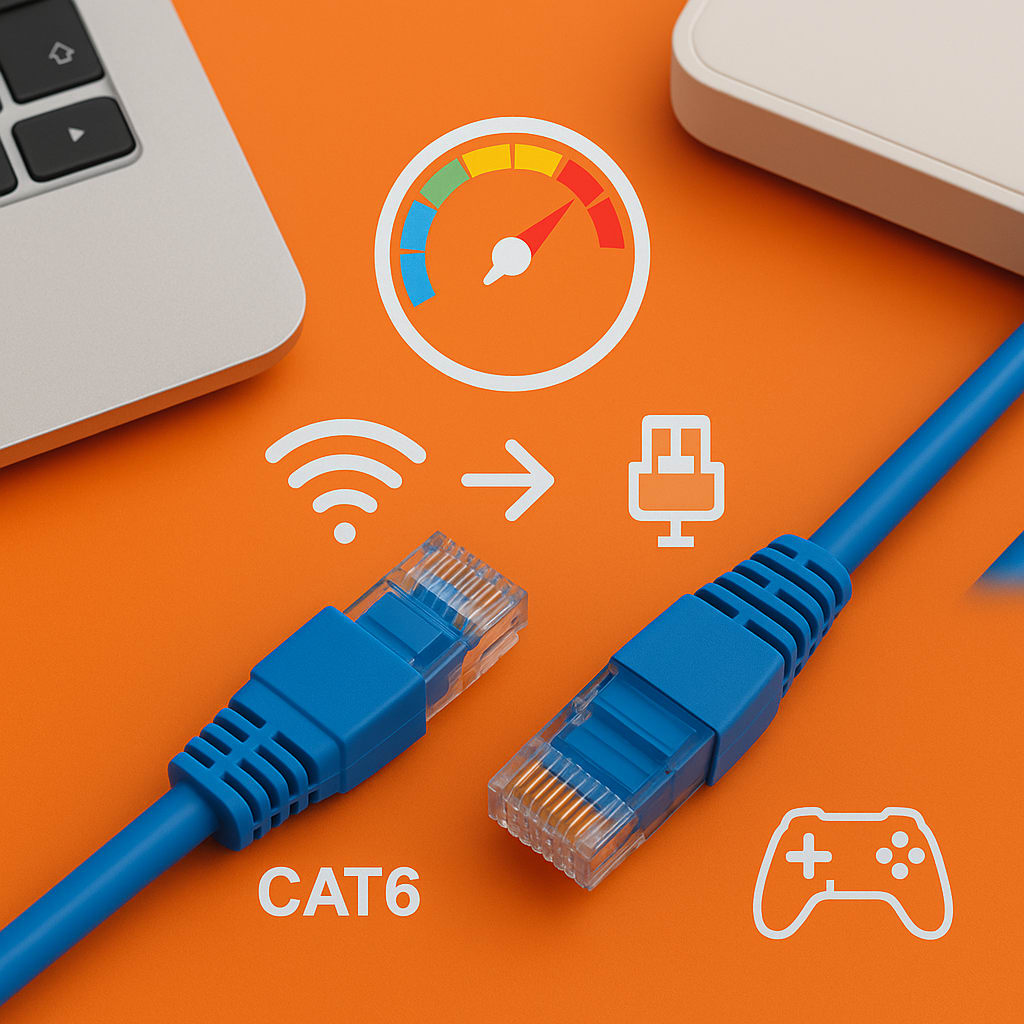
Ethernet cables are essential for connecting devices to the internet. If you’ve ever set up a computer, game console, or other smart device, you’ve probably used one. Two of the most common types of Ethernet cables are Category 5 (Cat 5) and Category 6 (Cat 6). But how do they differ? Which one is better for your needs?
In this article, we’ll explore the key differences between cat 5 and cat6 ethernet cable. We’ll help you understand which one is the right choice for your home or office network.
What Is a Category 5 Ethernet Cable?
Cat 5 cables are a type of Ethernet cable that has been around for a long time. They are made of twisted copper wires that transmit data signals. Cat 5 is known for its reliability and was one of the most common cables used for networking before newer, faster cables like Cat 6 came along.
A cat 5 Ethernet cable can support speeds up to 100 Mbps, which is fine for basic internet browsing, streaming, and everyday tasks. However, as internet speeds have increased over time, Cat 5 cables started to show their limits.
What Is a Category 6 Ethernet Cable?
Cat 6 is the next generation of Ethernet cables. It is faster and more efficient than cat 5. Cat6 ethernet cable can handle speeds up to 10 Gbps, which is 100 times faster than Cat 5. This makes it a great choice for modern homes and offices where speed and performance are important.
In addition to being faster, cat6 ethernet cable is designed to reduce interference. It has better insulation and shielding than Cat 5, which helps protect the signal from noise. This is especially important in environments with a lot of electronic devices that might cause interference.
Speed Differences: Cat 5 vs Cat 6
The most noticeable difference between cat 5 and cat6 ethernet cable is speed.
Cat 5 can handle speeds of up to 100 Mbps. This is suitable for basic internet tasks like browsing, emailing, and watching standard-definition videos.
Cat 6 can handle speeds of up to 10,000 Mbps (or 10 Gbps). This makes it ideal for high-speed internet connections, gaming, streaming 4K videos, or transferring large files quickly.
If you have a high-speed internet plan or want to future-proof your network, cat 6 is the better choice. However, if you only use the internet for basic tasks, cat 5 will still work just fine.
Performance: Cat 5 vs Cat 6
When it comes to performance, cat6 ethernet cable outperforms cat 5 in several key areas.
Bandwidth: Cat 5 cables have a bandwidth of 100 MHz, while cat 6 cables have a bandwidth of 250 MHz. This means cat6 ethernet cable can handle more data at once, resulting in faster and more stable connections.
Distance: Both cat 5 and cat6 can support distances of up to 100 meters (about 328 feet). However, Cat 6 maintains higher speeds over longer distances than Cat 5. If you need to run cables over long distances, Cat 6 will give you better performance.
Interference and Crosstalk: Cat 5 vs Cat 6
Interference is another area where cat 6 excels over cat 5.
Cat 5 cables are more likely to experience crosstalk, which happens when signals from one wire interfere with those in another. This can cause slower speeds and unreliable connections.
Cat 6 cables have better shielding to reduce crosstalk and electromagnetic interference. This makes cat6 ethernet cable a more reliable option, especially in areas with a lot of electronic equipment or high levels of interference.
Durability: Cat 5 vs Cat 6
Both cat 5 and cat 6 cables are durable and designed for long-term use. However, cat 6 cables are generally built to handle more demanding tasks. The extra shielding inside cat6 ethernet cable helps protect the cable from damage and ensures that the data signal remains strong.
If you’re setting up a network in a high-traffic area, or if you need cables that can handle large amounts of data for extended periods, cat 6 is the better option.
Price: Cat 5 vs Cat 6
One of the main factors to consider when choosing between cat 5 and cat6 ethernet cable is price. Cat 6 cables tend to be more expensive than Cat 5 because they offer faster speeds and better performance.
However, the price difference isn’t huge. Cat 5 cables are a good budget-friendly choice for basic home setups. If you’re building a network for gaming, video streaming, or heavy data usage, it may be worth spending a little extra on cat6 ethernet cable.
When to Use Cat 5
Cat 5 is a good choice if:
You have a basic internet connection with speeds below 100 Mbps.
You only use the internet for activities like browsing, emailing, and watching standard-definition videos.
You’re on a tight budget and need an affordable solution for connecting devices.
While cat 5 is still useful, it is becoming outdated in some situations. For faster speeds and better performance, cat 6 is often the better choice.
When to Use Cat 6
Cat 6 is the better option if:
You have a high-speed internet plan or want to future-proof your network.
You play online games, stream 4K video, or transfer large files regularly.
You need a stable, interference-free connection in an area with lots of electronic devices.
If you plan to upgrade your internet speed or want to get the most out of modern technology, cat 6 is the clear winner.
Can You Use Cat 5 and Cat 6 Together?
Yes, you can mix cat 5 and cat 6 cables in the same network. However, the speed of your network will only be as fast as the slowest cable. So if you connect a cat 6 cable to your router but use cat 5 cables for other parts of your network, the cat 5 cables will limit your speed.
To get the best performance, it’s recommended to use the same type of cable for your entire network. This ensures that you can take full advantage of the faster speeds and better performance that cat6 ethernet cable offers.
Conclusion
The main differences between cat 5 and cat6 ethernet cable come down to speed, performance, and reliability. Cat 6 is faster, can handle more data, and provides better protection against interference. It’s the best choice for modern, high-speed internet connections, especially if you stream videos, play games, or work with large files.
However, cat 5 is still a good choice for basic home setups and users who only need to browse the web or check emails. It’s also a more affordable option if you don’t need the extra speed.
When choosing between cat 5 and cat6 ethernet cable, consider your internet speed, usage needs, and budget. Both cables have their place in today’s networks, but cat 6 is the future-proof option for those looking for faster speeds and more reliable performance.
About the Creator
Jennifer Truong
SF Cable provides a huge selection of the highest quality computer cables, components, and accessories at the lowest prices with fast shipping and lifetime technical support!
Keep reading
More stories from Jennifer Truong and writers in Education and other communities.
Why USB-C Is Becoming the New Standard for All Devices
Over the last few years, a noticeable shift has been seen in the way modern electronic devices are powered and connected. That change has been driven by the rise of USB-C. This compact, versatile connector is replacing older USB formats and has been widely adopted across smartphones, laptops, tablets, accessories, and even desktops. From simple charging to high-speed data transfer, USB-C has been designed to handle it all.
By Jennifer Truong10 months ago in Education
The Deer’s Carelessness
Once upon a time, our teacher was explaining an important lesson to us in class. He spoke in a calm but thoughtful tone and said, “Do not focus on who is speaking; instead, pay attention to what is being said.” The classroom became quiet, and everyone listened carefully. One student, curious and slightly confused, raised his hand and asked, “Sir, what does this mean?”
By Sudais Zakwana day ago in Education
Calibration Services for Maintaining Instrument Performance and Traceability
In today’s highly regulated and technology-driven world, accurate measurement is essential for quality, safety, and efficiency. From manufacturing plants and laboratories to healthcare facilities and energy operations, organizations rely heavily on instruments to measure temperature, pressure, flow, electrical signals, and countless other parameters. Calibration services play a critical role in ensuring that these instruments deliver precise and reliable results.
By Bobby Yadava day ago in Education
Why Black History Matters in America?
The United States of America is celebrating their 250th anniversary in 2026. I'm proud to be an American and as someone who was born here, I wouldn't imagine myself living anywhere else. This is a country where opportunities are possible. Where anyone can be successful in anything they desire to do. Equality, community, and togetherness are the backbones of what America is and should be about. However, we have an administration who wants to erase and disregard those who have made positive, meaningful impacts in our country, specifically Black figures, such as Martin Luther King, Jr., Rosa Parks, and Maya Angelou. President Trump and his administration have been constantly complaining and fighting against what they call the "Woke agenda". They use this excuse as a distraction from other issues they refuse to address, such as the high cost of living, climate change, and inflation. That equality is dividing America, when in reality, it's bringing us together. Being woke is not tied to a specific political party. No matter where you stand on the political spectrum, you can still care about other people and their plights. Compassion and empathy for others isn't tied to a political party, either. We were taught as children to treat others the way we want to be treated and not judge others because they're different from us. Caring about others isn't a personal attack on your beliefs. It doesn't make you any less of a person. People who are easily offended over African American figures, past or present, or anything related to it, are grasping at straws. Current and future generations need to know who people like Harriet Tubman and Shirley Chisholm were, especially in the classroom. Black History is part of American History. It should be recognized, not hidden or forgotten. Besides, you can't shield children from everything, just because your feelings are easily hurt.
By Mark Wesley Pritchard 4 days ago in The Swamp




Comments
There are no comments for this story
Be the first to respond and start the conversation.