
What is Tawaf in Islam: Meaning, Rulings, and Types
Shar'i Ruling of Tawaf

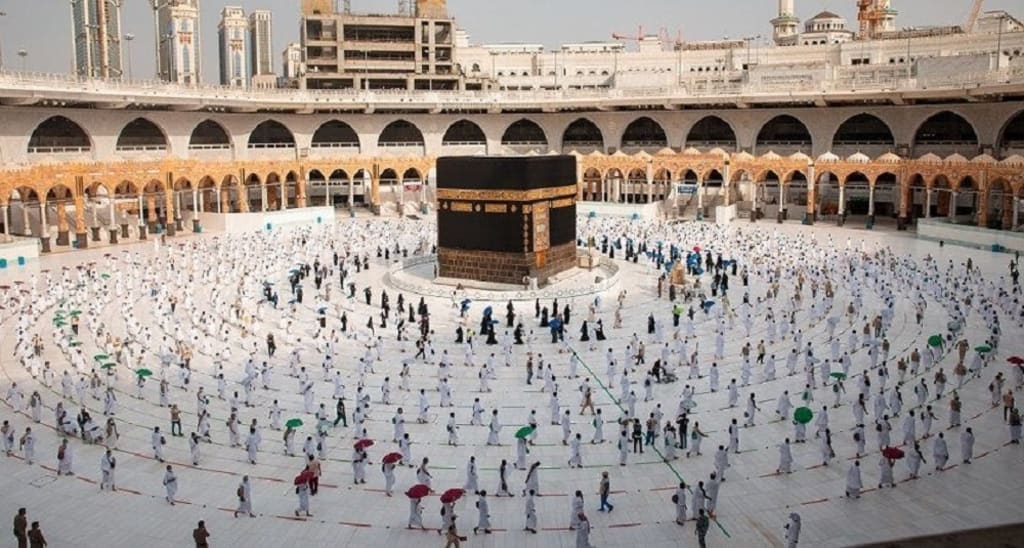
When pilgrims set foot in the sacred sanctuary of Makkah, one of the most profound rituals they perform is Tawaf — a beautiful act of devotion and submission that connects the heart of the believer with the House of Allah, the Kaaba. But what exactly is Tawaf, and what are the rules and types associated with it? In this comprehensive guide, we’ll explore the significance of Tawaf, its rulings, and the different types of Tawaf performed during Hajj and Umrah.
What Is Tawaf?
Tawaf is the Islamic ritual of circumambulating (walking around) the Kaaba seven times in a counter-clockwise direction. It is an essential component of both Hajj and Umrah, and it signifies a Muslim’s love, reverence, and obedience to Allah.
The term Tawaf literally means "to walk around" in Arabic. Spiritually, it represents the believer’s desire to center their life around Allah, much like how the planets revolve around a central force. Every circle around the Kaaba during Tawaf deepens the pilgrim's connection to the Divine, making it not just a physical act, but a spiritual experience.
Tawaf Rulings: Conditions and Requirements
Understanding the Tawaf rulings is crucial for ensuring the act is valid and accepted. Islamic scholars have outlined specific guidelines for performing Tawaf correctly:
1. Intention (Niyyah)
Though Tawaf doesn't require a verbal intention, one must have the clear intention in their heart that they are performing Tawaf for the sake of Allah.
2. Wudu (Ablution)
According to most scholars, having wudu (ritual purification) is a condition for the validity of Tawaf, similar to prayer.
3. Covering the ‘Awrah
Men must be properly covered from the navel to the knees, and women must be fully covered except for the hands and face.
4. Starting Point: The Black Stone (Hajar al-Aswad)
Each of the seven rounds begins and ends at the Black Stone. Pilgrims either kiss it, touch it, or point towards it (istilam), depending on accessibility.
5. Counter-Clockwise Direction
Tawaf must be done counter-clockwise, keeping the Kaaba on the left side at all times.
6. Seven Complete Circuits
Each round must be completed fully; partial rounds are not counted. The seven circuits should be consecutive, with no long interruptions unless there's a valid reason.
7. Tawaf Area
Tawaf must be performed within the Masjid al-Haram, in the designated Tawaf area, and not outside its boundaries.
8. Prayer After Tawaf
It is Sunnah (highly recommended) to pray two rak’ahs behind the Station of Ibrahim (Maqam Ibrahim) after completing Tawaf, if possible.
Tawaf Types: Understanding the Various Forms
There are several types of Tawaf in Islamic tradition. Each serves a unique purpose and is performed at specific times or under specific conditions. Understanding the Tawaf types helps in fulfilling one’s obligations during Hajj and Umrah.
1. Tawaf al-Qudum (Tawaf of Arrival)
- Purpose: Performed upon entering Makkah.
- Obligation: Sunnah for those performing Hajj al-Ifrad or Hajj al-Qiran.
- Time: As soon as one enters the Masjid al-Haram.
- Note: Not obligatory, but highly recommended.
2. Tawaf al-Umrah
- Purpose: Integral part of Umrah.
- Obligation: Mandatory.
- Note: Must be followed by Sa’i (walking between Safa and Marwah).
3. Tawaf al-Ifadah (Tawaf of Visit)
- Purpose: Main Tawaf of Hajj.
- Obligation: Fard (obligatory).
- Time: Performed on the 10th of Dhul Hijjah or after.
- Note: Hajj is not complete without this Tawaf.
4. Tawaf al-Wada’ (Farewell Tawaf)
- Purpose: Farewell before leaving Makkah.
- Obligation: Wajib (compulsory) for non-residents of Makkah.
- Time: Just before departing the city.
5. Tawaf al-Nafl (Voluntary Tawaf)
- Purpose: Performed any time as an act of devotion.
- Obligation: Not obligatory.
- Note: Each voluntary Tawaf should also consist of seven complete rounds and can be followed by two rak’ahs.
Tips for Performing Tawaf
- Be mindful and sincere: Tawaf is not just a ritual, but a chance to reflect, repent, and connect deeply with Allah.
- Stay calm and patient: Especially duulingring peak seasons, the area can get very crowded.
- Make du’a (supplication): You can make personal prayers during Tawaf; there are no fixed supplications except between the Yemeni corner and the Black Stone.
Final Thoughts
Tawaf is a cornerstone of Islamic worship during Hajj and Umrah. Whether you're preparing for your pilgrimage or seeking to understand this sacred practice better, knowing what is Tawaf, the Tawaf rulings, and the Tawaf types is essential. It reflects the believer’s journey towards Allah — physically circling His House, while spiritually centering the heart on Him.
As with all acts of worship, sincerity, intention, and knowledge are key. May Allah accept the Tawaf of all the Muslims.
About the Creator
Fatwa QA
Your trusted source for Islamic guidance, questions and answers. Explore pins on Islamic rulings (fatwas), daily spiritual tips, Quranic insights, and educational resources.
https://www.fatwaqa.com
Starting Strong: Learning the Basics of Investment Management
Investment management involves managing money set aside to grow over time. It is about deciding how and where to put money so that it earns more in the future. This process includes choosing among options such as stocks, bonds, or real estate. It also involves planning how long to hold these investments and how to react when markets change. For beginners, learning about investment management is the first step toward gaining control over their financial future.
By Winston Feng7 days ago in Education
My Journey Exploring Panasonic Avionics Corporation
When I first dove into the world of aerospace technology, one company kept popping up again and again: Panasonic Avionics Corporation (PAC). Over the years, I’ve learned that this organization isn’t just another supplier it’s a powerhouse in in-flight entertainment and communication systems (IFEC) that has quietly shaped how millions of passengers experience air travel.
By Beckett Dowhan6 days ago in Education
One Hard Thing
Stop me if you’ve heard this one before: You have the number, you know your schedule- you’ve even picked out the perfect day and time to make this appointment. Shoot, you’ve even picked out alternative days and times just in case their schedules can’t accommodate you!
By Taylor Rigsby2 days ago in Motivation


Comments
There are no comments for this story
Be the first to respond and start the conversation.