
What is on-demand functionality in the cloud?
Cloud service providers such as Amazon Web Services (AWS), Microsoft Azure, and Google Cloud Platform (GCP) offer on-demand functionality as a core feature of their services.
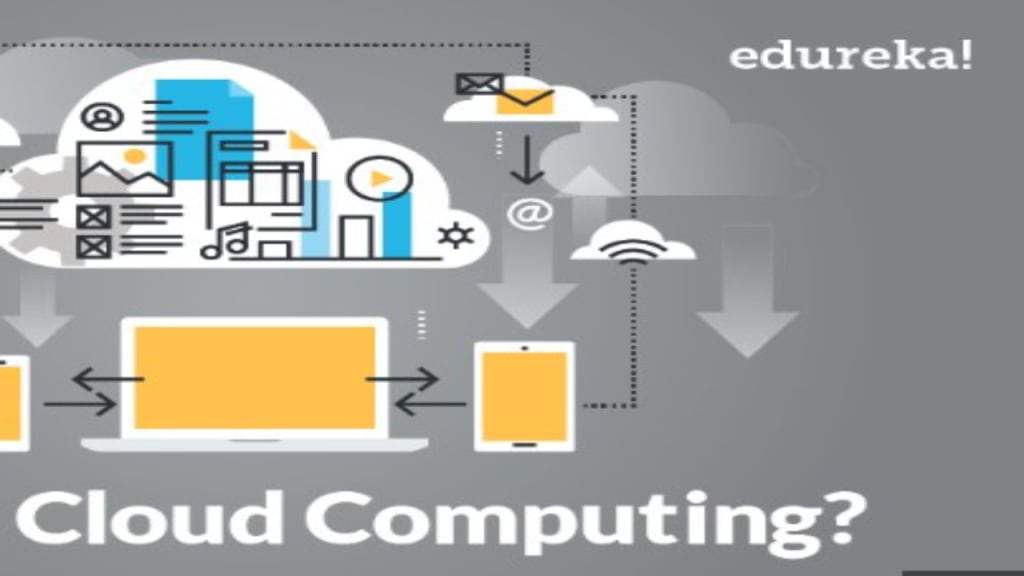
On-demand functionality cloud computing refers to the capability of accessing computing resources, services, or features as needed, without the need for upfront provisioning or long-term commitments. It allows users to request and utilize cloud resources on an as-needed basis, scaling up or down according to their requirements and paying only for the resources they consume.
With on-demand functionality, users can quickly and easily access a wide range of cloud services and resources, such as virtual machines, storage, databases, networking, and software applications, without the need to invest in and manage their own physical infrastructure. This flexibility enables organizations to respond rapidly to changing business demands and optimize resource utilization.
Key aspects and benefits of on-demand functionality in the cloud include:
1. Resource Scalability: On-demand functionality allows users to scale their resources up or down in response to changes in workload or user demand. This scalability ensures that sufficient resources are available when needed, reducing the risk of performance bottlenecks or resource constraints.
2. Cost Efficiency: On-demand functionality follows a pay-as-you-go model, where users are billed based on their actual resource consumption. This approach eliminates the need for upfront capital expenditure and allows organizations to optimize costs by only paying for what they use. It also enables the ability to quickly scale down resources during periods of low demand, further optimizing cost efficiency.
3. Agility and Speed: On-demand functionality provides the agility to rapidly provision and access computing resources. Users can spin up new instances, deploy applications, or scale resources within minutes, allowing for faster development, testing, and deployment cycles.
4. Flexibility and Variety: Cloud providers offer a wide range of services and features that can be accessed on-demand, providing users with the flexibility to choose the most suitable options for their specific needs. This includes different types of storage, databases, analytics tools, machine learning capabilities, and more.
5. Global Availability: On-demand functionality in the cloud enables global accessibility, allowing users to access resources and services from anywhere with an internet connection. This supports distributed teams, remote work, and facilitates collaboration across different locations.
Cloud service providers such as Amazon Web Services (AWS), Microsoft Azure, and Google Cloud Platform (GCP) offer on-demand functionality as a core feature of their services. Users can provision and utilize cloud resources instantly, benefiting from the scalability, cost efficiency, and flexibility that the cloud provides.
On-demand functionality in the cloud revolutionizes the way organizations access and utilize computing resources. With this capability, users can tap into a vast array of services and resources whenever they need them, without the constraints of traditional infrastructure provisioning.
The flexibility and scalability offered by on-demand functionality provide numerous benefits to businesses. One key advantage is the ability to scale resources dynamically to meet changing demands. During peak periods, such as high-traffic events or seasonal spikes, organizations can quickly ramp up their resources to ensure optimal performance. By obtaining Cloud Architect Course, you can advance your career in Cloud Architect. With this course, you can demonstrate your expertise in Cloud Computing, AWS Architectural Principles, Migrating Applications on Cloud and DevOps, many more fundamental concepts, and many more critical concepts among others.
Conversely, during periods of low demand, resources can be scaled down to minimize costs and maximize efficiency. This pay-as-you-go model is particularly advantageous for businesses as they only pay for the resources they actually use, eliminating the need for large upfront investments. Furthermore, the agility and speed associated with on-demand functionality enable rapid development and deployment cycles.
Development teams can swiftly provision the required resources, reducing time-to-market for applications and services. Additionally, on-demand functionality provides a wide range of options, including various types of storage, databases, analytics tools, and machine learning capabilities. This diversity empowers organizations to choose the most suitable services for their specific needs, ensuring optimal performance and functionality.
With on-demand functionality, businesses can operate on a global scale, accessing resources and services from anywhere, which facilitates collaboration among distributed teams and accommodates the growing trend of remote work. Overall, on-demand functionality in the cloud is a transformative feature that empowers organizations to leverage computing resources efficiently, optimize costs, and rapidly respond to evolving business needs.
Overall, on-demand functionality in the cloud empowers organizations to leverage computing resources and services as needed, enabling agility, scalability, cost optimization, and faster time-to-market for their applications and solutions.
About the Creator
Image-to-text technology, also known as Optical Character
Image-to-text technology, also known as Optical Character Recognition (OCR), has transformed the way we interact with visual information. It allows machines to extract text from images, enabling various applications across multiple industries. From digitizing printed documents to reading text from scanned images, OCR plays a vital role in making printed content accessible, editable, and searchable. The need for such technology has grown exponentially with the increasing reliance on digital data and the rapid shift from physical to digital content in nearly all sectors of life. As the digital world continues to expand, image-to-text technology has paved the way for more seamless workflows, enabling businesses and individuals alike to save time, effort, and resources.
By Alexander Jackson6 days ago in Education




Comments
There are no comments for this story
Be the first to respond and start the conversation.