
What is machine learning?
Unleashing the Power of Data: Machine Learning

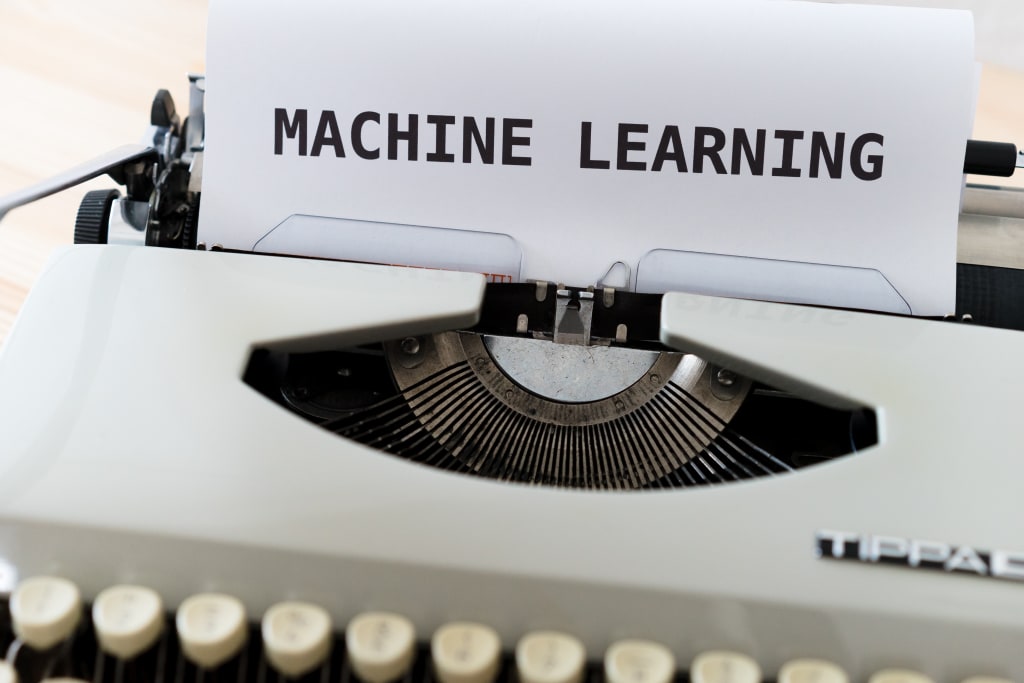
Machine learning is a field of artificial intelligence that enables computers to learn and make predictions without being explicitly programmed. It involves creating algorithms that analyze data, recognize patterns, and make decisions based on that analysis. In simpler terms, machine learning is about teaching computers to learn from experience and improve their performance over time.
What are the types of machine learning?
There are three main types of machine learning: supervised learning, unsupervised learning, and reinforcement learning.
1. Supervised learning: In supervised learning, the machine learning algorithm is provided with labeled data, where the input data is associated with corresponding output labels. The algorithm learns from this labeled data to make predictions or classify new, unseen data accurately.
2. Unsupervised learning: Unsupervised learning involves working with unlabeled data. The algorithm explores the data, finds patterns, and groups similar data points together without any predefined labels. It helps uncover hidden insights and structures within the data.
3. Reinforcement learning: Reinforcement learning involves training an agent to interact with an environment and learn from feedback in the form of rewards or penalties. The agent learns to make decisions and take actions that maximize the cumulative reward over time.
In simple terms, supervised learning is about learning from labeled examples, unsupervised learning is about finding patterns in unlabeled data, and reinforcement learning is about learning through trial and error in order to maximize rewards. Each type of machine learning has its own unique applications and benefits.
What are the advantages and disadvantages of machine learning?
Advantages of Machine Learning:
1. Automation and Efficiency
2. Handling Complex and Large Datasets
3. Improved Accuracy and Decision Making
4. Adaptability and Generalization
5. Uncovering Hidden Patterns
6. Personalization and Customization
7. Time and Cost Savings
8. Continuous Improvement
9. Handling Multidimensional Data
10. Innovative Applications
Disadvantages of Machine Learning:
1. Need for Quality and Relevant Data
2. Interpretability and Explainability
3. Overfitting and Underfitting
4. Computational Requirements
5. Lack of Domain Expertise
6. Data Privacy and Security Concerns
7. Dependency on Data Quality and Preprocessing
8. Ethical and Fairness Considerations
9. Limited by Available Data
10. Human Supervision and Intervention
How does machine learning work?
Machine learning works by creating algorithms that allow computers to learn from data and make predictions or take actions without being explicitly programmed. Here's a simple breakdown of how it works:
1. Data Collection: Machine learning begins with collecting relevant data related to the problem we want to solve or the task we want the computer to learn.
2. Data Preprocessing: The collected data may need to be cleaned, organized, and prepared for analysis. This step involves removing any inconsistencies, handling missing values, and converting data into a suitable format.
3. Training Phase: In this phase, the machine learning algorithm uses the prepared data to learn patterns and relationships. It analyzes the input data and the corresponding desired outputs (in the case of supervised learning) to adjust its internal parameters and create a predictive model.
4. Testing and Evaluation: Once the model is trained, it is tested on new, unseen data to assess its performance. This helps determine how well the model can generalize and make accurate predictions on unseen data.
5. Deployment and Prediction: After successful testing, the trained model can be deployed to make predictions or take actions on new, real-world data. The model utilizes the learned patterns and relationships to make predictions based on the input it receives.
6. Iterative Improvement: Machine learning is an iterative process. If the model's performance is not satisfactory, the process can be repeated by refining the algorithm, collecting more data, or adjusting parameters until the desired accuracy or performance is achieved.
In simple terms, machine learning involves training a computer to learn from data, creating a predictive model, and using that model to make predictions or take actions on new, unseen data. The more data it learns from, the better it becomes at making accurate predictions.
What is the role of training and testing data in machine learning?
Training and testing data play crucial roles in machine learning. Here's a simple explanation of their roles:
1. Training Data: Training data is the dataset used to teach a machine learning algorithm. It consists of input data along with the corresponding correct or desired outputs. The algorithm learns from this labeled data, identifying patterns and relationships to build a predictive model. The more diverse and representative the training data, the better the model's ability to generalize and make accurate predictions.
2. Testing Data: Testing data is a separate dataset that is not used during the training phase. It serves as a benchmark to evaluate the performance and generalization ability of the trained model. The testing data contains input samples for which the correct outputs are known. By comparing the model's predictions with the actual outputs, we can measure how well the model performs on unseen data. This evaluation helps us assess the model's accuracy and its ability to handle new, real-world scenarios.
In simple terms, training data is used to teach the machine learning algorithm, enabling it to learn from examples and create a model. The testing data is then used to evaluate the model's performance and measure its accuracy on unseen data. This separation ensures that the model can make reliable predictions on new data that it has not been trained on.
What are some popular machine learning algorithms?
There are several popular machine learning algorithms used to solve various problems. Here are a few commonly used ones:
1. Linear Regression: Linear regression is used for predicting a continuous numerical value based on input features. It establishes a relationship between the input variables and the output variable by fitting a straight line that best represents the data.
2. Decision Trees: Decision trees are versatile algorithms that make predictions by creating a tree-like structure of decisions and their possible outcomes. They are easy to understand and interpret, making them useful for both classification and regression tasks.
3. Random Forests: Random forests combine multiple decision trees to improve prediction accuracy. Each tree is trained on a random subset of the data and features, and the final prediction is made based on the consensus of all the trees.
4. Support Vector Machines (SVM): SVM is a powerful algorithm for classification tasks. It finds a hyperplane that best separates the data points of different classes, maximizing the margin between them.
5. k-Nearest Neighbors (KNN): KNN is a simple and intuitive algorithm that classifies data based on the similarity to its k nearest neighbors. It assigns a label to a new data point based on the labels of its closest neighbors.
6. Neural Networks: Neural networks are a class of algorithms inspired by the human brain. They consist of interconnected nodes (neurons) organized into layers. Deep learning, a subset of neural networks, uses multiple hidden layers to learn complex patterns and achieve state-of-the-art results in various domains like image recognition and natural language processing.
These are just a few examples of popular machine-learning algorithms. Each algorithm has its own strengths and weaknesses, making it suitable for different types of problems and datasets. The choice of algorithm depends on the specific requirements and characteristics of the problem at hand.
What is overfitting in machine learning?
Overfitting is a common challenge in machine learning that occurs when a model performs exceptionally well on the training data but fails to generalize to new, unseen data. Here's a simple explanation:
Imagine you have a machine learning model that you train on a dataset. During training, the model learns to capture and fit the patterns and relationships present in the training data. However, if the model becomes too complex or if the training data is limited, it may start memorizing the training examples instead of learning the underlying patterns.
As a result, the model becomes overly specialized to the training data, losing its ability to make accurate predictions on new, unseen data. This phenomenon is known as overfitting. Essentially, the model is "overfitting" the training data to the point that it fails to generalize well.
To visualize this, think of an overfit model as one that creates a jigsaw puzzle where every piece perfectly matches the training data, but when you try to fit new pieces (unseen data) into the puzzle, they don't quite fit.
Overfitting is a problem because the goal of machine learning is to create models that can generalize well to new data. To overcome overfitting, techniques like regularization (to simplify the model), increasing training data, or using cross-validation to evaluate the model's performance on multiple subsets of the data can be employed. The aim is to strike a balance between capturing the patterns in the training data and avoiding overfitting to ensure the model performs well on unseen data.
What is feature selection in machine learning?
Feature selection is the process of choosing the most relevant and informative features from a dataset to improve the performance of a machine learning model. Here's a simple explanation:
When working with a dataset, it often contains multiple features or variables that describe each data point. However, not all features may contribute equally to the model's predictive power or accuracy. Some features may be irrelevant or redundant, while others may have a stronger influence on the target variable.
Feature selection helps identify and select the most important features that have the most significant impact on the model's performance. By choosing the right subset of features, we can improve the model's accuracy, reduce complexity, and enhance its efficiency.
There are different methods for feature selection, including:
1. Univariate Feature Selection: This method examines each feature individually, considering its statistical significance and relationship with the target variable. Features that have a high correlation or mutual information with the target are selected.
2. Recursive Feature Elimination: This method starts with all features and recursively eliminates the least important features based on their importance rankings. It continues this process until the desired number of features is reached.
3. Regularization: Regularization techniques, such as L1 or L2 regularization, add a penalty term to the model's training process. This penalty encourages the model to assign lower weights to less important features, effectively performing feature selection.
The goal of feature selection is to improve the model's performance by focusing on the most informative features while eliminating noise or irrelevant information. It helps simplify the model, reduce overfitting, and enhance its interpretability.
What skills are essential for a career in machine learning?
A career in machine learning requires a combination of technical skills, mathematical understanding, and domain knowledge. Here are some essential skills for a career in machine learning, explained simply:
1. Programming Skills: Proficiency in programming is crucial, with Python being a popular language for machine learning. Understanding concepts like variables, loops, conditionals, and functions is essential for implementing machine learning algorithms and working with data.
2. Data Analysis and Manipulation: Skills in data analysis and manipulation are essential to work with datasets. This includes tasks such as cleaning and preprocessing data, handling missing values, and transforming data into a suitable format for machine learning algorithms.
3. Statistics and Mathematics: A solid understanding of statistics and mathematics forms the foundation of machine learning. Concepts like probability, linear algebra, calculus, and statistical methods are important for understanding algorithms, evaluating models, and making data-driven decisions.
4. Machine Learning Algorithms: Familiarity with various machine learning algorithms, such as linear regression, decision trees, and neural networks, is essential. Understanding their working principles, strengths, and limitations helps in selecting and applying the right algorithms for specific tasks.
5. Data Visualization: The ability to effectively visualize data helps in gaining insights and communicating results. Knowledge of libraries like Matplotlib or Seaborn in Python can aid in creating visualizations to explore and present data.
6. Deep Learning: Deep learning is a subset of machine learning that deals with neural networks and complex models. Familiarity with deep learning frameworks like TensorFlow or PyTorch is beneficial for tackling advanced tasks like image recognition or natural language processing.
7. Problem-Solving: Strong problem-solving skills are essential in machine learning. This involves the ability to identify problems, break them down into manageable parts, and apply appropriate algorithms and techniques to solve them.
8. Continuous Learning: Machine learning is a rapidly evolving field. Keeping up with the latest research, algorithms, and techniques through self-study, online courses, or attending conferences is crucial for staying updated and improving your skills.
Remember, building expertise in machine learning is a continuous process, and practical experience through projects and real-world applications will further enhance your skills and understanding.
How does deep learning differ from traditional machine learning?
Deep learning is a subset of machine learning that differs in its approach and capabilities compared to traditional machine learning. Here's a simple explanation of the differences:
Traditional Machine Learning: Traditional machine learning algorithms typically rely on manual feature engineering. This means that human experts need to identify and extract relevant features from the input data, which are then used as inputs for the machine learning algorithm. The algorithm learns patterns and relationships between these features and the target variable to make predictions.
Deep Learning: Deep learning, on the other hand, leverages neural networks with multiple hidden layers to automatically learn and extract features from raw or unstructured data. It eliminates the need for manual feature engineering, as the neural network learns to automatically discover relevant features as part of the learning process.
Key Differences:
1. Feature Extraction: In traditional machine learning, experts manually engineer features from the data, while in deep learning, features are learned automatically from the raw data.
2. Data Representation: Traditional machine learning often relies on structured data with pre-defined features, whereas deep learning can handle unstructured data, such as images, text, and audio, directly without explicit feature extraction.
3. Performance on Complex Tasks: Deep learning excels at tackling complex tasks, such as image recognition, natural language processing, and speech recognition, due to its ability to learn hierarchical representations of data through multiple layers.
4. Amount of Data: Deep learning algorithms typically require a large amount of labeled training data to generalize well and achieve high performance. Traditional machine learning algorithms may be more effective with smaller datasets.
5. Computational Requirements: Deep learning models are computationally intensive and often require powerful hardware, such as GPUs or specialized processors, due to the complexity of training large neural networks. Traditional machine learning algorithms are generally less computationally demanding.
In simple terms, deep learning is a subset of machine learning that automatically learns relevant features from raw data using neural networks, while traditional machine learning relies on manual feature engineering. Deep learning excels in handling complex tasks and unstructured data but requires more computational resources and labeled training data.
About the Creator
Keep reading
More stories from Bijaya Budhathoki and writers in Education and other communities.
What is cloud computing?
Cloud computing refers to the practice of storing and accessing data, applications, and services over the Internet instead of using your computer's hard drive or local servers. In simpler terms, it means using the internet to access and use various resources and software, like storing files, running applications, or hosting websites, without needing to have them physically present on your own device.
By Bijaya Budhathoki3 years ago in Education
Guide to Canada's Six Essential Learning Skills for Students
Written by Kiki Devano In Canada, there are the six essential skills that are encouraged for students to develop. These learning skills have a formidable impact on student learning and will help them achieve further success. This is a guide to aid students in successfully developing the essential skills.
By Kiki Devano3 days ago in Education
Benefits of Study Abroad Scholarships
Benefits of Study Abroad Scholarships Millions of students around the world long to study abroad. It's very exciting to have the chance to study at a foreign university, learn about a new culture, and build a career that spans the globe.
By Farida Kabir4 days ago in Education


Comments
There are no comments for this story
Be the first to respond and start the conversation.