
What is an Instructional Designer?
Introduction to Instructional Design
🚀 New Blog Alert! 🎓
In today’s fast-evolving educational and professional landscape, the demand for innovative and effective learning experiences is on the rise. Instructional Designers play a crucial role in shaping these experiences, creating educational programs, courses, and materials that engage and educate learners of all types. But what exactly does an Instructional Designer do, and why are they essential to modern learning? Let’s dive deeper into this pivotal role in the education and training field.
Understanding Instructional Design
Instructional design is a systematic approach to creating educational programs and resources that enhance learning. This involves understanding how people learn and developing strategies, activities, and assessments that facilitate knowledge acquisition. Instructional Designers use various methods, technologies, and models to design programs that meet specific educational goals and objectives.
Who is an Instructional Designer?
An Instructional Designer is a professional who applies principles of instructional theory, learning psychology, and technology to create engaging and effective learning experiences. These experts work in various fields, including education, corporate training, healthcare, government, and beyond. Whether it’s an online course, a corporate training program, or a new educational app, an Instructional Designer tailors the content to suit the learners’ needs, ensuring that the knowledge and skills gained are practical and applicable.
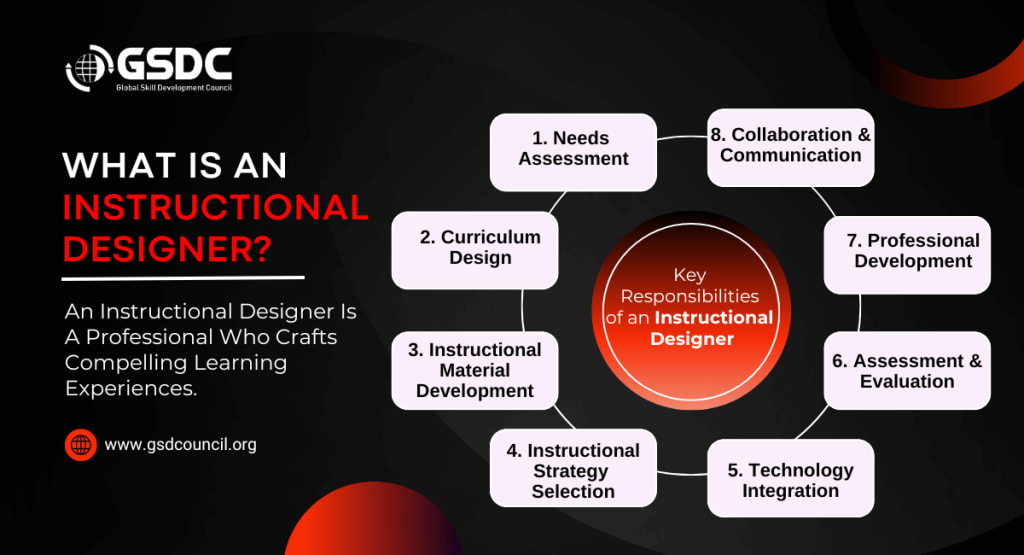
Key Responsibilities of an Instructional Designer
The role of an Instructional Designer encompasses a wide range of tasks, including:
Conducting Needs Analysis
Instructional Designers begin by assessing the learning needs of their target audience. This analysis helps determine what knowledge or skills the learners need and identifies any gaps in their current understanding.
Designing Course Content
After identifying the learning objectives, Instructional Designers structure the course content to ensure it aligns with those objectives. This includes creating engaging multimedia elements, interactive modules, quizzes, and other assessments.
Developing Engaging Materials
Instructional Designers often work with subject matter experts to create materials that are accurate, accessible, and engaging. They use various tools and software to produce high-quality visuals, animations, videos, and other content to enhance learning.
Implementing the Learning Program
Implementation is a key step where the instructional content is delivered to learners. This may involve setting up an online course on a learning management system (LMS) or coordinating in-person training sessions.
Evaluating Effectiveness
An important part of instructional design is evaluation. After a course or training is delivered, the Instructional Designer assesses its effectiveness. This feedback informs future program improvements, ensuring continuous learning enhancement.
Skills and Qualities of a Successful Instructional Designer
To succeed in this role, an Instructional Designer should possess a mix of technical, creative, and analytical skills. Key skills include:
Understanding of Learning Theories
Instructional Designers must be well-versed in learning theories and instructional models like ADDIE (Analyze, Design, Develop, Implement, Evaluate), Bloom’s Taxonomy, and Gagné’s Nine Events of Instruction.
Technical Proficiency
Proficiency in tools like Articulate Storyline, Adobe Captivate, and other e-learning authoring tools is essential for creating digital content.
Communication Skills
Effective communication is crucial, as Instructional Designers often collaborate with subject matter experts, trainers, and learners.
Analytical Thinking
The ability to analyze feedback, assess needs, and measure success is important in refining instructional materials for maximum impact.
Why Instructional Designers are in Demand
As companies and institutions move towards digital and blended learning environments, the demand for skilled Instructional Designers is on the rise. Their expertise helps organizations streamline training processes, save costs, and ensure employees and students are well-prepared for real-world challenges.
Conclusion
Instructional Designers play a pivotal role in creating impactful, engaging, and effective learning experiences. Their blend of educational theory, creativity, and technical skills makes them indispensable in both academic and professional training settings. As technology continues to reshape how we learn, the role of an Instructional Designer will only grow in importance.
📖 Read here: https://www.gsdcouncil.org/blogs/what-is-an-instructional-designer
#InstructionalDesign #eLearning #Education #LearningArchitects #Blog #GSDCouncil
About the Creator
Keep reading
More stories from anders wisdom and writers in Education and other communities.
Mastering Interview Questions for HR Position Candidates
Introduction Landing an HR position requires more than just understanding human resources—it demands communication skills, a strategic mindset, and the ability to align company goals with talent management. To stand out, candidates should focus on preparing for interview questions that reveal both their technical knowledge and interpersonal skills.
By anders wisdomabout a year ago in Education
Wealthiest Zip Codes in the U.S: A Guide for Real Estate Investors
In the world of real estate, there is a distinct difference between "expensive" markets and "wealth-concentrated" ecosystems. While many investors chase high-growth "hot" markets, a select group of seasoned professionals focuses on a different metric: the five-digit zip code.
By REI Data Solutionsabout 22 hours ago in Education




Comments
There are no comments for this story
Be the first to respond and start the conversation.