
What is an inductor?
An inductor is a passive component used in electronic circuits to store energy in a magnetic field when electricity is applied.

Introduction
I remember the first time I encountered inductors in a circuit. At first glance, they looked like simple coil-like components, but their role in electronic devices is far more significant. These structures consist of a wire that is looped around a central core and is often insulated to prevent interference. Their primary functions include controlling electric surges and handling sudden spikes in current flow. By storing energy in an electromagnetic field, inductors can manage power fluctuations efficiently. When the current flow changes, they gradually release the energy back into the circuit, helping to decrease sudden variations. Unlike resistors and conductors, which primarily influence current and voltage, inductors react dynamically, making them essential in power regulation and signal processing.
Understanding Inductors
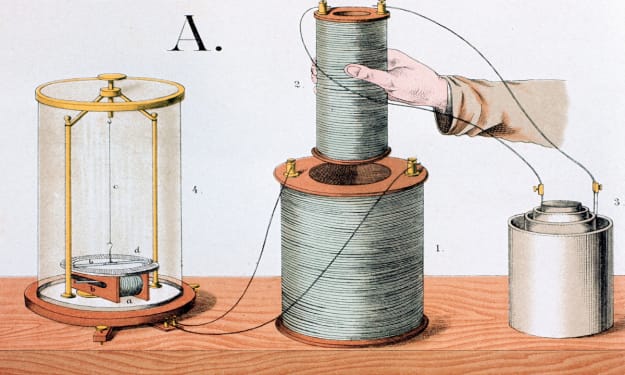
An inductor is a passive component used in electronic circuits to store energy in a magnetic field when electricity is applied. It consists of a coil of wire wound around a core, which can be made of different materials. The size, shape, and permeability of the core affect how the inductor behaves. One of its key properties is that it impedes sudden changes in current, meaning it opposes any fluctuation in the flowing electric charge. This is why inductors are often used in power circuits to help maintain steady voltage levels. The induced magnetic field creates resistance to changes, and this effect is measured in henries (H), the SI unit of inductance.
The ratio of voltage to the rate of change in current determines the inductor’s nature, and this is influenced by several factors, such as the number of turns, layers, and space between the wires. Unlike a capacitor, which stores electrical energy, an inductor primarily stores magnetic energy. It also has a unique feature where its polarity changes when charging and discharging, meaning the induced voltage can become opposite to its original polarity, as explained by Lenz’s law. Inductors come in various forms, including chokes and reactors, and are used in many power and electronic applications to equalize circuits and prevent sudden spikes in current.
Construction of an inductor
Structure and Materials of an Inductor
An inductor is a passive electrical component that stores energy in a magnetic field when current flows through it. It consists of a coil made of insulated copper wire, wound around a core that can be air or a ferromagnetic material. The core material plays a crucial role in determining the inductance, with soft ferrites and electrical steel being commonly used due to their high permeability. Some inductors use laminated cores to minimize eddy currents, which helps in reducing energy losses, especially in low-frequency applications like transformers and power supplies.
Types and Specialized Inductors
Inductors come in different shapes and types, depending on their purpose. Some have an adjustable core to allow changing inductance, while others use a ferrite bead to act as a blocking element for high frequencies. Planar inductors, built using planar cores, are found in integrated circuits and consist of aluminum interconnects arranged in a spiral coil pattern. These are often used in compact electronic devices but have limitations due to restricted dimensions, which reduce inductance.
Shielded Inductors for Noise Reduction
In applications where interference must be minimized, shielded inductors are preferred. They are designed to work under low-noise operating conditions and are often fully shielded or partially shielded. These inductors play a significant role in power regulation systems, lighting, and other sensitive circuits where maintaining signal clarity is important.
Different Types of Inductors
Inductors come in different types based on the materials used for their core and their electrical components. Each type has its own properties suited for specific applications. One common type is the iron-core inductor. This inductor uses iron as its core, which offers high inductance and is good for high-power applications. However, iron-core inductors tend to have low-frequency capacity and are not ideal for high-frequency use.
Another type is the air core inductor, which does not have any core material, unlike the iron core. These inductors are useful when the required inductance is low, and they don’t suffer from core loss. Since there’s no core, the inductor must have more turns of insulating wire to maintain the same inductance as a core-based inductor. This results in a high Q factor, which indicates a high quality factor and low resistance.
Next, we have iron powder inductors, where the core is made from iron oxide or fine insulating particles of iron powder. These inductors can store a high magnetic flux due to the air gap in the core. Iron powder inductors have lower permeability, which makes them ideal for use in switching power supplies and other energy conversion systems. These inductors are also great for applications that need to manage current flow efficiently.
A unique type of inductor is the ferrite core inductor. Ferrites are ceramic materials that come in two types: soft ferrites and hard ferrites. Soft ferrites can reverse their polarity without external energy, while hard ferrites are permanent magnets and their polarity remains unchanged. Ferrite core inductors are typically used in high-frequency applications because they can handle high-frequency blocking and provide excellent signal control in electrical circuits.
Finally, chokes are inductors that are specifically designed to block high-frequency alternating current (AC) and allow low-frequency signals or direct current (DC) to pass. They are used to control current changes in a circuit and are often found in systems that need to manage low noise or filter out high-frequency interference. The magnetic core of the choke helps maintain efficient signal passing and high-frequency blocking.
Functions of an Inductor
Inductors play a key role in electric circuits by controlling and storing energy. When electric current flows through the coils of an inductor, it creates a magnetic field. This field allows the inductor to either pass low-frequency signals or block AC current, depending on the frequency. For higher frequency signals, the inductor makes it harder for them to pass, while DC current can flow through easily. This makes inductors useful in LC circuits and LC filters, where they help manage signals by either allowing or blocking their flow.
In addition to controlling signals, inductors also serve the important function of storing energy. The magnetic energy generated by the coil as current flows is stored and can later be released. This stored energy comes from the inductive property of the inductor, which uses electromagnetic fields to store and release energy. The ability to control current flow, block certain signals, and store energy makes inductors essential electrical components in a wide range of applications, such as power regulation and energy conversion.
Inductors in Parallel Configuration
When inductors are connected in parallel, their inductance value decreases, similar to how resistance decreases when resistors are connected in parallel. In a parallel setup, the current flowing through each inductor will be different, depending on the inductance of each. However, the voltage across each inductor will remain the same. Using Kirchhoff’s Current Law, we can calculate the total current by adding the individual currents through each branch, such as I1, I2, and I3.
To find the total inductance (LTotal) of inductors in parallel, we use the voltage equation: 1 / LTotal = 1 / L1 + 1 / L2 + 1 / L3. This equation shows that the total inductance is the sum of the inverses of the individual inductances, L1, L2, and L3. By simplifying this equation, we can calculate the total voltage and current flow across the parallel inductors. The relationship between these components is crucial for understanding how inductive components behave in electrical circuits.
Inductors in Series
When inductors are connected end to end in a series connection, their total inductance increases. This is similar to how resistors behave in series, where the total resistance goes up. When connected in series, the current flowing through each inductor is the same, but the voltage across each inductor may differ. The voltage drop depends on the inductance value of each inductor. According to Kirchhoff’s voltage law, the total voltage drop is simply the sum of the voltage drops across each inductor. The relationship between the voltage equation and inductance can be written as LTotal = L1 + L2 + L3, where L1, L2, and L3 are the inductance values of the inductors in series.
For example, when the current passing through inductors in series is the same (I1 = I2 = I3), the voltage drop across the inductors is calculated by differentiating the inductance sum of the three inductors with respect to the time rate. The equation is modified to LTotal dL / dt = L1 x dL1 / dt + L2 x dL2 / dt + L3 x dL3 / dt. This shows how inductive components in a series arrangement affect the voltage and current. The total inductance in such a configuration is simply the sum of all the individual inductance values of the inductors involved. This makes calculating total inductance in a series connection quite straightforward.
Impedance of an inductor
The impedance of an inductor is mainly determined by its AC resistance, which is often referred to as inductive reactance. This property opposes the change in current within an AC circuit. The symbol XL represents inductive reactance, and it is given by the equation XL = VL / IL = Lω. From this equation, we can see that inductive reactance is proportional to the frequency of the AC signal. In simple terms, the higher the frequency, the greater the opposition to the flow of current through the coil.
About the Creator
Muhammad Ikram
A cultural anthropologist
Keep reading
More stories from Muhammad Ikram and writers in Education and other communities.
Faraday’s Laws of Electromagnetic Induction
Introduction When I first started learning about Faraday’s work, I was fascinated by how his laws explain the relationship between electricity and magnetism. The first law clearly describes how an electric current is produced when a changing magnetic field interacts with a conductor. The second law goes further and quantifies the amount of emf generated based on the rate of change of flux. These principles are the foundation of electromagnetic induction, which plays a vital role in electrical machines and power generation.
By Muhammad Ikramabout a year ago in Education
Parts of my Library Planner
This one is a long one, but I hope it helps some librarians (or anyone). Once you’ve purchased your planner materials, you need something to go inside it. I honestly feel that what goes in your planner is personal and needs to be tailored to what you’ll use. While you can find many teacher planners, when I searched for school librarian planners, I found only four. Although one is only 12.50, you would have to print and assemble it yourself. A second one is almost thirty dollars and also has to be printed and assembled yourself. A third is mass produced through Amazon and doesn’t have everything I would want. Finally there’s the Demco planner. While I agree that it looks like a fantastic purchase, I just cannot justify spending that much money on a planner that I’m only going to use for one year. For all the librarians that do purchase it, I hope you enjoy it. I might invest in it one year just to see what the fuss is about. For now, I’ll continue to use the one I’ve been developing and customizing for the last two years.
By Reb Kreyling6 days ago in Education
Effective App Site Design: Tips & Best Practices
In today's digital age, an engaging and effective app site design is crucial for capturing and retaining user interest. The right design not only showcases your app but also enhances user experience, making it crucial for converting casual visitors into loyal users. This article explores various aspects of app site design, from UI design ideas to responsive layouts, and provides actionable tips to help your app stand out.
By nandbox support2 days ago in Education
The Angry Man in Your House
"If you grow up with an angry man in your house, there will always be an angry man in your house" This statement has caused plenty of controversy online, people say its a statement that blames victims while also undermining those who break traumatic cycles to form health relationships... but if I'm honest now that I'm in my 30s it makes more sense to me than ever, and I'd argue that its not just about fathers and uncles.
By S. A. Crawforda day ago in Humans



Comments (1)
An inductor is good to have! Great Work!