

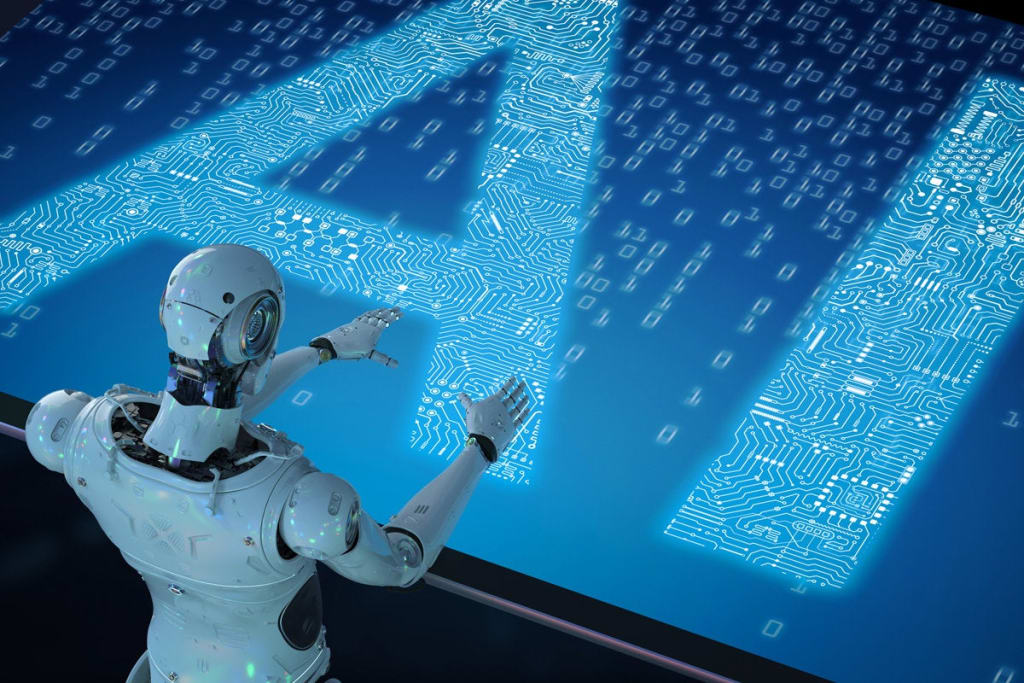
Artificial Intelligence (AI) refers to the ability of machines and computer systems to perform tasks that would typically require human intelligence, such as visual perception, speech recognition, decision-making, and language translation. It involves the development of algorithms and computer programs that can perform tasks that would normally require human intelligence.
There are several different types of AI, including:
Reactive machines: These are the simplest form of AI, and are designed to perform specific tasks in response to specific stimuli.
Limited memory: These systems can use past experiences to inform future decisions, but they don't have the ability to form a long-term memory.
Theory of mind: This is a form of AI that has the ability to understand human emotions and thoughts.
Self-aware: This is the most advanced form of AI, and refers to systems that have a sense of self and consciousness.
AI has a wide range of applications, including computer vision, speech recognition, natural language processing, robotics, and autonomous vehicles. It has the potential to revolutionize many industries and has already had a significant impact on the way we live and work. However, it also raises important ethical and societal questions, and its development and deployment must be carefully managed to ensure that its benefits are realized while minimizing its risks.
ADVANTAGES
Improved Efficiency: AI can automate many tasks and processes, leading to increased efficiency and productivity.
Better Decision Making: AI systems can analyze large amounts of data and identify patterns and relationships that may not be immediately apparent to humans, leading to more informed and accurate decision-making.
Enhanced Customer Experience: AI can be used to personalize customer experiences and provide more personalized services, leading to improved customer satisfaction and loyalty.
Increased Accuracy: AI systems can perform tasks with a high degree of accuracy and consistency, reducing the risk of human error.
Cost Savings: By automating many tasks and processes, AI can help to reduce costs and increase profitability.
Predictive Maintenance: AI can be used to predict when equipment or machinery is likely to fail, allowing for proactive maintenance and reducing downtime.
New Job Opportunities: AI is creating new job opportunities in areas such as data science, machine learning, and AI development.
Improved Healthcare: AI has the potential to revolutionize healthcare, for example by improving patient diagnoses, predicting disease outbreaks, and enhancing drug development.
DISADVANTAGES
Job Losses: While AI is creating new jobs in some areas, it is also automating many tasks and processes, which could lead to job losses in certain industries.
Bias and Discrimination: AI systems can perpetuate and amplify existing biases in the data they are trained on, leading to unfair and discriminatory outcomes.
Lack of Accountability: AI systems can make decisions that have significant consequences, but it can be difficult to determine who is responsible for those decisions and to hold them accountable.
Privacy Concerns: AI systems often collect and analyze large amounts of personal data, raising concerns about privacy and the protection of sensitive information.
Technical Complexity: Developing and deploying AI systems can be technically complex and require specialized knowledge and expertise, making it challenging for many organizations to adopt and utilize AI.
Dependence on Technology: As AI systems become more widely used, there is a risk of becoming overly dependent on them, which could lead to reduced critical thinking and problem-solving skills.
Cybersecurity Risks: AI systems are vulnerable to cyberattacks, which could compromise sensitive data and disrupt operations.
Ethical Concerns: AI raises important ethical questions about the role of machines in society and the responsibility of those who develop and deploy AI systems.
Overall, AI has the potential to bring about significant benefits in many industries, but it's important to remember that it's just a tool, and its effects will depend on how it's used and integrated into society.
while AI has the potential to bring about significant benefits, it's important to be aware of and address the potential risks and challenges associated with its development and deployment.
About the Creator
Rubs talk
"I have not failed. I have just found 10000 ways that won't work"
Purpose Driven Event Lighting Design That Unites Style, Comfort, and Safety
Event lighting design plays a decisive role in how people experience an event. It shapes the mood, guides movement, and supports safety at every step. When lighting is planned with purpose, it does more than look attractive. It creates a space where guests feel relaxed, confident, and protected.
By Brian Casella6 days ago in Education




Comments
There are no comments for this story
Be the first to respond and start the conversation.