
What is a Probate Sale in Real Estate? Are They Worth Your Investments?
The Investor's Guide to Probate Sales: Hidden Equity or Legal Headache

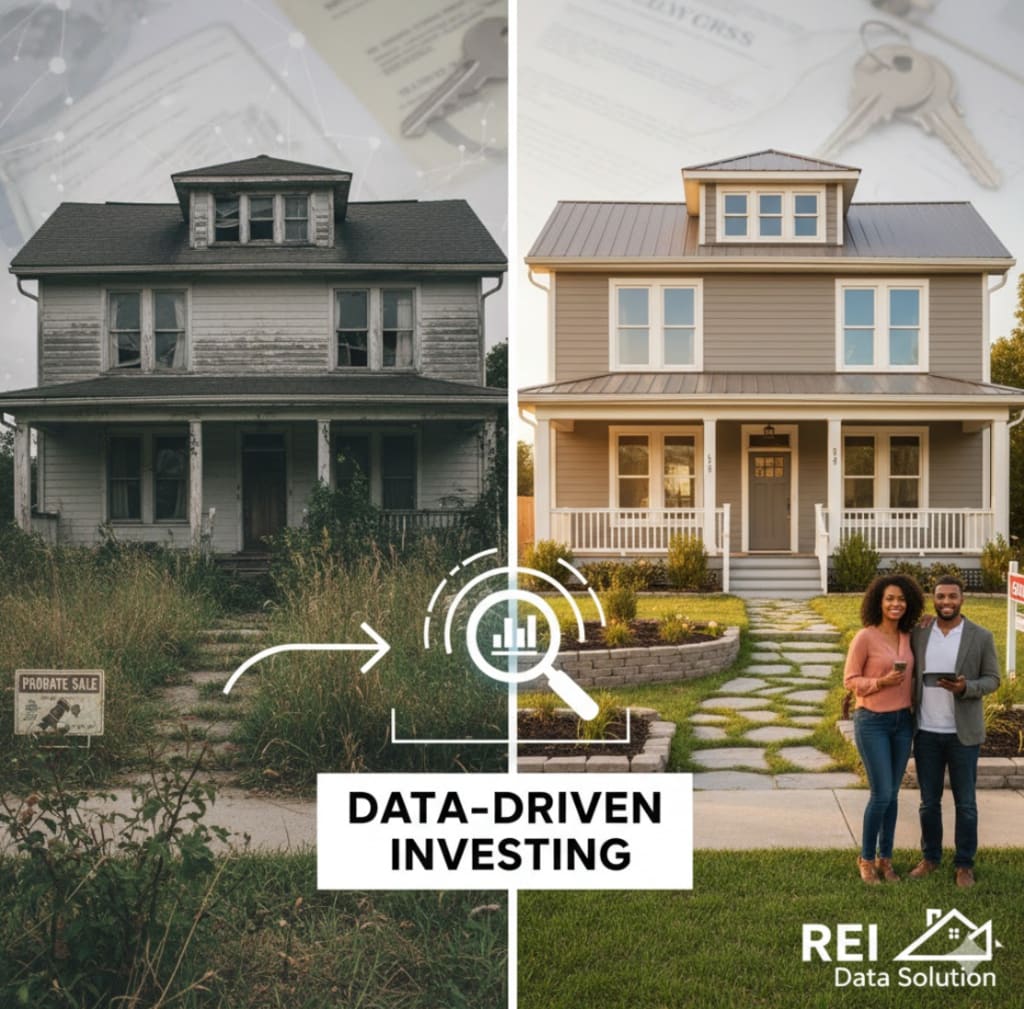
Why the best deals don't always come from foreclosures and how savvy investors turn court red tape into immediate profit.
The real estate investment world often focuses on foreclosures and short sales for finding "hidden deals." But as smart investors know, sometimes the most overlooked, profitable opportunities come from an entirely different, quieter source: probate sales.
Imagine an investor like Michelle. Frustrated by losing bid after bid on stylish, flip-ready homes, she was looking for an edge. Her agent quietly mentioned a listing that wasn't on Zillow or Redfin. The home was a classic "time capsule" dated paint, overgrown yard, but with a price tag 20% below market value. It was a probate property. Michelle's curiosity and her sharp business instinct told her this wasn't a typical transaction. It was fraught with legal complexities and emotional weight, yet it offered the tantalizing possibility of instant, built-in equity. Her experience perfectly illustrates the dual nature of probate investing: high reward potential perfectly paired with a unique set of risks and hurdles.
Let's break down this niche market and determine if it's worth your investment capital.
⚖️ So, What Exactly Is a Probate Sale?
In the simplest terms, a probate sale occurs when a property owner passes away without a clear, legally designated heir or will.
When this happens, the local court steps in. Its job is to oversee the fair and orderly distribution of the deceased person’s assets, including their real estate. The court appoints an executor (if there was a will) or an administrator (if there wasn't a will). This individual’s primary duty is to manage and liquidate the estate's assets, not to hold out for the highest possible price for sentimental reasons. Their goal is simply to settle any outstanding debts and distribute the remaining proceeds to the legal heirs efficiently.
This duty-bound approach creates a unique dynamic in the real estate market.
🔑 Why These Properties Create Investor Opportunities
Probate properties are fundamentally different because they are not being sold by a traditional homeowner. They are sold by a court-appointed representative a family member, an attorney, or a trusted friend.
- Motivation Over Sentiment: The seller is often motivated by duty, not by the desire for a premium price. They want to close the estate quickly and move on. They may live out of state and have no emotional attachment to the house itself. This often translates to a pragmatic, business-like approach to pricing and negotiation.
- The Time Capsule Advantage: The properties themselves are often houses that have been in the same family for decades. Neglected maintenance, outdated kitchens, and decades-old carpeting are not defects; they are the core of the opportunity for investors who specialize in renovation and adding value.
💰 The Alluring Pros of Probate Investing
The potential benefits are what draw savvy, patient investors into this space.
- Below-Market Pricing: This is the primary draw. Executors frequently prioritize a quick, certain, all-cash sale over a prolonged search for the absolute highest bidder. The result is often a significantly reduced purchase price that establishes immediate equity for the buyer.
- Reduced Competition: Most retail buyers and many casual investors shy away from these sales because they don't know where to find them or are intimidated by the legal process. Less competition means a much lower chance of being sucked into a frantic bidding war.
- Substantial Equity Potential: Purchasing a property significantly under its market value creates instant "sweat equity." Once you factor in the value you add through smart renovations, the potential profit margin can be substantial, often eclipsing what's possible with traditionally listed homes.
🚧 The Real-World Cons You Can't Afford to Ignore
Probate sales are far from a "get-rich-quick" scheme. The path to profit is lined with distinct challenges that require preparation.
- Legal Delays and Bureaucracy: The sale requires court approval. This is an extra layer of bureaucracy and time. A standard transaction closes in 30–45 days; a probate sale can easily take 3 to 6 months or longer. You are entirely at the mercy of the court's schedule.
- Unpredictable Timelines: If you are an investor who needs a quick turnaround or a guaranteed closing date, probate is likely not for you. Delays are common and often unavoidable.
- Sensitive Sellers: While the executor is tasked with being neutral, they are frequently a grieving family member. This can make negotiations sensitive, sometimes unpredictable, and require a high degree of empathy and professionalism.
- "As-Is" Sales: Almost all probate properties are sold as-is. This means you inherit every issue, from a leaky foundation to outdated electrical systems. Your due diligence must be meticulous and comprehensive; there is little recourse after the sale.
🎯 What Makes a Probate Deal Worth Your Investment?
The decision to invest comes down to a simple, sober financial formula:
$$\text{Potential Equity} > (\text{Cost} + \text{Time} + \text{Risk})$$
A deal is truly "worth it" when the discount you receive is deep enough to comfortably cover all your projected costs: the purchase price, the renovation budget, all holding costs (taxes, insurance, utilities) during the long closing period, and a significant buffer for unexpected repairs. Patience is your most valuable asset, second only to accurate data. You must accurately assess the After Repair Value (ARV) and all associated costs to ensure the numbers provide a healthy return.
Finding the Signal in the Noise
How do professional investors find these off-market gems and vet them quickly? Manually searching through public court records is time-consuming and inefficient. Modern investors leverage specialized data tools to aggregate and verify this information. These platforms allow investors to efficiently identify properties that meet their criteria, assess the potential profit, and focus their effort on the most viable opportunities, bypassing the time-consuming "dead-end" research.
The Bottom Line 🤝
Probate sales represent one of the most powerful, often-untapped avenues for building significant wealth in real estate. They offer a unique path to acquiring properties with built-in equity and less competition. However, they are not for the faint of heart. They demand a specific, robust skillset: patience, empathy, and meticulous due diligence backed by solid financial data. The greatest rewards in this niche go to those who truly understand the process, respect the situation, and back their decisions with an ironclad investment plan.
Further Reading
- What is a Probate Sale in Real Estate? Are They Worth Your Investments?
- How Savvy Investors Find Code Violation Properties
- Navigating the Disclosure Process: A Broker’s Responsibility with Fire-Damaged Listings
About the Creator
Keep reading
More stories from REI Data Solutions and writers in Education and other communities.
The Hidden Importance of Design Hierarchy: How Layout Guides Attention and Improves Readability
Design Hierarchy Is the Foundation of a Clear, Effective Website Design hierarchy is one of the most influential principles in web design — yet it’s often overlooked by users because a strong hierarchy feels seamless and natural. Hierarchy determines what people notice first, how they scan a page, and what they choose to engage with. When done correctly, it guides attention effortlessly, improves readability, and makes websites feel intuitive.
By Power Marketing International4 days ago in Education
Me and Study: Nights I Didn’t Tell Anyone About
There were nights when the world slept, and I stayed awake with my books like they were the only witnesses to my existence. No one knew about those hours—not my friends, not my family, not even the version of me I showed during the day. These were the nights I didn’t talk about, because explaining them felt heavier than living through them.
By Inamullah Momand 6 days ago in Education




Comments
There are no comments for this story
Be the first to respond and start the conversation.