
What is a Liquidity Provider? Understanding the Role and Importance
In conclusion, liquidity providers play a vital role in financial markets by offering continuous bid and ask quotes, reducing bid-ask spreads, absorbing order flow, and stabilizing prices. They enhance market efficiency, reduce price volatility, increase market depth, and facilitate complex trading strategies. Understanding the role and importance of liquidity providers is crucial for traders and investors seeking to navigate the dynamic world of finance successfully
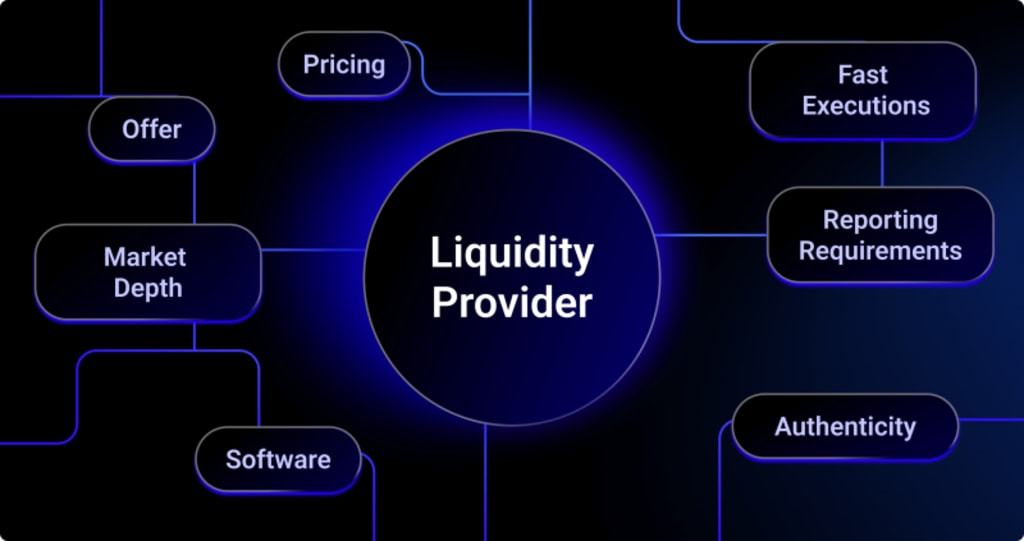
Introduction
In the world of finance and trading, liquidity plays a crucial role. Liquidity refers to the ease with which an asset or security can be bought or sold without causing significant price fluctuations. Liquidity providers are entities that facilitate this process by ensuring there is always a sufficient volume of assets available for trading. In this article, we will delve deeper into the concept of liquidity providers, their role in the financial markets, and why they are essential for traders and investors.
What is a Liquidity Provider?
A liquidity provider, also known as a market maker, is an individual or institution that offers continuous buy and sell prices for a specific set of financial instruments. These instruments can include stocks, bonds, commodities, cryptocurrencies, and more. Liquidity providers essentially act as intermediaries between buyers and sellers, ensuring that there is a ready market for trading these assets.
The Role of Liquidity Providers
Liquidity providers play a vital role in maintaining an orderly and efficient market. Here are some key functions they perform:
Providing Continuous Quotes: Liquidity providers offer continuous bid and ask quotes for a particular asset. These quotes represent the prices at which the provider is willing to buy or sell the asset. By doing so, they ensure that there is always a two-way market available for traders.
Reducing Bid-Ask Spreads: Bid-ask spread is the difference between the highest price a buyer is willing to pay (bid) and the lowest price a seller is willing to accept (ask). Liquidity providers aim to narrow this spread, making it more cost-effective for traders to execute their orders.
Absorbing Order Flow: Liquidity providers have the capacity to handle large volumes of trade orders. They can absorb substantial order flow from buyers and sellers, ensuring that there is sufficient liquidity in the market.
Stabilizing Prices: By offering continuous quotes and absorbing order flow, liquidity providers help stabilize prices in the market. They prevent excessive price fluctuations that could occur if there were insufficient buyers or sellers at any given time.
How Liquidity Providers Make Money
Liquidity providers earn profits through the bid-ask spread. They buy assets at a lower price (bid) and sell them at a slightly higher price (ask). The difference between the bid and ask prices is their profit margin. However, liquidity providers operate on a high-volume, low-margin model, as they aim to attract a large number of trades to maintain liquidity in the market.
Why Are Liquidity Providers Important?
Liquidity providers play a crucial role in financial markets, and their importance cannot be overstated. Here are some reasons why they are essential:
Enhanced Market Efficiency: Liquidity providers improve market efficiency by ensuring that there is always a ready market for trading assets. Traders can execute their orders quickly and at fair prices, leading to a more efficient allocation of resources.
Reduced Price Volatility: By offering continuous bid and ask quotes, liquidity providers help stabilize prices and reduce volatility. This benefits traders and investors by minimizing the impact of sudden price swings.
Increased Market Depth: Liquidity providers contribute to market depth by offering a large number of bids and asks. Market depth refers to the ability of a market to handle large trade volumes without significant price movements. Deep markets provide traders with more opportunities for executing their trades efficiently.
Facilitate Complex Trading Strategies: Liquidity providers enable the execution of complex trading strategies, such as arbitrage and high-frequency trading. These strategies rely on the availability of liquidity to execute trades swiftly and profitably.
Frequently Asked Questions (FAQs)
Q1: What are the main types of liquidity providers?
A1: The main types of liquidity providers include banks, brokerage firms, and specialized market-making firms. These entities have the necessary resources, expertise, and technology to provide liquidity in various financial markets.
Q2: How do liquidity providers ensure fairness in the market?
A2: Liquidity providers ensure fairness by offering continuous bid and ask quotes to all market participants. They do not discriminate between buyers and sellers and operate based on transparent rules and regulations.
Q3: Are liquidity providers only present in traditional financial markets?
A3: No, liquidity providers are present in both traditional and digital financial markets. With the rise of cryptocurrencies and decentralized exchanges, liquidity providers have also emerged to provide liquidity for digital assets.
Q4: Do liquidity providers take on any risks?
A4: Yes, liquidity providers take on certain risks in their role. They face the risk of holding assets in their inventory, which may experience price fluctuations. Additionally, they must manage the risk of market-wide events that can impact asset prices.
Q5: How do liquidity providers determine their bid and ask prices?
A5: Liquidity providers use various factors to determine their bid and ask prices, including the current market conditions, supply and demand dynamics, volatility, and their own risk appetite. Advanced algorithms and trading systems help them calculate these prices accurately.
Q6: Can individual traders become liquidity providers?
A6: Yes, individual traders can become liquidity providers in certain markets. However, this requires significant capital, expertise, and technology infrastructure to handle the demands of providing liquidity.
About the Creator
Keep reading
More stories from Mayank Singh and writers in Education and other communities.
Best Rehab Center in West Bengal: Helping You Find the Path to Recovery
Understanding Addiction: A Complex Challenge Addiction is a multifaceted issue that affects both the individual and their loved ones. It is essential to comprehend the complexity of addiction to provide effective treatment and support. Addiction can stem from various factors, including genetic predisposition, environmental influences, and psychological triggers. It affects individuals physically, mentally, and emotionally, making it challenging to break free from its grasp.
By Mayank Singh3 years ago in Humans
City’s Arts Funding Preserved for Next Three Years
A Victory for Local Arts In a major win for the city’s creative sector, officials have announced that arts funding will be preserved for the next three years. This decision comes after months of discussions between policymakers, arts organizations, and community leaders who emphasized the critical role arts play in the social, economic, and cultural vitality of the city.
By Aarif Lashariabout 8 hours ago in Education
How Neuroscience Is Changing the Way We Learn
In recent decades, advances in neuroscience have reshaped our understanding of human learning. Rather than viewing learning as merely memorizing facts, researchers now see it as a biological process that physically and functionally changes the brain. This shift in perspective — from teaching content to understanding how the brain learns — is transforming educational theory, classroom practice, and lifelong learning strategies across the globe.
By Games Mode On8 days ago in Education
📢 Raise Your Voice Thread: 01/22/2026
Our “Raise Your Voice Threads” are hosted most alternating Thursdays at 12PM ET to offer creators more avenues to uncover exceptional stories on Vocal. As we are continuously searching for fresh creators and inspiring stories, this thread provides an opportunity to exchange and discuss the stories that have moved and motivated us on Vocal.
By Raise Your Voice by Vocal4 days ago in Resources



Comments
There are no comments for this story
Be the first to respond and start the conversation.