
What Happens to Your Body When You Quit Smoking? Teach With Realistic Lung Models
Help patients understand how quitting smoking transforms their health using visual lung models that make recovery real, not just theoretical.

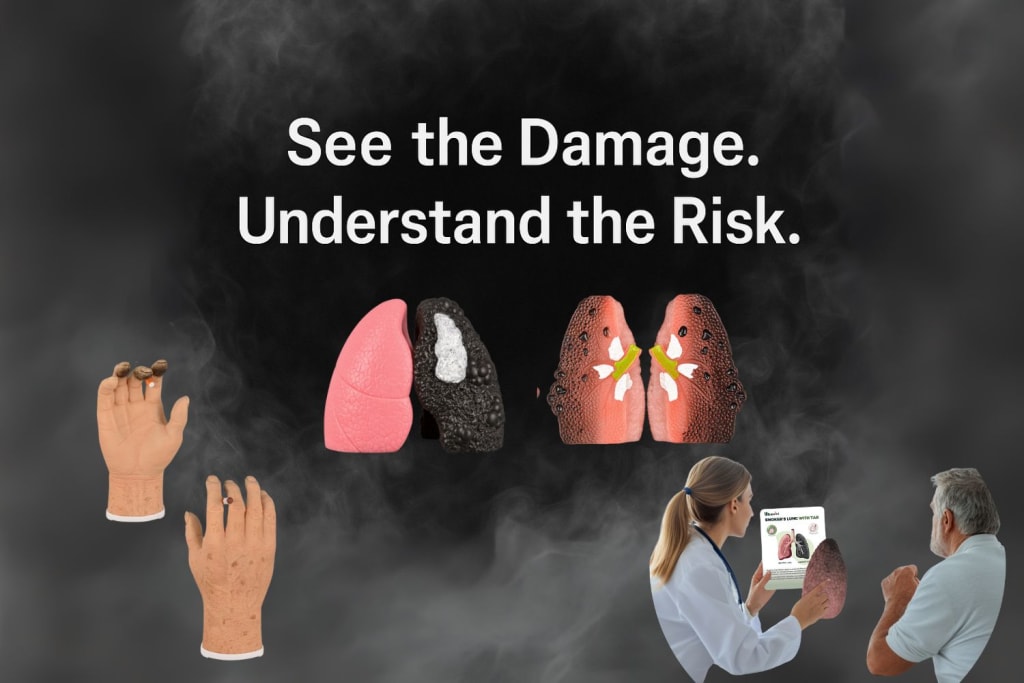
Every smoker has heard it: "The body begins to heal itself the moment you quit."
But what does that actually look like?
How does it feel to someone who's been smoking for 10, 20, or even 40 years?
For many long-term smokers, the idea of reversing years of damage feels unrealistic. The habit is ingrained, the cravings are real, and the changes—while backed by science - are often invisible. That's why health educators and providers need tools that don’t just explain but show what healing looks like.
This is where realistic anatomical lung models come into play: they make the invisible, visible - and they help turn hesitation into hope.
The Body's Healing Timeline After Quitting Smoking
Within minutes of quitting, your body starts to repair itself. But without a way to visualize it, most patients can't grasp just how profound the change is.
- 20 minutes: Blood pressure and heart rate begin to normalize
- 48 hours: Nicotine is cleared from the body
- 2 weeks to 3 months: Lung function improves, circulation gets better
- 1 year: Heart disease risk is halved
- 5 to 15 years: Stroke risk drops to that of a non-smoker
- 10 years: Risk of lung cancer is cut in half
These are impressive milestones - but they're also abstract. Patients don't see their alveoli recovering. They don't watch their blood vessels expand or their lung elasticity return.
That's why using realistic anatomical models can help patients visualize the change and believe in the possibility of healing.
Show, Don't Just Say: Why Visual Models Work
Research shows that people retain up to 65% of visual information after three days, compared to just 10–20% of written or spoken material.
So when you're explaining what happens after quitting, don't just list the facts. Show them a diseased lung next to a healthy one. Let them hold it. Compare the texture, the color, the capacity. It's no longer an abstract warning - it's a clear, physical consequence with a path toward healing.
Recommended Tools for Teaching Tobacco Recovery
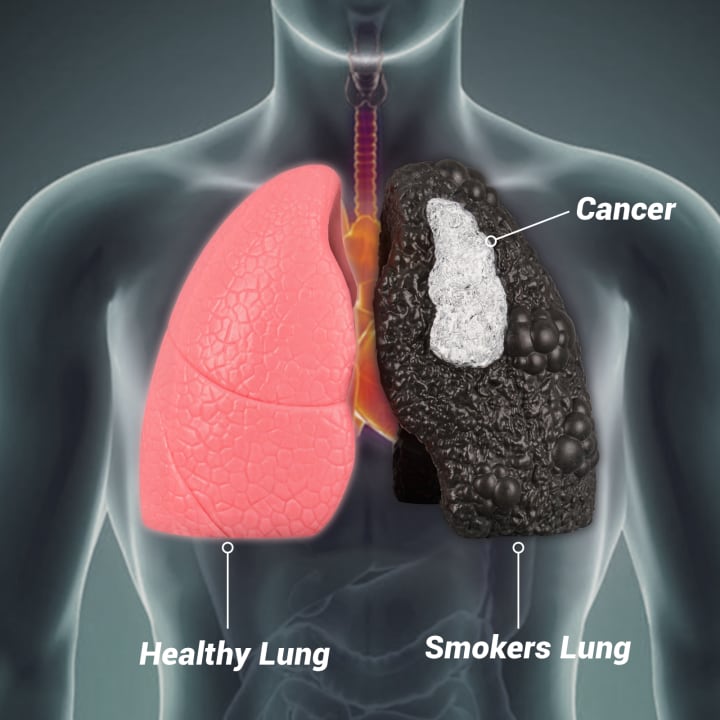
Ultrassist Healthy Lung vs. Smoker's Lung Model Set
This dual model lets educators demonstrate the difference in lung tissue before and after prolonged tobacco use. It's perfect for explaining:
- The restoration of lung elasticity
- Improved gas exchange
- Decrease in tar buildup over time
The contrast is powerful, especially for smokers who are uncertain if it's "too late to quit." It shows that healing is possible, even after years of damage.
Ultrassist Cough Up Lung Model
This hands-on model simulates the effects of mucus congestion and chronic inflammation due to long-term smoking. It's ideal for:
- Demonstrating what improved airflow feels like
- Explaining how cilia regeneration helps clear the lungs
- Highlighting symptom relief post-cessation
By showing what the lungs look like before and what they can start becoming after, these models provide hope and a tangible goal.
From Curiosity to Commitment: Helping Patients Take the First Step
Quitting smoking is overwhelming for many. The withdrawal symptoms, the fear of failure, the years of habit - all of these can make patients feel stuck.
But the moment they see what their lungs are doing to survive - and how quickly the body starts to repair - it reframes quitting from punishment to possibility.
That's the power of realistic lung education.
Whether you're a nurse in a primary care setting, a respiratory therapist, or a school health educator, these tools help you connect better and teach deeper.
Visualize the Comeback, Not Just the Damage
So much of smoking education focuses on disease - and rightly so. But quitting is a victory. The human body is remarkably resilient.
Let your patients and students see that with their own eyes.
Because sometimes, knowing you can heal is the first real reason someone needs to try.
About the Creator
Ultrassist
We're Ultrassist, creators of realistic medical training models for nursing, EMS, and trauma care. Our blog offers tips, tutorials, and insights to support hands-on learning. Visit ultrassist.com for more.
Keep reading
More stories from Ultrassist and writers in Education and other communities.
Why EMS Training Requires Realistic IO Trainers
Why EMS Training Requires Realistic IO Trainers In emergency medical services (EMS), seconds matter. When a patient is in shock, cardiac arrest, or severe trauma, establishing rapid vascular access can mean the difference between life and death. While intravenous (IV) access remains the first choice in many cases, it often fails in critical situations. This is why intraosseous (IO) access has become a core life-saving skill for EMS professionals.
By Ultrassist13 days ago in Education
Rabbi Shlomo Slatkin, M.S., LCPC on Imago Dialogue, Repair, and Relationship Safety
Rabbi Shlomo Slatkin, M.S., LCPC, is founder and therapist at The Marriage Restoration Project in the Baltimore area. An ordained rabbi and Certified Imago Relationship Therapist and workshop presenter, he guides couples through intensives, retreats, and counseling aimed at restoring safety, communication, and connection after conflict or crisis. He holds a master’s in Counseling Psychology from Loyola University Maryland and trained with the Imago Relationship Institute. Slatkin earned a B.A. in Middle Eastern Studies, with undergraduate study at George Washington University and Oxford, and authored The Five Step Action Plan to a Happy & Healthy Marriage. He also co-edited curricula.
By Scott Douglas Jacobsenabout 6 hours ago in Education
Why UMPCO Fasteners Still Solve Critical Aerospace Problems Today
When I started researching legacy aerospace fastener manufacturers, I wasn’t just looking for brand names—I was looking for solutions to real aviation problems. Structural failure, vibration fatigue, corrosion at altitude, and long-term reliability are challenges that every aerospace engineer eventually faces. One name that repeatedly surfaced in technical documentation and historical aerospace supply chains was UMPCO fasteners.
By Beckett Dowhan7 days ago in Education


Comments
There are no comments for this story
Be the first to respond and start the conversation.