
What future trends will drive growth in real estate tokenization development and platforms?
Key Future Trends Accelerating the Growth of Real Estate Tokenization Development and Platforms

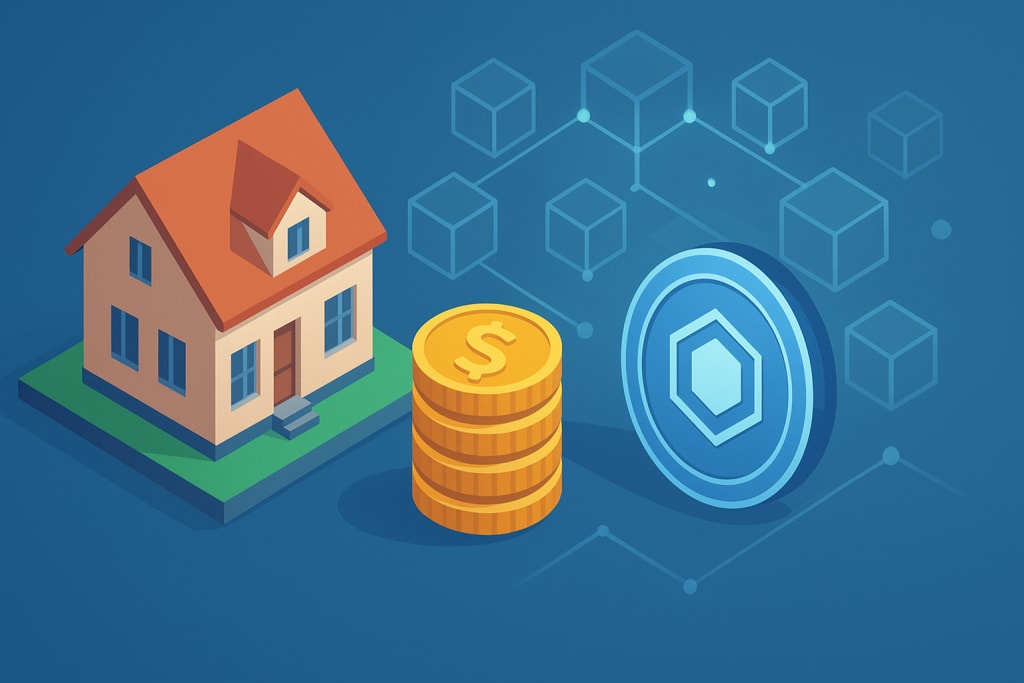
Real estate tokenization is increasingly recognized as one of the most transformative applications of blockchain technology for traditional asset markets. By converting real-world property rights into digital tokens on a distributed ledger, tokenization unlocks fractional ownership, improved liquidity, transparency, and global access to real estate investment. While still in its early stages, tokenization has already begun reshaping how commercial and residential property investments are structured, accessed, and traded.
To understand the long-term potential of tokenization, it’s essential to look beyond the present. A complex convergence of technology, regulation, investor demand, and market innovation is creating an environment ripe for massive growth. The trends driving this expansion will not only shape how tokenized real estate markets evolve but also determine how capital flows into digital property assets across retail, institutional, and cross-border investor segments.
This article explores the most pivotal trends driving future growth in real estate tokenization development and platforms, explaining why these forces are critical and how they shape the next phase of digital asset finance.
Fractional Ownership and Broader Market Participation
Fractional ownership remains one of the strongest growth drivers for real estate tokenization. By dividing property value into smaller, tradeable digital units, tokenization reduces investment barriers and enables participation from a much wider audience. Retail investors can gain exposure to premium real estate assets without committing large amounts of capital, while institutional investors benefit from flexible portfolio construction. This structural shift expands the investor base, increases transaction velocity, and supports faster capital formation for property developers.
Regulatory Maturity and Compliance-Driven Platforms
The evolution of regulatory clarity is expected to significantly boost adoption. Governments and financial authorities are increasingly defining legal classifications for tokenized real estate assets, distinguishing them from speculative cryptocurrencies. As compliance standards around investor protection, identity verification, taxation, and reporting become more standardized, tokenization platforms can operate with greater certainty. Regulation-focused platform architectures will play a central role in attracting institutional investors and enabling long-term market stability.
Secondary Markets and Improved Liquidity
Liquidity has historically been one of real estate’s biggest constraints. Tokenization addresses this by enabling secondary trading of property-backed tokens on compliant digital marketplaces. These secondary markets allow investors to buy and sell fractional ownership positions more efficiently, improving price discovery and reducing exit timelines. As liquidity deepens, real estate becomes more comparable to traditional financial assets, which further enhances its attractiveness to active investors.
Smart Contract Automation and Operational Efficiency
Smart contracts are a foundational component of real estate tokenization platforms. They automate ownership transfers, rental income distribution, dividend payments, and compliance enforcement. This automation reduces reliance on intermediaries, lowers administrative costs, and minimizes human error. Over time, smart contract-based workflows will become increasingly sophisticated, enabling complex real estate structures to be managed transparently and efficiently on-chain.
Cross-Border Investment Enablement
Tokenization significantly reduces geographical barriers to real estate investing. Investors can participate in international property markets without navigating traditional cross-border complexities such as banking friction, settlement delays, or jurisdictional inefficiencies. Blockchain-based platforms can embed multi-jurisdiction compliance rules, making global participation more seamless. This trend is expected to channel new capital into both emerging and established real estate markets.
Hybrid Tokenization Models
Rather than fully replacing traditional ownership structures, many projects are adopting hybrid models that combine conventional legal frameworks with blockchain-based token issuance. In these structures, tokens may represent economic rights such as rental yield or revenue participation, while legal ownership remains within established entities. Hybrid models offer flexibility, reduce legal friction, and make tokenization more accessible to conservative investors and legacy real estate operators.
White-Label and Modular Tokenization Platforms
The rise of white-label and modular tokenization platforms is accelerating adoption by reducing development complexity. These platforms provide ready-made infrastructure, including smart contract templates, investor dashboards, compliance modules, and marketplace integrations. Businesses can launch tokenized real estate offerings faster and at lower cost, driving market expansion and innovation across different property segments.
Multi-Chain and Interoperable Infrastructure
Future real estate tokenization platforms are increasingly being built with multi-chain support. This allows assets to be issued, managed, and traded across different blockchain networks, optimizing for scalability, cost efficiency, and security. Interoperability ensures that tokenized real estate assets are not confined to a single ecosystem and can participate in broader digital asset markets, including decentralized finance applications.
ESG-Focused and Sustainable Real Estate Tokenization
Environmental, social, and governance considerations are becoming more influential in investment decisions. Tokenization platforms are responding by integrating ESG metrics directly into asset disclosures. Tokenized properties that emphasize sustainability, energy efficiency, or social impact can attract a growing segment of values-driven investors. Transparent, on-chain ESG reporting enhances trust and aligns real estate tokenization with global sustainability goals.
Institutional Adoption and Traditional Finance Integration
Institutional participation is expected to be a major catalyst for growth. As banks, asset managers, and financial infrastructure providers integrate blockchain-based real estate products into their offerings, tokenization will gain credibility and scale. Institutional involvement brings deeper liquidity, improved governance standards, and stronger market infrastructure, pushing real estate tokenization closer to mainstream financial adoption.
Conclusion
The growth of real estate tokenization development and platforms is being driven by a convergence of technological innovation, regulatory progress, and shifting investor expectations. Trends such as fractional ownership, liquidity through secondary markets, smart contract automation, cross-border accessibility, and institutional participation are reshaping how real estate assets are structured and traded. As these forces continue to evolve, real estate tokenization is positioned to become a foundational layer of the global property investment ecosystem, offering a more efficient, transparent, and inclusive future for real estate markets.
About the Creator
Gabrielle
Blockchain enthusiast and NFT writer dedicated to merging technology with art on decentralized platforms, driving innovation for a creative future. Embracing the potential of digital expression.
Beyond the Resume: How to Assess Startup Teams When Backgrounds Fall Short
Investors and partners often begin evaluating startup teams by scanning resumes, titles, and past employers. While experience offers helpful signals, it rarely tells the full story in early-stage ventures. Startups operate in uncertain environments where adaptability and judgment matter as much as credentials. Therefore, relying solely on experience can lead to missed opportunities or misplaced confidence.
By Rushi Mancheabout 12 hours ago in Education
Best Laptop for Digital Art
In the vibrant world of digital art, the right laptop can be your greatest creative ally. Whether you're sketching breathtaking illustrations, designing compelling graphics, or animating entire worlds, you need more than just a machine you need a digital canvas that brings your ideas to life.
By Home Care Ranks2 days ago in Education




Comments
There are no comments for this story
Be the first to respond and start the conversation.