
What does loneliness do to the mind, and how do individuals deal with it effectively?
loneliness do to the mind
Loneliness is often mistakenly perceived as a temporary emotional condition, something which will pass with the passage of time. But clinical observation and research establish that loneliness can actually be a profound psychological experience—one with a significant impact on mental and physical well-being when it lasts or remains unresolved.
With hyper-connectivity, it would be expected that loneliness was being viewed on a massive scale. Social media creates an illusion of social contact, but remote work and urban dwelling reduce real human interactions. The overall effect is an emerging plague of loneliness that claims all ages and demographics.
This answer explores the psychological impacts of loneliness, how loneliness is distinct from solitude, and most importantly, offers ways of healing and re-establishing connection in a meaningful way.
Loneliness is more than mere aloneness
Loneliness isn't determined by the quantity of people that surround you, but rather the quality of your relationships. A person may be surrounded by friends, family, or coworkers and yet experience a deep sense of loneliness if those relationships are not very emotionally fulfilling or understood.
Psychologists would define loneliness as the unpleasant state created by a discrepancy between the amount or quality of wanted social relations and that perceived by an individual. It is an interpersonal emotional state, typically involving feelings of:
Feeling misunderstood
Being alone in a crowd
Not having intimacy or emotional closeness
Perceiving one's pain or experience being noticed or acknowledged by others
Solitude, on the other hand, is a chosen and often renewing state. Solitude may provide clarity, creativity, and peace. Loneliness, though, is defined by unwanted solitude and the pain of unmet connection.
The Psychological Effects of Loneliness
Loneliness is not just an emotion—it's a risk factor for a wide range of mental illness. Prolonged loneliness may:
1. Contribute to Depression and Anxiety
People who experience chronic loneliness are significantly more likely to develop depression. The internal narrative often becomes: “No one understands me,” or “I’m not worth connecting with.” These beliefs erode self-esteem and can lead to despair or social withdrawal.
Anxiety also tends to increase, particularly social anxiety, which can make it harder to reach out even when support is available.
2. Impair Cognitive Functioning
Loneliness affects the way we think. It increases rumination—the tendency to dwell on negative things that occurred or even to fantasize the worst. It creates a feedback loop of worry, shame, and more loneliness over time.
Chronic loneliness has also been linked to memory loss and cognitive decline in old age.
3. Disrupt Sleep and Increase Stress
The emotional hurt of loneliness activates the brain's stress response system. Excessive levels of cortisol can lead to insomnia, lethargy, and dampening of the immune system. People might be tired but alert and emotionally drained without even knowing it.
4. Boost Risk of Substance Abuse
To cope with the pain of loneliness, individuals may turn to alcohol, drugs, or addictive behaviors such as over-watching, playing games, or eating emotionally. These offer temporary solace but typically exacerbate the inherent loneliness in the long run.
Why Loneliness Is So Widespread Nowadays
Understand what causes modern loneliness to reduce its stigma. Some common factors are:
Digital dependence: Technology may unite us, but in doing so, it tends to replace one-on-one interaction with shallow relationships.
Cultural emphasis on independence: Cultures that emphasize self-reliance may shame vulnerability, making it harder for people to admit that they require emotional connection.
Threshold life changes: Moving to a new city, starting college, divorce, loss of a job, or becoming a parent may all trigger loneliness.
Mental illness: Depression, anxiety, or trauma might cloud perception and make it harder to reach out.
Grief or loss: The loss of a loved one creates an emotional vacuum that can't be filled.
How to Cope with Loneliness in a Healthy and Empowering Way
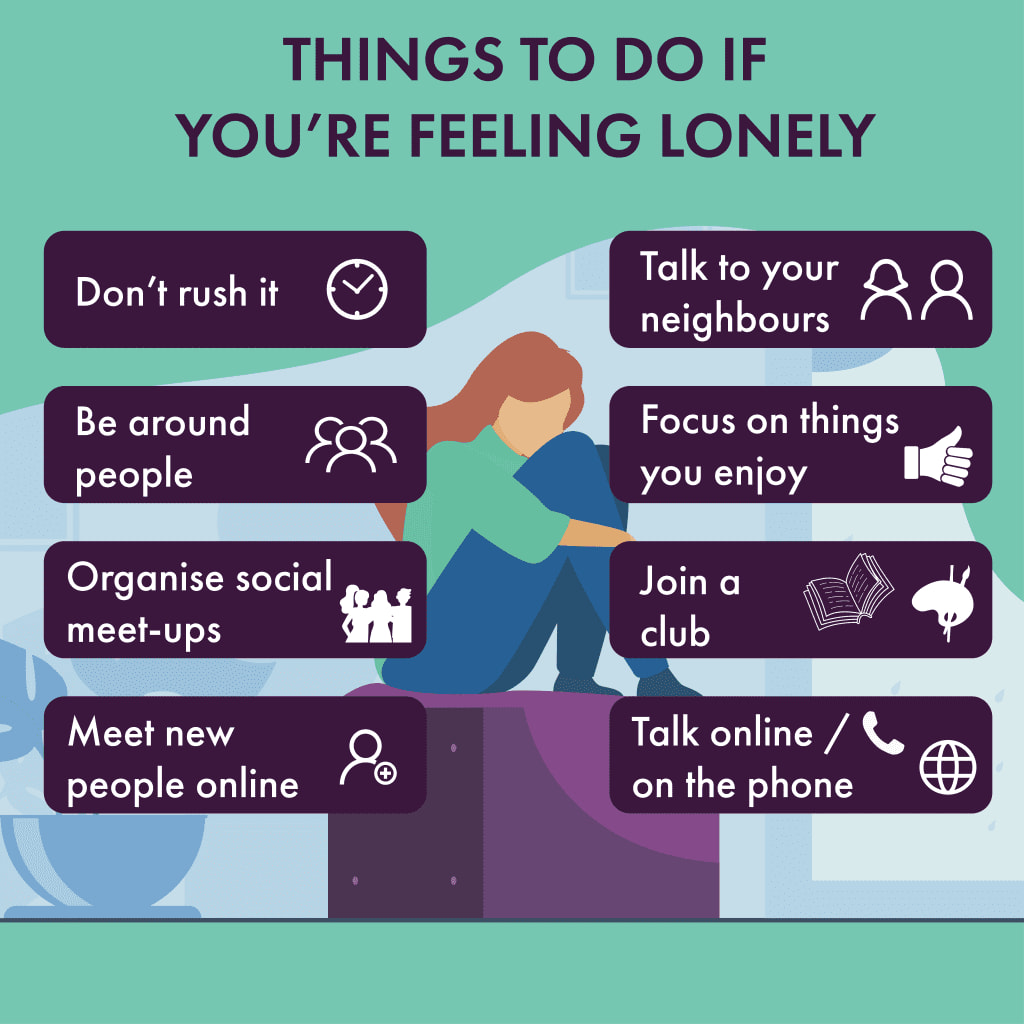
While loneliness is a suffocating reality, there are concrete and compassionate steps individuals can take to negate its impact and reestablish a sense of connection.
1. Identify and Validate the Feeling
The first step to healing is to admit the loneliness without judgment. Most individuals feel ashamed to acknowledge that they are lonely and believe it means there is something wrong with them or that they are not lovable.
In reality, loneliness is a natural human emotion. It detracts nothing from you—it simply means your deep connection needs aren't being fulfilled.
Remind yourself: "It's okay to feel lonely. It's a signal, not a defect."
2. Reconnect With Yourself First
At times, the loneliest moments are when we feel disconnected from who we are. Activities that reconnect with self-awareness and self-compassion include:
Journaling about your feelings and thoughts
Meditative walk or breathwork
Finding your own interests, hobbies, or passions
Repeating affirmations that remind you of value
When you connect with yourself, you're more of you in relationships and can create deeper connections more naturally.
3. Establish Small Social Contact
If contact feels too much, start in tiny increments:
Smile at the neighbor
Talk to a barista or cashier
Message an old buddy
Attend a local event or class
Consistency beats intensity. As the weeks pass, these micro-contacts build confidence and wear away social anxiety.
4. Connect with Support Groups or Community
Loneliness dissipates when we realize we are not alone. Join:
Therapy groups or mental health groups
Hobby clubs (book clubs, art clubs, exercise groups)
Volunteer groups
Faith or spiritual groups
Common activities make a connection. Helping others might even shift your focus outwards and boost self-esteem.
5. Have Realistic Expectations for Connection
All social contacts do not need to evolve into deep friendships. Learn to enjoy different degrees of connection:
Casual friends for casual chat
Friends for group activities
Close friends for emotional support
Let relationships evolve at their own pace, without pressuring yourself and others.
6. Limit Comparisons and Social Media
Social media can make loneliness worse by presenting others' lives as easily happy. Remember that what others share is typically filtered, not the full picture.
Try to break away from apps that bring you down, or block profiles that tempt you to compare with yourself.
7. Seek Professional Assistance When You Need It
If loneliness is chronic, interfering with your sleep, self-esteem, or mood, it's a good idea to speak with a mental health professional. Therapy can assist in:
Recognizing cognitive distortions that perpetuate isolation
Increasing social skills and confidence
Working through trauma or grief that might be standing in the way of connection
Creating a customized coping plan
There is no need to feel ashamed to seek guidance. Therapists are schooled to welcome you where you're at—with compassion, not criticism.
8. Develop a Connection Ritual
Develop a daily or weekly habit that fosters connection, including:
A weekly gratitude text to one person
Weekly calls with family and friends
A social calendar of events, even small ones
Writing letters to people you miss or look up to
These habits give a feeling of comfort and connection, even during emotionally stormy times.
Reframing Loneliness as a Signal, Not a Sentence
Think of loneliness not as a sentence, but as a message from your brain: a hint that relationship is key to your well-being. It's hunger, like food or rest—not a defect.
Through kindness, patience, and guidance, you can employ this message to guide you toward healthier, more fulfilling relationships—with others, and with yourself.
You Are Not Alone in Feeling Alone
If you're struggling with loneliness, know this: you are not broken, and you are not invisible. You are a human being with a genuine, healthy desire for human connection. Your desire should be respected—not shamed or stigmatized.
There is hope. There is help. And there are people who care.
For compassionate mental health services and professional counseling, check out:
https://www.delhimindclinic.com/
https://www.craftcmsdeveloper.in/
Reach out to me anytime when you need changes in your Craft website or just want to talk about your Craft project. Free consultation!
About the Creator
Keep reading
More stories from Naveen Garg and writers in Education and other communities.
What is high-functioning anxiety, and how do individuals identify it and cope with it effectively?
In our culture of achievement, individuals who appear to be on top of things, productive, and cool are greatly admired and complimented. But behind the high degree of success, numerous individuals are struggling silently with so-called high-functioning anxiety—a condition more of inner suffering behind a mask of competence.
By Naveen Garg6 months ago in Education
How AI Is Impacting the Jobs of Website Designers and Developers
Artificial Intelligence (AI) is transforming industries across the globe, and the world of website design and development is no exception. From streamlining workflows and enhancing creativity to automating repetitive tasks and reshaping professional roles, AI’s influence is broad and deep. In this article, we explore how AI is impacting website designers and developers — the opportunities it presents, the challenges it introduces, and how professionals can adapt to thrive in an AI-augmented landscape.
By Rajiv Menon3 days ago in Education
Kiranmala: the legend of the princess who considered magic mountain
Long ago, in a land far away, the queen was panicked, her grasp on reality seemingly slipping. She had given birth to two boys and one girl. But to her horror, before even meeting their father, each child vanished, something else taking their place. She faced accusations of witchcraft and demon sorcery. And though the king loved her, he was easily swayed. He soon grew doubtful and banished his wife, who left the kingdom in anguish. Little did they know, the queen’s jealous sisters were the ones to replace the newborns
By Munesh Yadav2 days ago in Education
Center Stage with Paul Stewart
*** I'm keen to republish the interviews I did for my series with Vocal creators. It's been a few years and I thought it might be nice to revisit these wonderful conversations. I'll be releasing them one at a time for a few weeks/months.
By Heather Hubler3 days ago in Interview



Comments
There are no comments for this story
Be the first to respond and start the conversation.