
What do we do in the Universe
Are We Figments of a Cosmic Dream
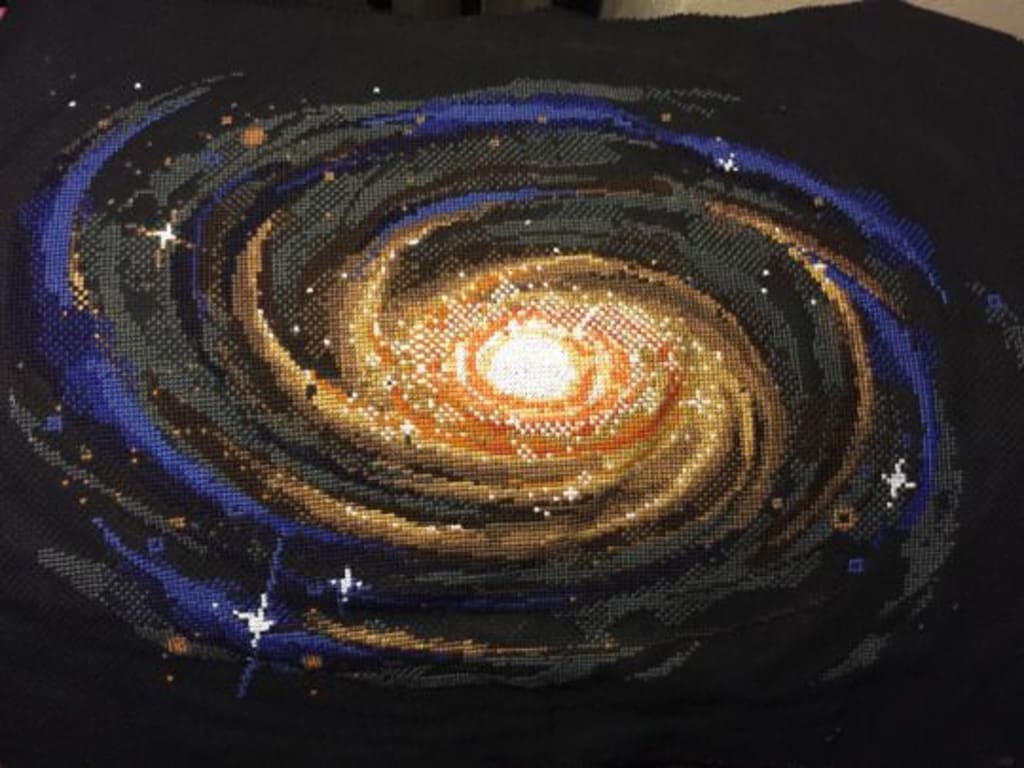
Imagine this: Everything you believe about yourself and the universe might be an illusion. While you think of yourself as a real being in a universe that began 14 billion years ago, creating galaxies, stars, Earth, and ultimately, you, there's a fascinating twist to this tale. What if you, along with everything you think is real, are actually just part of the dream of a deceased universe? It may sound unbelievable, but this concept stems from some of the most profound scientific theories about our universe. So, let's dive into the fascinating world of quantum mechanics, the distant future of the cosmos, and the peculiar notion that you could be a floating brain.
To grasp this intriguing idea, let's start with three essential concepts. First, consider the Arrow of Time. What sets the past apart from the future? Picture dropping a red ink droplet into a glass of water. The ink gradually spreads throughout the water, but it never spontaneously gathers back into a single droplet. Time appears to move in the direction where the ink spreads. However, at the microscopic level, there are no strict rules governing the direction of time. Each particle's motion can occur in reverse. So, why do we perceive time as flowing in one direction?
The answer lies in probability. When ink molecules disperse in the glass, they can occupy various spatial configurations, resulting in numerous potential combinations. Just like your chances of winning the lottery increase with more tickets, the likelihood of ink molecules filling the glass is much higher than the chance of them forming a droplet again. In fact, witnessing the ink spontaneously turning into a droplet would require an astronomical amount of time – 1 followed by one hundred sextillion zeros.
Now, let's shift our focus to the future of the universe. Our cosmos was born from the Big Bang and has been expanding and evolving for over 14 billion years. However, it's not a static entity; the universe is expanding at an accelerating pace due to dark energy, causing matter to become more and more diluted. In roughly 100 trillion years, the last star will extinguish, and the universe will enter a phase dominated by dark energy.
In this unimaginably distant future, the universe will appear as a vast expanse of space, nearly devoid of matter and expanding rapidly. Surprisingly, it will develop a cosmic horizon – a boundary beyond which nothing, not even light, can reach. Essentially, the universe will resemble an inside-out black hole, emitting Hawking radiation just like black holes do. Over an inconceivable span of time, this radiation will replenish the universe with particles.
Now, let's introduce the concept of eternity. With eternity at our disposal, even the most improbable events can occur. Particles in the universe will collide and combine, much like a monkey randomly typing on a typewriter. Most of the time, it will produce nonsense, but given sufficient time, it could generate the first acts of Hamlet or even the complete works of Eminem.
Here's where it gets truly mind-bending: if our universe can generate random arrangements of particles, what might they create? Could these fluctuations give rise to planets, galaxies, or even quirky universes with bizarre glitches? Perhaps you're living in a "pop-up universe" – one that spontaneously emerged by chance rather than evolving from a Big Bang.
However, not all fluctuations have equal probabilities. Smaller fluctuations are more likely than grandiose ones. Surprisingly, the emergence of a human brain is much more probable than that of a galaxy. The astonishing implication is that you might be a disembodied brain, formed by chance in a dead universe, complete with your knowledge and memories.
The idea that you're a floating brain in a universe that randomly came into existence may be perplexing, but it raises captivating questions about our understanding of the cosmos. Nevertheless, this mind-boggling notion is a thought experiment in physics, showcasing the vast potential of the human mind. Ultimately, you're most likely not just a creation of a deceased universe's imagination, at least in all probability.
The universe, with its vastness and enigmas, continues to challenge our comprehension. While the notion of being a floating brain is a captivating mental exercise, it underscores the boundless possibilities and uncertainties that lie ahead as we explore the cosmos. So, rest assured, you're probably not merely a figment of a dead universe's reverie.
About the Creator
Keep reading
More stories from Mariam Melikidze and writers in Education and other communities.
Birth of our Solar System
The night sky, adorned with twinkling stars, has always captivated human imagination. But beyond the distant constellations lie celestial wonders much closer to home—our very own solar system. This remarkable expanse, spanning billions of kilometers, comprises not only the Sun but also a diverse family of planets, moons, asteroids, and comets. Join us on an awe-inspiring journey as we unveil the origins, characteristics, and captivating stories of our solar system's eight planets.
By Mariam Melikidze2 years ago in Education
Emerging Financial Planning Shifts Advisors Must Use to Improve Client Outcomes
Financial planning continues to evolve as market conditions shift, technology advances, and client expectations expand beyond traditional investment guidance. Today’s clients want comprehensive plans that address more than assets and returns. They seek clarity, long-term stability, and strategies that adapt to changing life circumstances. For financial advisors, staying informed about the latest trends is essential to providing high-quality service and achieving stronger client results. Understanding these new trends allows advisors to create more personalized financial plans, improve communication, and deliver measurable value.
By Lee Generous6 days ago in Education


Comments
There are no comments for this story
Be the first to respond and start the conversation.