
What are the various education boards are there in India?
In this blog, we will take you through the different Education Boards in India.
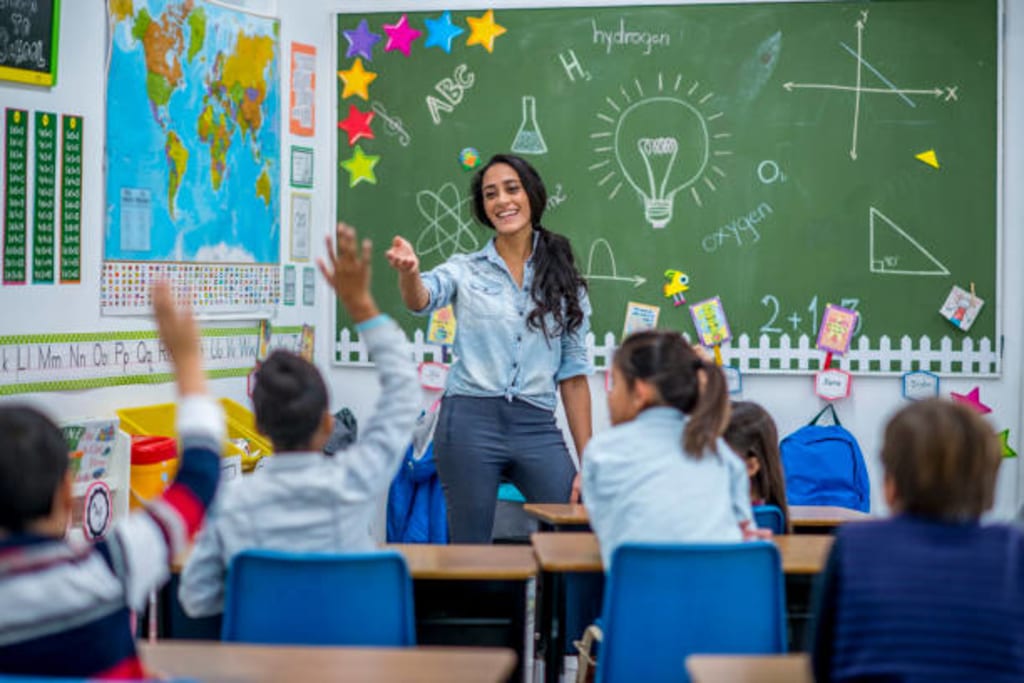
India has many educational boards, some of which have been around for a very long period. Each Board has its own approaches to curriculum, instruction, and exam administration that support students' entire growth. Parents frequently struggle to choose the best education board for their kids. You can find out everything you need to know about the many Indian educational boards in this post.
Different Education Boards in India:
1. State Boards
2. Central Board of Secondary Education (CBSE)
3. Indian Certificate of Secondary Education (ICSE)
4. International Baccalaureate (IB)
5. International General Certificate of Secondary Education (IGCSE)
6. National Institute of Open Schooling (NIOS)
State Boards
Every State has its own State Boards, which adhere to its own syllabus and ranking standards. The main education boards in India each have their own educational strategies, which results in differences in the curricula from one state to the next. It places a focus on regionally relevant topics and local content that enables students to prepare for state-level engineering and medical admission exams. In comparison to numerous other boards, the syllabus is often restricted. Regional heritage and languages have a significant part in the curriculum. Recent state board directives mandated that all schools use only NCERT textbooks, which are crucial for students preparing for all-India exams.
Central Board of Secondary Education (CBSE)
One of India's most renowned and possibly most well-known education boards is the Central Board of Secondary Education (CBSE). Since it relates to establishing traditional teaching frameworks for most schools across the country, CBSE has succeeded in doing this. Numerous private and public schools across subscribe to this national level board. Exams are given by the Board to both regular and private students. Candidates who are interested in remote learning can register for admissions and apply for evaluations. After the tenth grade, CBSE offers its students a variety of courses in the humanities, sciences, and business. Students can submit applications to numerous universities for higher education after graduating from class twelve.
Indian Certificate of Secondary Education (ICSE)
In India, a private education board of administers the Indian School Certificate Examination. The purpose of this board is to offer an English-medium general education examination in compliance with the New Education Policy 1986 (India) recommendations. Candidates who plan to take the exam must complete one to three papers in each of six disciplines. Consequently, depending on the disciplines, there are eight to eleven papers in total. Results for the ICSE exam only consider the top five topics. But English marks are always required and inclusive.
IB School
With its headquarters in Geneva, Switzerland, the International Baccalaureate (IB) is a privately run global educational foundation. It offers three main programmes: a primary year programme for students in grades KG through 5, a middle year programme for students in grades 6 through 10, and a diploma programme for students in grades 11 and 12. The 144 nations where this board is offered have around 3500 schools on it. Without having to take several additional tests, the IB board assists pupils in applying to overseas universities. Students are taught analytical abilities, language, the arts, and humanities in its curricula. To prevent a fragmented approach, the disciplines are taught in this setting in an integrated manner. Typically, parents who intend to relocate overseas favour IB.
International General Certificate of Secondary Education (IGCSE)
Students can prepare for the International Baccalaureate and Cambridge Assessment International Education (CAIE) A-level through the private, internationally accepted International General Certificate of Secondary Education (IGCSE) programme. There are essentially four exam types: Cambridge Primary for students in the fifth through eleventh grades, Cambridge Secondary 1 and Cambridge Secondary 2 for students in the twelveth through sixteenth grades. It provides students with two pathways: Cambridge IGCSE and Cambridge O Level, as well as Cambridge Additional for students between the ages of 16 and 19 who need advanced study to get ready for college and higher education. Students then have the option of enrolling in Cambridge Pre-U or Cambridge International AS and A Level. The tests are administered by the University of Cambridge International Examinations, and this board has members in 120 nations.
National Institute of Open Schooling (NIOS)
The National Institute of Open Schooling (NIOS), which was founded in 1989, is a government-run open school that enables students to study online or even restart their education if there has been a lapse in their studies. This board's main objective is to improve distant communities' access to education. Open Basic Education (OBE) includes classes 3 through 8 in the primary grades. Basic math, environmental science, and computer abilities are all covered here. At least five subjects and a language must be taken from each of the two basic groupings for grade 10. In grade 12, there are additional alternatives available in the humanities, sciences, and business. Then, the students choose one or two from each of the five groups that were created.
Conclusion:
Students today in India have a variety of education boards to pick from while choosing a curriculum. It can be challenging to find the right education board in India, though. Choosing the best curriculum may be one of your many alternatives, but you also need to consider several other factors, such as the extracurricular activities that are given, the cost, and the future aspirations of your children. I recommend the Soundarya School in Bangalore, which offers both CBSE and state board education along with excellent other facilities that can assist your child develop more fully. We sincerely hope that our advice on selecting the best education board for your child helped you.
About the Creator
Keep reading
More stories from Swati naik and writers in Education and other communities.
8 interesting extracurricular activities that will advance your child's career
Even after a long day at school, your child won't be content if that's the only thing to keep her entertained. Extracurricular activities become important at this point. Your child will gain a lot from engaging in a non-academic activity she enjoys after a food and some downtime. She has a variety of options, including sports, chess, dance, literature, and music clubs. Your child will undoubtedly discover something she enjoys!
By Swati naik3 years ago in Education
What your poop can tell you about your health
The average person poops out approximately 11,030 kilograms of cumulative waste. That's the equivalent of more than six SUVs. Now, oftentimes, that poop is brown. But why is that, considering all the colorful comestibles one consumes? And what's going on when poop appears in different colors and textures? Say you’re eating a beautiful, rainbowy salad. Your teeth and saliva first help break down the food and add lubrication. Each bite enters your esophagus and sequential muscle contractions push it towards your stomach.
By Munesh Yadav2 days ago in Education
Adding Tech to Ed
Technology is reshaping education in ways that were unimaginable just a generation ago. While access to quality learning was once limited by geography, income, language, or physical ability, digital innovation is steadily removing many of those barriers. Today, technology is not simply enhancing classrooms—it is expanding who education is for, when it happens, and how it is experienced. By increasing flexibility, personalization, and inclusion, technology is making education more accessible to learners of all ages and backgrounds.
By Dennis Muizers Lovejoy5 days ago in Education


Comments
There are no comments for this story
Be the first to respond and start the conversation.