
What are some tips to consider while selecting a dissertation topic?
Topic Selection

Introduction
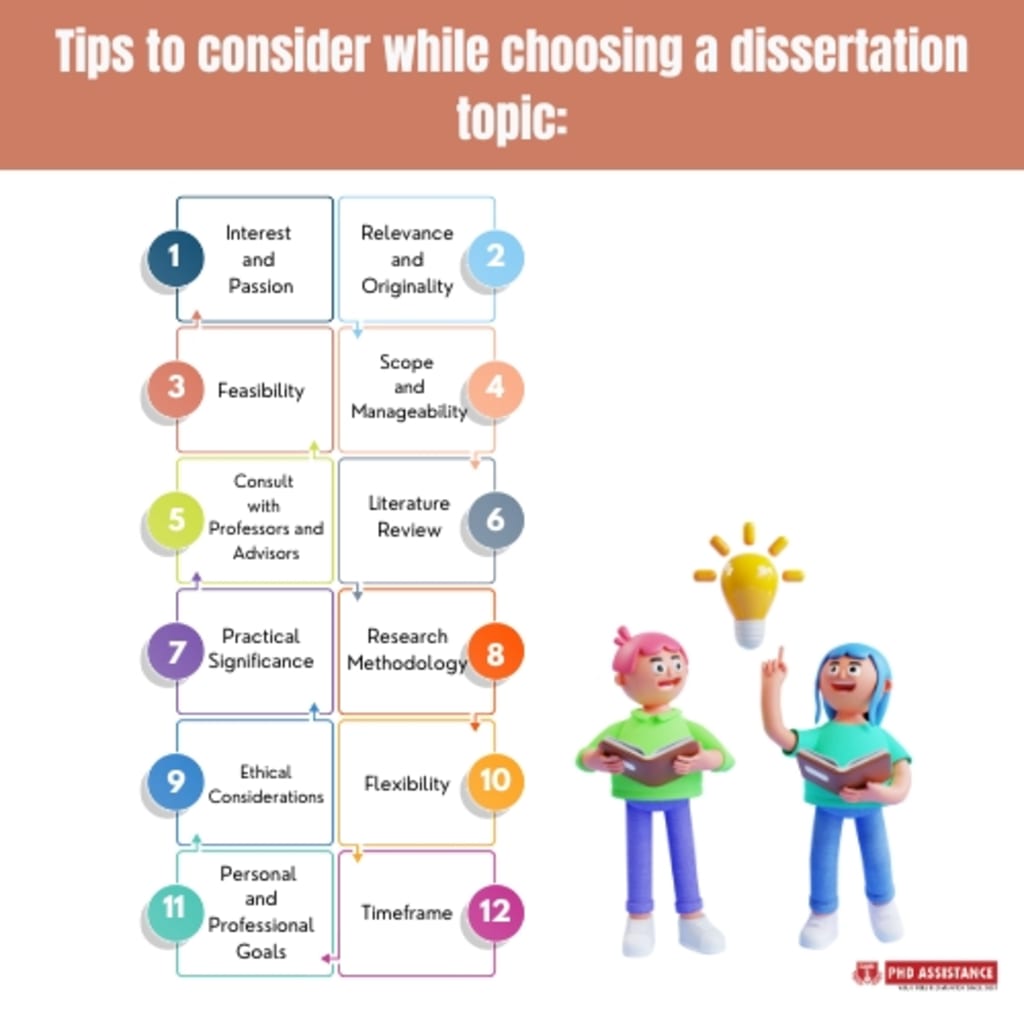
Selecting a dissertation topic is a crucial decision that can significantly impact your academic and professional journey. Here are some tips to consider while choosing a dissertation topic:
1. Interest and Passion: Choose a topic that genuinely interests you and aligns with your passion. A dissertation is a long and intensive project, and staying motivated becomes easier when you are genuinely curious about the subject matter.
2. Relevance and Originality: Look for a topic that is relevant to your field of study and has the potential to contribute something new to the existing body of knowledge. Aim for originality and avoid topics that have been extensively explored unless you have a unique perspective or approach.
3. Feasibility: Assess the feasibility of your topic in terms of data availability, research resources, and time constraints. Ensure that you can access the necessary information and conduct research effectively.
4. Scope and Manageability: The topic should be neither broad nor narrow. A broad topic might lead to overwhelming data, while a very narrow one might limit your research options. Find a balance that allows for in-depth analysis within a reasonable scope.
5. Consult with Professors and Advisors: Seek advice from your professors and academic advisors. They can provide valuable insights, guide you towards potential topics, and help refine your ideas.
6. Literature Review: Conduct a thorough literature review to understand what has already been studied in your chosen area. Identify gaps in the existing research that your dissertation could address.
7. Practical Significance: Consider the practical significance of your topic. Will your research findings have implications or applications in real-world situations? Practical relevance adds value to your work.
8. Research Methodology: Consider the research methods you will employ to answer your research questions. Make sure you have a clear idea of how you will collect and analyze data.
9. Personal and Professional Goals: Consider how your dissertation topic aligns with your long-term personal and professional goals. Will it contribute to your career aspirations or academic interests?
10. Flexibility: Keep in mind that your research might take unexpected turns during the dissertation process. Choose a topic that allows flexibility and adaptation as you delve deeper into the subject.
11. Ethical Considerations: Be aware of any ethical considerations related to your research topic. Ensure that your study adheres to ethical guidelines and safeguards the rights and well-being of participants, if applicable.
12. Timeframe: Assess the time required to complete your dissertation—factor in any potential delays or challenges that may arise during the research and writing process.
By considering these tips, you can increase the likelihood of selecting a dissertation topic that engages your interest and makes a valuable contribution to your academic discipline. Remember that your chosen topic will influence your academic journey, so invest time and thought into making the right decision.
Conclusion
Selecting a dissertation topic is a crucial decision that requires careful consideration and analysis. It requires a balance of personal interest, academic relevance, and feasibility. A dissertation topic driven by genuine interest and passion fuels motivation, while practicality and manageability are essential. Consulting with experienced professors and advisors helps refine research objectives. Maintaining ethical considerations and aligning the chosen topic with personal and professional goals demonstrates a commitment to academic integrity.
Flexibility in adapting to unexpected challenges ensures dynamic research. Students should embrace the opportunity to contribute to their academic discipline while honing research and analytical skills. The journey of writing a dissertation is not only about the outcome but also about the growth and learning experience throughout the process.
About the Creator
Keep reading
More stories from phd Assistance and writers in Education and other communities.
What Are The Best Way To Write A PhD Research Proposal
Introduction A PhD research proposal is a structured and formal document that explains the research plan and the relevance of your study to the research subject. The document is submitted to your university before the commencement of your research, and you must demonstrate the originality of your research and your passion for the subject. The university approves your PhD study based on the research proposal, so it is important to present a well-written proposal.
By phd Assistance3 years ago in Education
What is Affiliate Marketing: A Beginner's Step-by-Step Guide
Affiliate marketing is a performance-based online business model that generates over $12 billion annually in the U.S. alone and continues to grow as e-commerce expands. At its core, affiliate marketing allows individuals to earn commissions by promoting products or services created by other companies. Affiliates share unique tracking links through websites, blogs, social media, email lists, or videos, and earn a percentage of each sale or action completed through those links. Because affiliates don’t handle product creation, inventory, payment processing, or customer support, it’s one of the most accessible ways to monetize an online presence.
By Mohammad Sufyaan3 days ago in Education




Comments
There are no comments for this story
Be the first to respond and start the conversation.