
What Are Nitazines and Why Are They Dangerous?
What You Need to Know


Introduction
The purpose of this article is to give concise, accurate, and scientifically sound information about nitazenes since they represent a class of substances that can already pose a serious threat because of their efficacy and toxicity. It is intended as a harm minimisation strategy and in the best-case scenario, a lifesaving intervention. As much as we do not support or advocate for drug use in whatever form, we are aware of the need to give those who use drugs, their families, friends and health carers accurate and credible information.
The appearance of nitazenes has sparked some major issues to health and safety, especially in areas that experience increased drug use. These synthetic opioids are stronger than traditional opioids, and therefore, tiny quantities of the substance become fatal. These drugs, accidental or otherwise, are present in street drugs making users more vulnerable, and so to protect them all, both providers and users, clinicians and patients, colleagues and administrators, need to be prepared for the signs of overdose, for safe behaviours and potential practices, and for the availability of support.
This article is not an authoritative textbook; it offers users the most recent research, risk minimization techniques, and recommendations. One must fully understand that lessening the adverse effects connected with substance abuse does not mean endorsing the use of these substances, but rather acknowledging that for one reason or another, they are still going to be used. If we provide them with effective instruments and knowledge, the hazards can be minimized, and the frequency of such failures might be lowered. Our vision is to make sure that no one is devoid of the information he or she needs to be safe or save the people they care about.
What Are Nitazenes?
Nitazenes, as a group of synthetic opioids, are classified into the 2-benzylbenzimidazole class of chemical compounds. First synthesized during the last decade of the fifties as possible analgesics of the opium alkaloid family, nitazenes have never been used therapeutically and remain unknown to the majority of physicians. However, in the recent past, these powerful chemicals have made their appearance in the illegal drug industry and they are very dangerous to people who take them. They have recently been reported to have entered the market through street drugs, which has caused a rise in overdose cases due to the high potency of normal opioids such as morphine or heroin.
The nitazenes are not only potent opioids but also very toxic since small doses may cause life-threatening respiratory depression and overdose. This class of opioids is several times more potent than morphine, and some nitazenes are 10 to 100 fold more. Thanks to this extremely high potency, it is relatively easy for users to consume a fatal dose of nitazenes, even if nitazenes are combined with other substances or concealed in heroin or counterfeit pills. Because nitazenes are sometimes not disclosed in drug testing, their use is usually disguised and people cannot measure the amount of danger they are in.
What is relevant to understand is the ineffable characteristic of these drugs: unpredictability. They are not easy to recognize because they retain a similar level of resemblance as the other opioids; the impact they have can also vary depending on the dosage and levels of tolerance. This variability raises the danger of overdose and illustrates why nitazenes are so risky for those who do not know what they are taking. As with many synthetic drugs, its testing is not regulated and sometimes it is not even produced according to the standards of medical science itself, making these substances extremely hazardous. Thus, there is a need for campaigns regarding harm reduction as well as awareness of such in a bid to eliminate deaths that arise from nitazene use.
What you need to know now
This is why it is important to know the risks of nitazenes and if you or the person you know uses recreational drugs- be cautious. This comes about because such substances are appearing in the drug supply and may be present for a long time without the knowledge of the users. Nitazenes are synthetic opioids that are highly potent as well as highly unpredictable. While some forms of nitazene are up to several hundred times stronger than morphine and heroin, some of them are highly lethal even in tiny doses. To provide some perspective, certain types of nitazenes can be between 100x more effective than morphine and many, many times more potent than heroin-type opioids. These opioids' potency might make users many times over more likely to overdose even with a high tolerance to other opioids.
As a cross-cutting concern, it should be highlighted that these substances usually make their through the black market as single substances, cut with other substances such as heroin, fake pills or cocaïne. This in turn makes it quite easy for people to unwittingly ingest nitazenes and this could prove fatal. As a result, nitazenes are not easily identifiable in regular toxicology screens and therefore users cannot tell what they are using. That is why the use of such chemicals is considered especially dangerous due to the unpredictability of the effects they produce.
This guide is not designed to make you feel fearful, however, it is intended to provide useful information about measures that you can take to protect yourself. It is important to be aware of the threats and learn measures that can help you avoid such situations. Gaining knowledge on nitazenes and its effects could be the very thing that saves a life, your own, a friend or a family member's.
How Strong Are They?
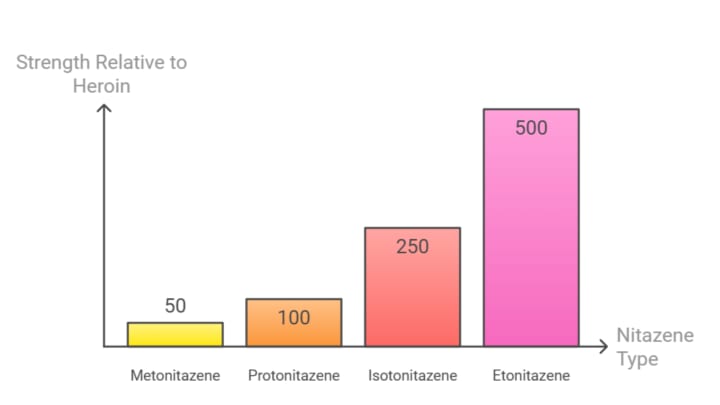
To put their strength in perspective, here's how different nitazenes compare to heroin [4]:
• Metonitazene: 50 times stronger than heroin (similar to fentanyl)
• Protonitazene: 100 times stronger than heroin.
• Isotonitazene: 250 times stronger than heroin
• Etonitazene: 500 times stronger than heroin
Metonitazene, protonitazene, isotonitazene, and etonitazene are synthetic opioids belonging to the benzimidazole class, known for their potent analgesic properties. First synthesized in the 1950s, these compounds have been studied for their potential as pain relievers. However, due to their high potency and associated risks, they have not been approved for medical use and are primarily encountered as illicit substances.
Metonitazene is a synthetic opioid analgesic structurally related to etonitazene. It has been reported to be approximately 1,000 times more potent than morphine when administered centrally and is about 10 times more potent when taken orally. Its effects are similar to other opioids, including analgesia, euphoria, and sleepiness. Adverse effects include vomiting and respiratory depression, which can be potentially fatal. Due to its high dependency potential and dangerous adverse effects, it has never been introduced into pharmacotherapy and is commonly used in the illicit manufacture of counterfeit oxycodone opioid pills.
Protonitazene is a benzimidazole-derived opioid analgesic related to etonitazene. It is an isomer of isotonitazene, distinguished by the substitution at the C4 position of the benzyl moiety with an n-propoxy group. Protonitazene has been synthesized and studied for its opioid receptor activity. However, due to its high potency and associated risks, it has not been approved for medical use and is primarily encountered as an illicit substance.
Isotonitazene is a benzimidazole-derived opioid analgesic related to etonitazene. It has been identified as a designer drug and has been associated with severe toxicity and fatalities. Isotonitazene has been reported to be more potent than fentanyl in activating the mu-opioid receptor, with a potency up to 10 times greater. Due to its high potency and associated risks, it has been linked to numerous overdose deaths and is considered a significant concern in the opioid crisis.
Etonitazene is a benzimidazole opioid first reported in 1957. It has been shown to have approximately 1,000 to 1,500 times the potency of morphine in animals. Due to its strong dependency potential and tendency to produce profound respiratory depression, it is not used in humans. Etonitazene has been useful in animal models for addiction studies, particularly those requiring the animals to ingest the agent, as it is less bitter than opiate salts like morphine sulfate.
These compounds are part of a broader class of synthetic opioids known as benzimidazole opioids or nitazenes. While they have been studied for their analgesic properties, their high potency and associated risks have prevented their approval for medical use. They are primarily encountered as illicit substances and pose significant risks to public health.
For comparison, fentanyl is about 50 times stronger than heroin. This extreme potency means that even tiny amounts can cause an overdose.

Where are the Nitazenes being Found?
Moreover, finding where nitazenes are appearing now is crucial in determining the risk in those areas. Sources have in the recent past reported that these harmful synthetic opioids are present in several regions of the world, they are also becoming more distributed in the black market.
North America: Nitazenes were first identified in the United States and Canada at the end of 2019 and the beginning of 2020. These substances quickly went to various states and were thus considered as leading to health risks. Already in Tennessee, overdose fatalities involving nitazenes increased significantly: from none in 2019 to 42 in 2021. This sharp increase creates a lot of concern especially as these substances are some of the potent substances in the illicit drug market.
Europe: This has also been identified by the presence of nitazenes that are commonly evident across Europe. To date, 21 of 27 states of the European Union and Norway have identified the presence of nitazenes in seized drugs. The UK for instance, reports that there were 179 nitazene-related deaths in the year from June 2023 to May 2024. West Midlands region and the East of England have been worst affected with the highest per density of deaths. The nitazenes' widespread presence in Europe also proves that these substances have now spread all over the world.
South America: In the past years, nitazenes, in particular, have been identified in a significant number of opioid seizures in Brazil and Sao Paulo city in particular. 95 % of opioid samples seized from July 2022 until April 2023 contained Nitazenes underlining the significant Nitazenes penetration in South America.
Asia and Oceania: Although not as frequent, nitazenes have been found in countries in Asia and Oceania indicating the global use of the product.
These reports show how nitazenes have spread across the world and the dangers they bring to societies globally.
What drugs are being mixed with nitazenes ?
Nitazenes have more recently been identified in a wide range of 'street drugs' where they can be found cut with other chemicals or present in admixture. Some of the drugs that have been reported to contain nitazenes include:
1. Heroin: There are three types of nitazenes which have been reported to have been mixed with heroin, which enhances the dangerous and unfixed nature of the substance. People may not know their heroin contains a synthetic opioid that is even more potent than heroin.
2. Fentanyl: Nitazenes may be present in combination with fentanyl, a potent opioid in its group, however, on its own. Enhancing the toxicity of these drugs this combination can intensify the chances of an overdose, both substances seriously affecting the respiratory centre.
3. Counterfeit Prescription Pills: Nitazenes were identified in counterfeit prescription pills which are commonly marketed as oxycodone or other opioids. Such pills may look quite legal but containing nitazenes renders them extremely deadly, because people may take far more potent opioids than they expect.
4. Cocaine: Nitazenes have been detected in some cocaine samples. This presence is new, and it is a trend in combining drugs because of enhanced effects or the feelings produced by opioids.
Nitazenes have also been found in substances like cannabis, new weight loss pills found on the internet and vapes.
Why are Nitazenes being mixed with Recreational Drugs?
There are a few reasons why nitazenes might be added to recreational drugs, despite the risks:
1. Increased Potency: All nitazenes are powerful opioids; the presence of such opioids in street preparations leads to greater effects in comparison with base substances. This is especially attractive to those who are in search of a strong feeling of the pleasure of being high.
2. Cost-Efficiency: Nitazenes are cheaper to manufacture or purchase compared to other opioids, making them suitable options for drug business people. Since they only require a small quantity to produce a strong effect the substances are cheaper to use in the process of making drugs impure.
3. Desire for Specific Effects: Nitazenes may cause effects which some users can seek, such as severe analgesia, sedation, or euphoria. Hence, nitazenes are more potent than typical opioids and might designed for individuals who have a high tolerance dependency on other drugs.
4. Lack of Knowledge: Most people might not have a clue that nitazenes are in the drugs they use since it is usually not readable in normal tests. This leads to the users consuming much higher doses than they think they are taking, and that increases with the overdose and death rate.
Nitazenes are easily combined with various other recreational substances since they provide even a stronger effect and do not require a lot of resources, still, their addition increases the risk of fatal overdose. One of the biggest issues that people can experience regularly is the unpredictability of these substances as many of their users cannot realize the threats that exist.
It is, therefore, important to establish which other drugs are compounded with nitazenes.
Critical Information for Overdose Response
There’s a need for critical information for overdose response now more than ever because of the current drug overdose epidemic.
Anyone who uses MDMA, cannabis, cocaine, or ketamine must be aware of the dangers involved when nitazenes are laced into these drugs. Even though these drugs are not opioids per se, there is a tendency that they may now contain synthetic opioids such as nitazenes, making the rates of overdose much more perilous. Here’s what you need to know to stay safe:
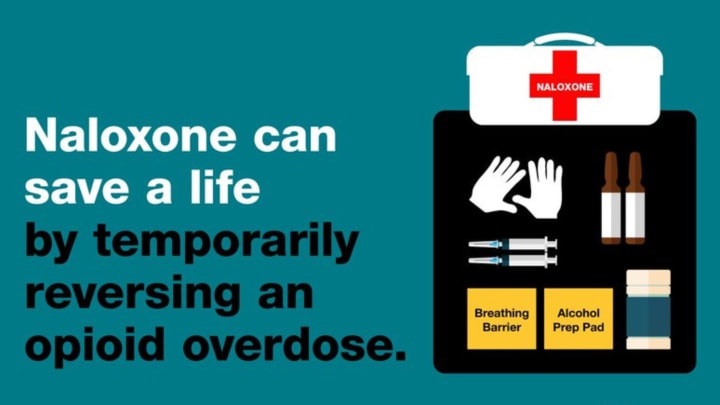
Naloxone (Narcan) Requirements for Nitazene Overdoses
The administration of naloxone hydrochloride which is a drug used in the management of opioid overdose can be given by anyone depending on the different state laws. Naloxone can be given by anyone; volunteers do not require medical education to be trained as their caregiver, friend, or any passerby during an overdose event. Paramedics, registered nurses, and physicians are permitted under state law to dispense naloxone as an ordinary course of business. Also, in some areas, arrest officials are permitted to have and utilize naloxone when preventing and addressing opioid emergencies. People can receive training concerning the correct administration of the medication this is in case of an overdose situation.
Specifically, Nitazene overdoses are distinguishable from standard opioid overdoses concerning naloxone (Narcan) usage. These substances are extremely potent, and they often require more naloxone to reverse the effects:
• Increased Need for Naloxone: There is evidence that approximately two-thirds of the patients who overdose on new and highly potent opioids such as nitazenes require two or more administrations of naloxone.
• Average Naloxone Doses: People who overdose on nitazenes in hospitals require, on average 1.33 of naloxone to counter the effects, while those who overdose on fentanyl require an average of 0.36 doses.
• Extreme Cases: In some instances, people required doses of up to 14 of naloxone to bring about the reversal of the overdose nitazenes hence the need to respond to such incidents quickly.
What This Means for You:
• Always Carry Extra Naloxone: If you do use MDMA, cannabis, cocaine or ketamine then it is sensible to always carry spare naloxone with you as you could take a batch that has been cut with nitazenes.
• Be Prepared to Use Multiple Doses: Naloxone may not work even if a patient has taken a single dose of nitazenes. Be prepared to give numerous doses in case it may be required.
• Call Emergency Services Immediately: Do not take it if one dose is sufficient. If you are sure that an overdose has taken place, you should call an ambulance as soon as possible. This is because prompt responses are very central to the survival of victims.
• Stay With the Person Until Help Arrives: If you have given the person naloxone, it is also important to wait with the person until the professionals get to the scene. Supervise them because they may require more shots or some other medical care.
Warning of nitazenes helps you be ready with naloxone and having the contact information of the nearest emergency centres that can help in the case of an overdose.
Signs That Drugs Might Contain Nitazenes
Nitazenes are particularly dangerous because they are not easily discovered by conventional testing techniques. This makes them very dangerous because the user can take them without knowing and end up being taken ill to the danger of their lives. However, there are a few signs of alert which could suggest the nitazenes are in drugs like MDMA, cannabis, cocaine, or ketamine and otherwise if mixed with nitazenes.
1. Abnormal Reactions from Regular Use
Another warning that should alert anyone that the substance they are using could have been tainted with nitazenes is when the impact it has is way beyond usual. For instance, a person who has developed tolerance to a given drug will make more specific effects such as euphoria, dizziness or confusion with normal dosage than the first-time user. Nitazenes are extremely powerful in terms of intensity and, when they're present with other materials, the effects will be intensified significantly more than expected.
2. Naloxone administration is required more often during an overdose
If someone is overdosing and needs significantly more than the normal number of injections of naloxone (Narcan) to counteract opioids such as fentanyl, then probably nitazenes are involved. Studies indicate that death from the new synthetic opioid drugs like nitazenes requires multiple administrations of Naloxone. In the event the administered naloxone appears not to work or the person experiences another round of overdose symptoms after using the dose, other doses should be given and professional help should be sought.
3. Greater or Dissimilar Withdrawal Symptoms
When nitazenes are combined with any other other psychoactive substances that users take for recreation they might be again faced with withdrawal symptoms that are either more severe or of different types. Because nitazenes are potent opioids, their presence may precipitate opioid-like withdrawal symptoms including muscle aches, restlessness, and bizarre cravings even among persons who did not use opioids. These symptoms may be even worse and they also make evolving very difficult for withdrawal.
4. Sedation Or Respiratory Depression Sneaks Up
Nitazenes have the characteristic of causing depression in the respiratory centre - shallow or slow breathing. It is said that if a person consuming recreational drugs gets abnormally drowsy or has trouble breathing, it may be nitazenes. The opioid's respiratory depression is a clinical sign that distinguishes an overdose and becomes even more dangerous when nitazenes are present; otherwise, it may cause life-threatening outcomes.
You must respond if you develop or observe any of these signs. Carry naloxone and go straight to the hospital. Knowledge of the interaction of nitazenes with new substances that can be combined with recreational drugs may help to avoid fatal outcomes and increase the possibility of a successful outcome in cases of an overdose.
For Caregivers and Loved Ones
1. Learn to Recognize Overdose Signs
Understanding the signs of overdose can help you respond quickly. Common signs include slowed or stopped breathing, extreme drowsiness, or loss of consciousness.
2. Keep Multiple Doses of Naloxone on Hand
As nitazenes can require more than one dose to reverse an overdose, it’s important to have multiple doses of naloxone on hand, especially if you live with someone who uses.
3. Know How to Administer Naloxone
Familiarize yourself with the proper administration of naloxone. Many overdose deaths can be prevented if naloxone is administered quickly.
4. Have Emergency Numbers Readily Available
Keep emergency contact numbers saved and accessible in case of an overdose. This includes local emergency services as well as poison control numbers.
5. Consider Learning CPR
Knowing how to perform CPR can be life-saving in the event of an overdose. Combine this with naloxone administration to improve the chances of survival.
6. Understand That Multiple Naloxone Doses Might Be Needed
Be aware that in the case of an overdose involving nitazenes, more than one dose of naloxone might be required. Stay prepared to administer additional doses if needed.
Harm Reduction Strategies
Of course, as we have learned, the only way to eliminate risk is to abstain; however, we also realize that this may not always be possible for many people. Measures to counter them are crucial therefore in order to cut risks because substances like nitazenes are most dangerous and often hidden in drugs due to their high potency. Listed below are evidence-based practices meant to minimize the risks that come with drug use.
Before Using
1. Never Use Alone
It is always important to have someone who is sober close by who can answer for the one who overdosed. That way if something does go wrong there is someone nearby that can administer the Narcan and call for help.
2. They should also always be in possession of more than one dose of naloxone.
Synthetic opioids such as Nitazenes and other potent opioids may require multiple administration of naloxone to counter the overdose. It is necessary to be equipped with additional doses in case they have to be used.
3. As I said, you should begin by investing much less than you would under normal circumstances.
If you decide to use drugs, you should use a much smaller amount, than should be used. Taking more of it is much simpler if more is required, whereas once an overdose has been given it cannot be reversed.
4. Test before you ingest! Take advantage of Drug Checking Services depending on the centres existing in your region.
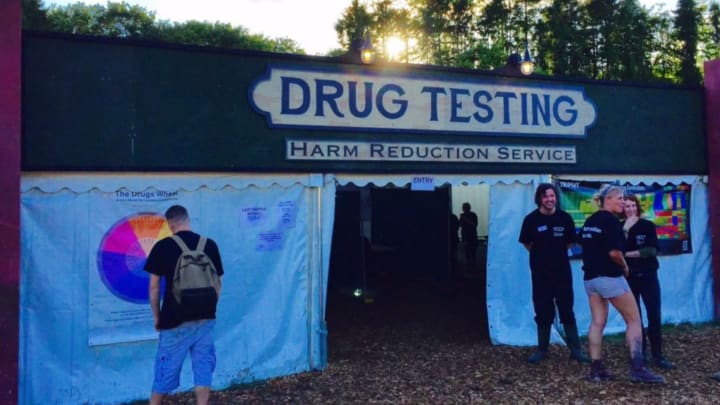
Many harm reduction organizations offer drug-checking services that can help identify substances, including nitazenes, in your drugs. These services are an important tool in ensuring that what you're using is what you think it is. Examples of such services include The Loop and Wedinos in the UK. In some countries, local drug services may provide access to testing kits for home use.
5. If you start using drugs again, for instance, be especially careful if you've recently taken a break from taking drugs.
If you have been away from using, the chances are that your tolerance level has dipped. Use sparingly because the results may be much more potent than you predict them to be.
While Using
1. Go Slowly
Wait for a longer time between the doses to see the impact it has on you.
2. It has always been important in the past and should remain so now to focus on how the drug feels compared to other drugs.
If the drug feels much stronger or seems to be different from what you usually take, then, it may contain nitazenes. Be aware of any side effects, and do something if it feels wrong.
3. Make Your Naloxone Available on Hand
Always make a naloxone companion carry naloxone during its use. Having it easily accessible may well prove the difference between life and death in an overdose case.
4. Have Your Phone With You to Make The Call to Emergency Services
Keep your phone nearby at all times, in case someone needs to contact emergency emergency services in the shortest possible time. Do not hope that the symptoms disappear - dial an emergency number as soon as possible.
5. Ensure That the Person Knows Where the Naloxone Is an How to Administer It
Always make sure that people are aware of the location of naloxone and can administer it properly in case of an overdose.
Healthcare System Response
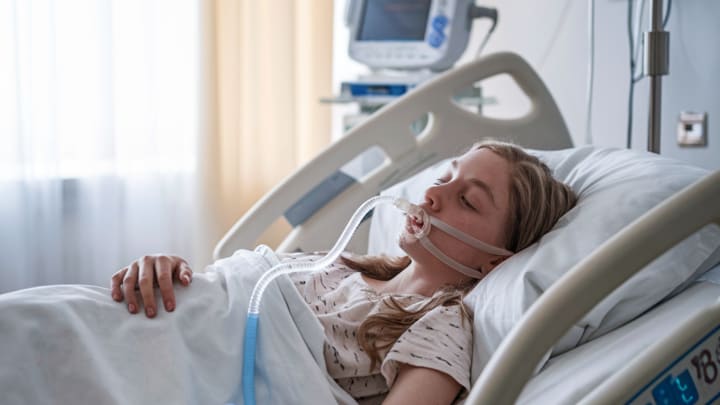
Emergency medical services (EMS) and healthcare systems have been seeing a notable rise in overdose-related calls, primarily due to the increasing presence of nitazenes in the drug supply. As the use of synthetic opioids like nitazenes continues to spread, healthcare providers are adapting to these new challenges, enhancing their preparedness and response strategies. Understanding how the healthcare system is responding to these changes can help users, caregivers, and loved ones make informed decisions in the event of an overdose.
Emergency Rooms Becoming More Experienced at Treating Nitazene Overdoses
With nitazenes appearing more frequently in illicit drug circulation, there has been an increase in reports of nitazene overdosage in patients presenting to A&E. This has ensured increased empirical awareness among the healthcare practitioners with the characteristic symptoms of nitazene overdose for instance respiratory depression and lethargy. There are indications that fen, medical staff are getting increasingly better at recognising these conditions and offering adequate and timely care. They noted that their exposure to nitazene overdoses has continued to increase while dealing with such incidences making it easier for them to contain the situation and deal with it appropriately which is important when handling overdoses, especially, when trying to find a way forward for the patient.

Importance of Medical Services in Overdose Situations
An overdose requires the immediate calling of an emergency services after the accidental intake of the substance. Though naloxone is a useful tool to counter opioid-related overdoses, it is not always guaranteed that one dose of the drug would be enough especially in cases involving nitazene overdose. Medical professionals are taught how to determine if a given case is a minor or a severe one and add other measures such as more doses of naloxone, oxygen or other supporting factors that can help to bring the person to normalcy awaiting technical intervention. Moreover, medical staff can track other characteristics, such as the patient's vital signs, to guarantee that his or her condition will progress gradually and no severe negative outcomes, such as brain damage due to oxygen starvation, will occur.
Thus, the presence of nitazenes in a drug market is a huge problem, however, the healthcare system is in the process of turning into a system ready to face such cases. Emergency Healthcare providers in general are getting more familiar with nitazene overdoses and are generally more prepared with multiple vials of naloxone to combat these strong opiates. Failures in the doses mean that the patient must seek help from the relevant emergency services as they will be in a position to offer more of the essential and life-saving assistance required.
Although Wedinos and The Loop are working and providing drug-checking services in the UK, to run such services, some legal, regulatory, and practical issues need to be discussed. Such services, which can be located at festivals or other occasions, are supposed to determine substances in samples provided by visitors. Yet these services need to be operating within current drug legislation; public health; and the dynamic illicit drug markets.
Legal Framework and Regulatory Requirements
Misuse of Drugs Act 1971
The Misuse of Drugs Act controls substances containing psychoactive substances in the United Kingdom and divides the drugs into categories A, B, and C, the use possession, cultivation and distribution of substances of class A are punishable by law. It means that owners of drug-checking services have to make sure that their services do not facilitate violation of the law, such as the use or selling of drugs. These services can only offer testing of drugs donated by clients and cannot in any way offer to sell the drugs.
Public Health Approach and Legal Exemptions
Almost all drug-checking services are couched in terms of harm reduction and education within a health promotion paradigm. Though they are funded by local governments or event promoters, these services stay in legal limbo and have to tread lightly in order not to be closed down. It targets raising awareness and not promoting chemical use.
Health and Safety Compliance
Drug-testing services are also bound by the Health and Safety at Work Act 1974 to test the safety of workers and the public. This comprises of storage and disposal of substances, and staff education on correct testing procedures. Some services employ field-tested kits for swift drug analysis while others employ advanced laboratory techniques and more intensive tests.
Challenges with Nitazene
New synthetic cannabinoid nitazenes are more frequently reported as components of new psychoactive substances used in recreational drugs but remain undetected in the common drug testing kits developed for traditional and more popular drugs. The failure to identify nitazenes can lead to dangerous consequences for medical treatment.
The Situation May Worsen Before It Improves
Nitazenes, like fentanyl , are stronger and extremely more potent than heroin or morphine, with small portions able to cause an overdose. These opioids can be combined with substances such as crack or meth and it becomes hard for the user to know, and this causes accidental overdoses.
When these substances are available on the market they might displace other opioids because it is cheaper and has a higher potential for dealers. They are difficult to test with other common tests; thus, users are likely to take toxic doses of the drugs. This calls for increased support of the drug testing services and the education on synthetic opioids.
Moving Forward
Whether you're actively using, considering change, or caring for someone who uses, knowledge is power. The emergence of nitazenes makes the landscape of recreational drug use more dangerous, but understanding these risks can help protect you and those you care about.
Remember
Your life has value, and people want to help you stay safe, whatever choices you make about drug use. Reach out for support when you need it.
For more information or support
- Contact your local harm reduction organization
- Speak with healthcare providers who understand substance use
- Connect with peer support networks
- Follow Ravesafe for harm reduction content and drug alerts
UK Charities
- With You : wearewithyou.org.uk
- Mind: mind.org.uk
- Alcohol Change UK: alcoholchange.org.uk
- Narcotics Anonymous UK: ukna.org
- Turning Point turning-point.co.uk
- Andys Man Club ITSOKAYTOTALK
About the Creator
Sid Coulton
I have discovered a love for writing blogs, creating stories and writing articles. My book reviews do contain affiliate links as i am an Amazon Associate.
Keep reading
More stories from Sid Coulton and writers in Education and other communities.
Is it time to change the UK Policy on drugs ?
Hey, everyone! Let’s chat about something that impacts many of us in the UK music scene — drug policy and harm reduction. With drug-related deaths in England and Wales rising for the 11th year in a row, reaching a record high of 4,907 deaths in 2022 [5], it’s essential to understand what’s happening and why it’s a crucial time for change.
By Sid Coultonabout a year ago in Education
Learn Golf the Smart Way: A Clear Path for New Players
Golf is often seen as a demanding sport, but it does not have to be confusing or intimidating. Many people want to learn golf for fun, fitness, or social reasons, yet they feel unsure about where to start. The truth is that golf becomes enjoyable when you focus on the fundamentals and take steady steps forward. This article is designed to help new players understand the game in a practical, straightforward way, especially those seeking golf basics for beginners that are easy to follow and apply on the course.
By Dr. Shawn Keller7 days ago in Education




Comments
There are no comments for this story
Be the first to respond and start the conversation.