
What Are Local Business Listings? How It’s A Powerful Tool For Local SEO Success
Local Business Listings

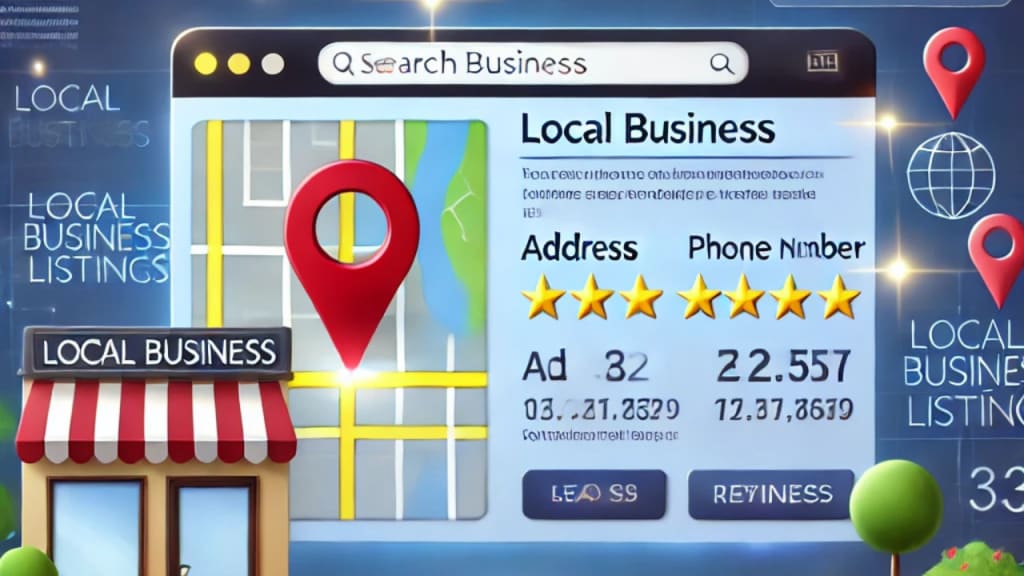
For businesses targeting local customers, local business listings are not just an option but a necessity. These listings are the backbone of local SEO, influencing search engine rankings, brand visibility, and customer trust. However, simply having a listing isn’t enough—strategic optimization is key to leveraging its full potential. This article dives deep into the pivotal role of business listings in local SEO and how they can drive growth and credibility.
What Are Local Business Listings?
A local business listing is a structured online profile that includes essential business details across directories, search engines, and social platforms. These listings go beyond just contact information—they serve as digital footprints that search engines use to determine a business’s legitimacy and relevance.
Key elements of an optimized business listing:
- NAP Consistency (Name, Address, Phone Number): Uniformity across all platforms for credibility.
- Business Description: A keyword-rich yet natural description that aligns with search intent.
- Categories & Services: Proper categorization ensures visibility for relevant searches.
- Reviews & Ratings: Social proof that builds trust and influences rankings.
- Photos & Videos: Engaging visuals improve engagement and conversion rates.
Why Local Business Listings Matter For SEO?
Google and other search engines prioritize businesses with strong, accurate listings. When done right, local business listings improve local search rankings, boost brand authority, and increase conversions. Here’s why it matters:
1. Listings Influence Google’s Local Pack & Map Rankings
Google’s Local Pack (the top three local results displayed in searches) heavily relies on verified and optimized business listings. A well-maintained Google Business Profile increases your chances of appearing in this high-visibility section.
2. Consistent Listings Strengthen Search Engine Trust
Discrepancies in NAP details across different platforms confuse search engines and users, leading to ranking drops. Search engines favor businesses with consistent, accurate listings, reinforcing legitimacy.
3. Local Citations Increases Domain Authority
Every business listing acts as a citation, a reference to your business on external sites. More high-quality citations signal authority and relevance to search engines, improving rankings for location-based searches.
4. Reviews & Engagement Boost Local Ranking Signals
Google considers customer reviews, engagement levels, and responses as ranking signals. Listings with frequent positive reviews and owner responses are prioritized in local searches, creating a feedback loop of increased visibility and customer trust.
5. Geo-Targeted Keywords in Listings Improve Discoverability
Optimizing business descriptions and categories with geo-specific keywords (e.g., "best seo agency in California") increases relevance for local searches, making your business more likely to appear in “near me” searches.
How To Optimize Local Business Listings For Maximum SEO Impact?
1. Claim & Verify Listings Across All Major Platforms
Start with Google Business Profile, Yelp, Bing Places, and Apple Maps. Verifying your profile gives you control over information and prevents unauthorized changes.
2. Maintain 100% NAP Consistency
Ensure that your business name, address, and phone number are identical across all listings. Even minor variations can confuse search engines and lower rankings.
3. Leverage Rich Media (Photos, Videos, Virtual Tours)
Search engines and users prioritize listings with high-quality images, promotional videos, and 360° virtual tours, leading to higher engagement and conversion rates.
4. Encourage & Respond to Reviews
Request satisfied customers to leave detailed reviews.
Reply to every review, addressing concerns and thanking customers for positive feedback.
More 5-star ratings lead to increased trust and better search positioning.
5. Use Structured Data Markup (Schema.org)
Adding structured data (local business schema) to your website reinforces your business details and improves how search engines interpret your listings.
6. Keep Listings Updated & Relevant
Regularly update business hours, service offerings, promotions, and images to signal activity and reliability to search engines.
Common Pitfalls To Avoid
Here’re some of the most common mistakes that most people make while committing their local SEO efforts.
- Inconsistent Business Information: Variations in NAP details weaken SEO efforts.
- Neglecting Review Management: Ignoring reviews (positive or negative) damages credibility.
- Overlooking Secondary Directories: Don’t just rely on Google; list your business on Yelp, Foursquare, and industry-specific directories.
- Ignoring Category & Keyword Optimization: Missing or incorrect categories can exclude your business from relevant searches.
- Failing to Monitor & Update Listings: Outdated information can lead to customer frustration and lost opportunities.
- Using Inaccurate or Duplicate listings: Duplicate entries can confuse search engines and negatively impact rankings.
- Lack of Engagement with Customers: Failing to respond to questions or comments on listings can reduce trust and engagement.
Conclusion
Local business listings are more than online directories—they are powerful SEO assets that improve search rankings, build credibility, and drive customer engagement. By maintaining accurate, keyword-optimized, and engaging listings, businesses can establish a strong local presence and outperform competitors in search results. Ensure your listings are up-to-date, encourage reviews, and maintain consistency across all platforms for long-term SEO success.
About the Creator
DexDel
DexDel - A result-driven digital marketing agency that offers professional digital marketing services Search Engine Optimization (SEO), Pay Per Click (PPC), website design & development, social media marketing, online reputation management.
Virtual Tours & AR: Selling Tampa Homes Through Mobile Apps in 2027
Not long ago, buying or selling a home meant scheduling appointments, driving across neighborhoods, and walking through multiple properties before making even a preliminary decision. The process was time-consuming, often inefficient, and heavily dependent on physical presence.
By Mary L. Rodriquez4 days ago in Education
The New Face of China: Why My Recent Trip to Shanghai Revealed a $9 Billion Aesthetic Shift
Walking through the Jing'an District in Shanghai today feels different than it did even three years ago. It isn’t just the neon lights or the futuristic architecture; it’s the faces. There is a subtle, polished "glow" that seems to have become the unofficial uniform of the city’s young professionals. We aren't talking about the dramatic, "done" looks of the early 2000s. We are talking about the era of the "tweak-ment."
By Neeraj kumarabout 21 hours ago in Education




Comments
There are no comments for this story
Be the first to respond and start the conversation.