
Web Accessibility Services: A Simple Guide for Business Owners
Web Accessibility
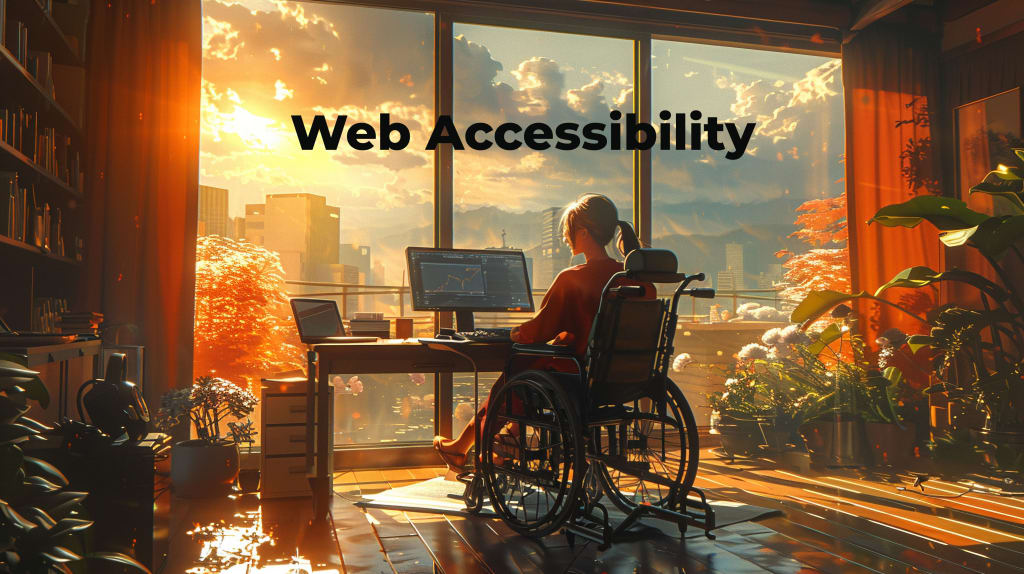
In today’s digital world, it's essential that everyone can access your website—no matter their abilities or disabilities. But how do you make sure your site is usable for all visitors? That's where web accessibility services come in. If you’ve never heard of them before, don't worry! In this blog, we’ll explain what web accessibility is and how web accessibility services can help make your website more inclusive.
What is Web Accessibility?
The meaning of web accessibility is the practice of making websites available and usable to everyone irrespective of any disability. There might be different types of disabilities that relate to any kind of vision, hearing, or movement-related problems or cognitive skills. It involves the objective of building a website that all persons with disabilities can use as easily as possible, navigate through it accordingly, and understand the website properly.
When a website is accessible, it means that all users can:
• Even if they have poor vision or use a screen reader, read the text.
• Listen to content, even if they are deaf or hard of hearing.
• Navigate the site, even if they can’t use a mouse and only rely on a keyboard.
• Understand the information, even if they have learning disabilities.
In simple terms, web accessibility ensures that everyone can use the internet without barriers.

Why Are Web Accessibility Services Important?
1. Legal Requirements
In fact, laws in many countries make websites accessible. For example, the Americans with Disabilities Act requires any public facing website to be accessible to people with disabilities. So, if your site is not accessible, it might lead you to legal issues and fines, as well.
2. Reach More People
Today, approximately 15% of the world population lives with some form of disability or another be it a disability to shop online, work online, or consume any kind of digital content on a regular basis. So by making your website accessible you may well be opening up your business to a larger marketplace of potential consumers.
3. Better User Experience
Accessibility however is not for people with disabilities only. Rather, it makes the rest of the world easier to use as well. Therefore it's making your text larger or even navigating through your site via voice commands can make your site much easier to navigate through for a person who is not disabled.
4. Improved SEO
As a result, web accessibility often overlaps with best practices for optimizing a website based on searches. Websites that are logical, easy to navigate, and contain clear content tend to do better in search rankings. So, in short, making your website accessible is a good way to get it noticed by a Google search.
What Are Web Accessibility Services?
Web accessibility services ensure that your website satisfies all users, including people with disabilities. Some services that are offered comprise a variety of activities that can help make your website more accessible. Let's break them down:
1. Accessibility Audits
An accessibility audit is a thorough review of your website to emphasize all possible areas that may cause a barrier to people with disabilities when accessing your website, including, but not limited to, testing for items such as:
• Alt text for images: People who are blind or have low vision use screen readers to “read” websites. These readers rely on descriptive text for images, so if you don’t include it, they won’t understand what the image is.
• Color contrast: Some people have trouble reading text if there isn’t enough contrast between the text and the background.
• Keyboard navigation: Many people can’t use a mouse and rely on keyboard shortcuts to navigate a website.
• Text readability: Text has to be easy to read and understand, with easy language and easy headings.
2. Website Remediation
Once an audit is done, the next step is remediation – fixing those issues that were found. This might include things like:
• Adding alt text to images.
• Improving website navigation so it’s easier to use with a keyboard.
• Ensure that all videos are captioned, or subtitled.
• Simplification of design to make easier on people with cognitive impairment to use.
3. Assistive Technology Compatibility
There are so many tools and technologies to help people with disabilities interact on websites: from simple screen readers, useful for the sightless, through speech recognition software, useful for the mobility challenged, to alternative input devices, prepared for people who cannot use a normal keyboard. The accessibility services for the web will help your site work just right with such assistive technologies.
4. Ongoing Accessibility Maintenance
Websites are dynamic. You can create new content, update images, or even change your design. However, it is important to periodically check the accessibility of your site so that your newly added updates do not inadvertently introduce new barriers for people with disabilities. Regular monitoring ensures that your dynamic site is still accessible to all.

How Do You Get Started with Web Accessibility Services?
1. Conduct an Accessibility Audit
First, review your website. It's okay to do that yourself, but it often works best to involve an accessibility expert who understands the guidelines and what's available to identify the problem areas.
2. Make the Necessary Changes
Once the audit is completed you can begin fixing the issues. This could involve redesigning some portions of the website as well as adding extra features such as text descriptions to images, or even making sure videos have captions.
3. Test with Real Users
always test with real users, either people with disabilities or perhaps other people. It could tell you the functionality of what works and doesn't work and fine-tune your accessibility options.
4. Keep It Updated
Accessibility is a never-ending thing. When your website changes, you should be checking it regularly to make sure it stays accessible.
Conclusion
Comprising such a huge percentage of web building for accessible websites that will go on to benefit everyone, services would attract more customers and improve the user experience of your website, keeping you on the right side of the law.
Through your working with the web accessibility experts you are able to keep your site easy to navigate, understand, and use for all the users of the Web, and that simply means the more inclusive Web environment.
Ready to make your website more accessible? It’s a smart move that benefits everyone!
About the Creator
Navigating Economic Uncertainty with Strategic Property Investment
Economic uncertainty has become a constant presence in today’s financial landscape. From inflation and rising interest rates to global conflicts and supply chain disruptions, investors are increasingly concerned about protecting their assets and ensuring long-term financial security. Amid this volatility, real estate remains one of the most dependable investment vehicles. Its tangible nature, consistent income potential, and historical resilience make it a powerful tool for weathering financial storms.
By Accrue Real Estate7 days ago in Education




Comments
There are no comments for this story
Be the first to respond and start the conversation.