
Waiting Turns and Tying Shoes: Building Patience in the Nursery Classroom
Teaching Patience and Delayed Gratification in Early Years

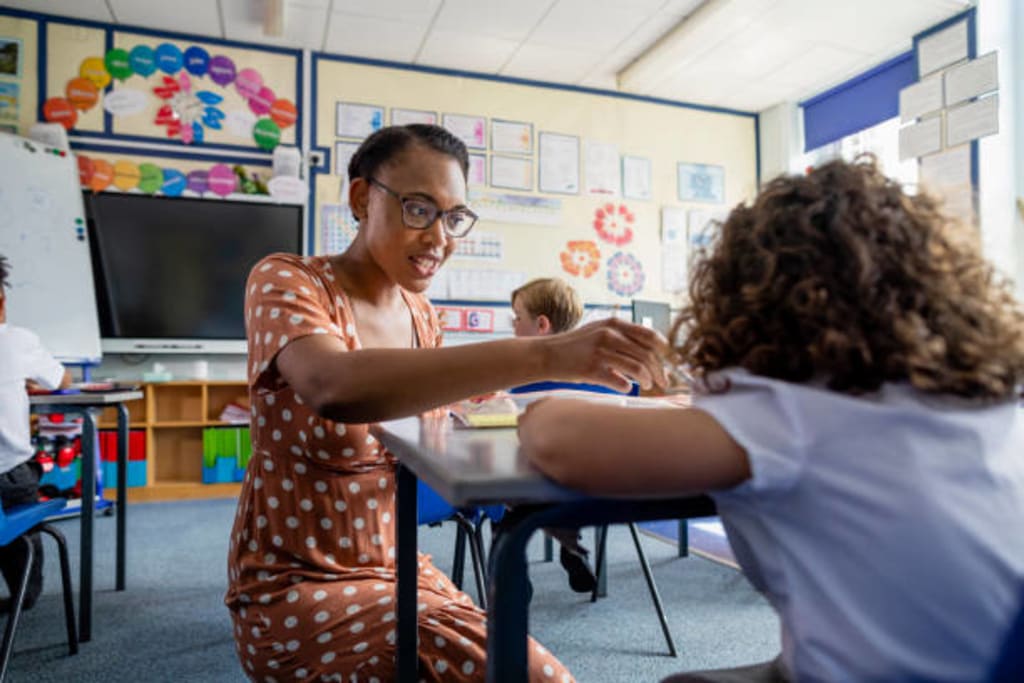
In a world of instant gratification, patience is a skill that takes time to learn—especially for young children. In the nursery classroom, learning to wait one’s turn, share resources, and complete small daily tasks like tying shoelaces all contribute to the foundational development of patience and self-regulation.
While it may seem like a simple virtue, patience is deeply linked to a child’s ability to manage emotions, form healthy relationships, and succeed in future academic settings.
Nurseries that intentionally embed these lessons into daily routines are creating environments that not only support learning but nurture resilience, empathy, and confidence.
Why Patience Matters in the Early Years
Children are not born patient—it’s something they must learn through experience and repetition. During the early years, the brain's self-control systems are still forming.
That’s why a nurturing, well-structured learning environment like a nursery in south london can be so powerful. Through supportive routines and guidance, children begin to understand how to manage emotions, wait for their turn, and persist through small challenges.
Patience supports the development of:
- Better emotional resilience
- Stronger social skills
- Increased focus and attention span
- A growth mindset and frustration tolerance
Children learn best through repetition and familiarity. Nursery classrooms are filled with natural opportunities to practise patience, including:
- Circle time and group discussions: Waiting to be called on to speak helps children learn impulse control.
- Sharing toys and materials: Turn-taking teaches fairness and empathy.
- Lining up, transitions and tidy-up time: These structured routines provide low-pressure opportunities to practise waiting and following directions.
- Personal care routines: Tasks like tying shoes or putting on coats build persistence and independence, both of which are tied to the development of patience.
High-quality settings such as a well-established herne hill montessori nursery integrate these opportunities into their daily rhythms, using calm, prepared environments to help children self-regulate and stay engaged with minimal frustration.
Imaginative Play: A Fun Path to Patience
Imaginative play—whether it’s setting up a pretend tea party, building a spaceship from blocks, or playing “school” with friends—offers rich opportunities for developing patience.
These open-ended scenarios often require children to plan, negotiate roles, wait their turn to speak or act, and adapt to unexpected changes in the story.Through role-play, children naturally practise the skills of compromise and delayed gratification.
For example, a child waiting to use a pretend stethoscope during a game of "doctor" is not just playing—they're learning to manage anticipation and consider others' perspectives. Educators can support this learning by joining in, helping mediate conflicts with gentle reminders, and praising collaborative moments.
The Role of Educators and Parents
Patience takes modelling and reinforcement. Educators play a crucial role in:
- Narrating the process ("I see you’re waiting your turn. That’s very thoughtful.")
- Offering praise when children demonstrate patience, no matter how small the act
- Using visual aids like timers to make waiting tangible
- Remaining calm and composed themselves, even in challenging moments
Parents can reinforce this at home by involving children in daily tasks, playing simple turn-taking games, and encouraging slow, mindful activities like baking, puzzles, or planting seeds.
Final Thoughts
Patience may not come easily to young children—but in the nurturing environment of the nursery classroom, it is carefully and consciously cultivated.
Through consistent routines, guided independence, and thoughtful modelling, children begin to understand that good things come to those who wait—and work for them.
As they learn to wait in line, tie their shoes, or share a favourite toy, they are also learning how to navigate the world with empathy, self-control, and confidence—skills that will support them well beyond their nursery years.
About the Creator
William Henry
At Best Independent Schools UK, we are here to make your journey smoother by providing detailed information about some of the best nurseries and preparatory schools in England
Keep reading
More stories from William Henry and writers in Education and other communities.
Designing a Meaningful Future: Strategic Planning for Mission-Focused Entrepreneurs
In today’s evolving business landscape, entrepreneurs are increasingly motivated by more than financial success. Many are building companies around a mission to create social, environmental, or community-driven impact. While passion and vision ignite these ventures, strategic planning transforms purpose into a lasting, scalable business. For mission-focused entrepreneurs, planning is not about restriction but about clarity, alignment, and sustainable growth.
By Mario Payne2 days ago in Education
Why Did Einstein Dislike Quantum Mechanics? The Greatest Scientific Disagreement Ever
Einstein Helped Create Quantum Mechanics It is often forgotten that Einstein was a pioneer of quantum physics. In 1905, Einstein proposed that light comes in discrete packets called photons. This explained the photoelectric effect and earned him the Nobel Prize. His work was one of the pillars of quantum theory.
By shahkar jalal6 days ago in Education
Wild Card Weekend Recap: What Happens Now?
I think I figured out why I love Wild Card Weekend so much. It's because it's the first playoff anything of the calendar year. The NFL season starts in the fall, and once upon a time, the champion was crowned either on or slightly before New Year's. The evolution of the NFL schedule has resulted in the playoffs starting just into the New Year, and currently, the final week of the season falls on the first weekend of the New Year, with Wild Card Weekend coming a week after that. So yes, chronologically, the NFL's Wild Card Weekend serves as the first playoff anything of the calendar year.
By Clyde E. Dawkins6 days ago in Unbalanced



Comments
There are no comments for this story
Be the first to respond and start the conversation.