
[Woman] So Matt, what’s with the piece of uranium ore in the studio?
Well, because it’s fascinating. A little unsettling, too. Plus, it was left off an important list that made headlines.
Today, I’m announcing that we’re banning all imports of Russian oil, gas, and energy.
As it turns out, the ongoing Russia-Ukraine conflict is revealing a lesser-discussed issue: the global nuclear fuel supply chain. This could have significant effects on the future of nuclear energy in the U.S.
(counter clicks)
(upbeat music)
In response to Russia's invasion of Ukraine, the U.S. and other countries have imposed sanctions on Russian energy resources, such as oil and gas. But uranium wasn't included in these sanctions.
Russia plays a significant role in the global nuclear energy landscape, especially in the uranium supply chain.
Justine Calma, a science journalist from "The Verge," wrote about why it’s so challenging for the U.S. to cut ties with Russian uranium.
The U.S. has successfully weaned itself off Russian oil and gas, but uranium is a different story. That’s because the U.S. depends heavily on Russia for a substantial portion of its uranium.
(soothing music)
Uranium is a primary fuel for nuclear energy due to the ease with which its isotope, U-235, undergoes fission, releasing vast amounts of energy. Nuclear power remains highly controversial, but it accounts for nearly half of the U.S.’s carbon-free electricity. This makes uranium a critical resource, especially as the Biden administration invests in nuclear energy to meet climate goals. This is why we’re discussing uranium.
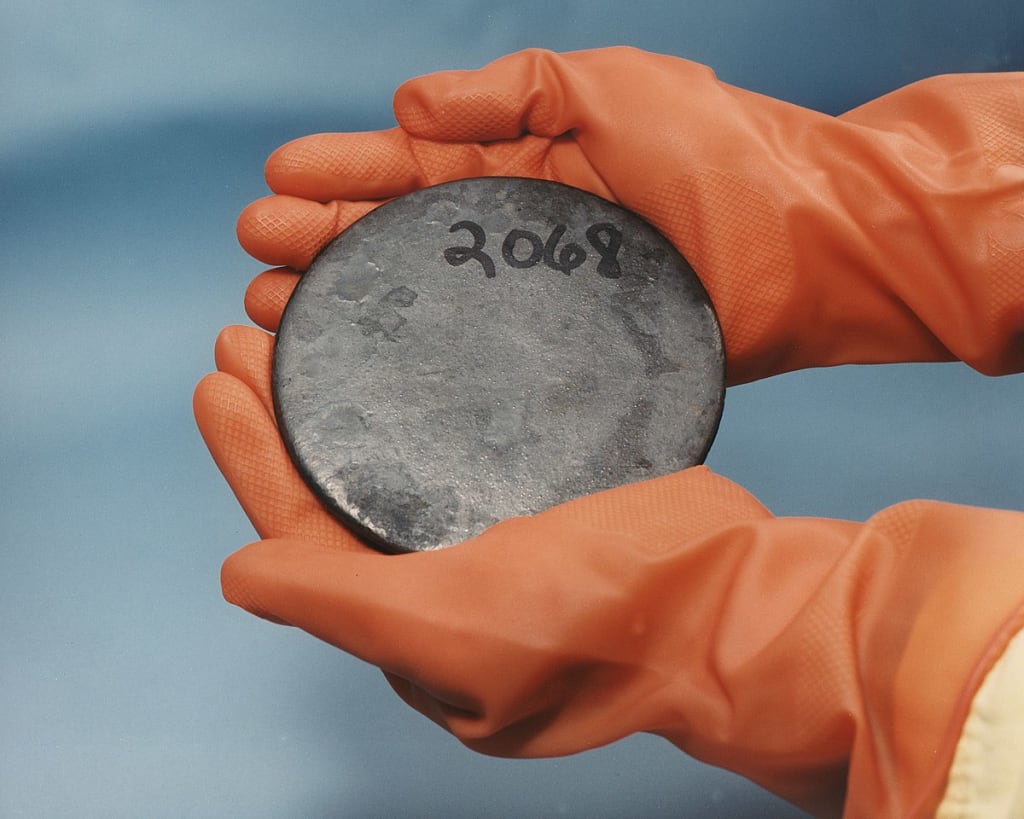
When we talk about nuclear power, everything begins with uranium ore, which is radioactive. That’s why we’re wearing gloves. We consulted experts on how to handle this material safely (counter clicks), so we’re following all the necessary precautions—though don’t try this at home.
(upbeat music)
Most uranium ore, like this sample, is mostly not uranium. Low-grade uranium ore contains only about 0.1% uranium. The rest of it is regular rock and elements like lead, thorium, and bismuth, which are decay products of uranium. These decay products are what’s triggering our Geiger counter. We need much more sensitive equipment to detect the uranium itself.
Somewhere in this sample (dramatic music) is a small amount of uraninite, a mineral rich in uranium. Essentially, it’s just uranium packed tightly within the rock. Uraninite is one of several minerals containing uranium, but even this small portion of uranium within tons of rock isn’t ideal for nuclear fuel.
Naturally occurring uranium, like what’s mined from the Earth, has very low concentrations of U-235.
The key takeaway is that vast amounts of uranium ore are needed to generate relatively small quantities of usable fuel. And the process to extract this fuel is quite intensive.
(soothing music)
For uranium to be useful in a nuclear reactor, it must undergo a conversion and enrichment process. This means isolating the U-235 isotope and concentrating it.
First, uranium is mined, then it’s converted into yellowcake, a concentrated form of uranium. The yellowcake is converted into a gas, which is then enriched to increase the U-235 concentration, and finally, it’s made into fuel rods.
It’s an extremely complex process, and different companies are contracted at various stages. Only a handful of countries, including France, Russia, and China, have the infrastructure to carry this out efficiently.
Along the entire supply chain, there are security concerns. Enriching uranium can be used for both nuclear power and nuclear weapons production.
The uranium market is also quite competitive, and now, with the rising demand for nuclear energy, the supply chain is under additional scrutiny.
The Russia-Ukraine conflict has heightened existing tensions between the U.S. and Russia, exposing vulnerabilities in the nuclear fuel supply chain.
One potential solution? A strategic uranium reserve.
(dramatic music)
This would be a stockpile of uranium meant to ensure a steady supply for U.S. power plants in case of emergencies, like a prolonged war.
If the conflict continues, we could potentially draw from this reserve to ensure our reactors keep running.
The war is also affecting the construction of next-generation nuclear reactors. Today’s nuclear plants run on fuel enriched to 5% U-235, but next-gen reactors need enrichment of up to 20%.
The higher U-235 concentration makes the fuel more efficient, allowing reactors to be smaller and less expensive. Cost is one of the biggest barriers to expanding nuclear power.
However, right now, Russia is the only country that can commercially produce this type of NextGen fuel. The U.S. is working on its own facility to produce such fuel, but it will take years before we achieve independence in uranium production.
(soothing music)
Considering the effort to stockpile and enrich uranium, some argue the U.S. should also revive domestic uranium mining.
From the 1940s to the 1980s, mining companies extracted vast amounts of uranium ore from the Western U.S., leaving behind environmental damage that the EPA is still addressing today.
Many Indigenous communities oppose the return of uranium mining on or near their lands, given the legacy of toxic contamination and health issues tied to past mining practices.
For example, the Navajo Nation still struggles with the legacy of hundreds of uranium mines, which have been linked to cancer and other health problems due to water contamination and other environmental issues.
Nuclear energy also faces challenges related to radioactive waste storage and the threat of potential meltdowns, making it a highly contentious issue.
The Biden administration has set a goal of achieving 100% carbon-free energy by 2035, and nuclear power is expected to play a significant role in that vision. As the debate over nuclear energy continues, these issues will only grow in importance.
Climate change is an urgent global crisis, and the future of energy production is at the heart of this debate. Nuclear energy, while not perfect, offers a potential solution to meet our carbon-free energy needs.
The debate over nuclear energy’s role in the energy transition won’t be resolved quickly. So, it seems we’ll be grappling with this issue—and with uranium—for some time to come.
(counter clicks)
Can I wash my hands now?
(screen beeps)
You guessed it, Russia.
You guessed it, Russia.
[Woman] That part? - You guessed it, Russia?
You guessed it, Russia?
You guessed it, Russia.
[Woman] You guessed it, Russia, and then like you circle it (indistinct).
Got it.
You guessed it, Russia.
About the Creator
Effective Mentorship Strategies to Help Clinicians Lead Patient-Centered Healthcare Innovation
Healthcare organizations today face growing expectations to deliver higher-quality care while improving efficiency and patient satisfaction. Innovation is often discussed at the leadership level, yet some of the most valuable ideas originate from clinicians working directly with patients. These professionals understand daily challenges in care delivery and recognize opportunities for improvement that others may overlook. When healthcare leaders actively mentor clinicians, they unlock the potential for meaningful, patient-centered innovation.
By Dr. Janet Chollet4 days ago in Education




Comments
There are no comments for this story
Be the first to respond and start the conversation.