
The Future of Artificial Intelligence:
A Glimpse into Tomorrow’s World
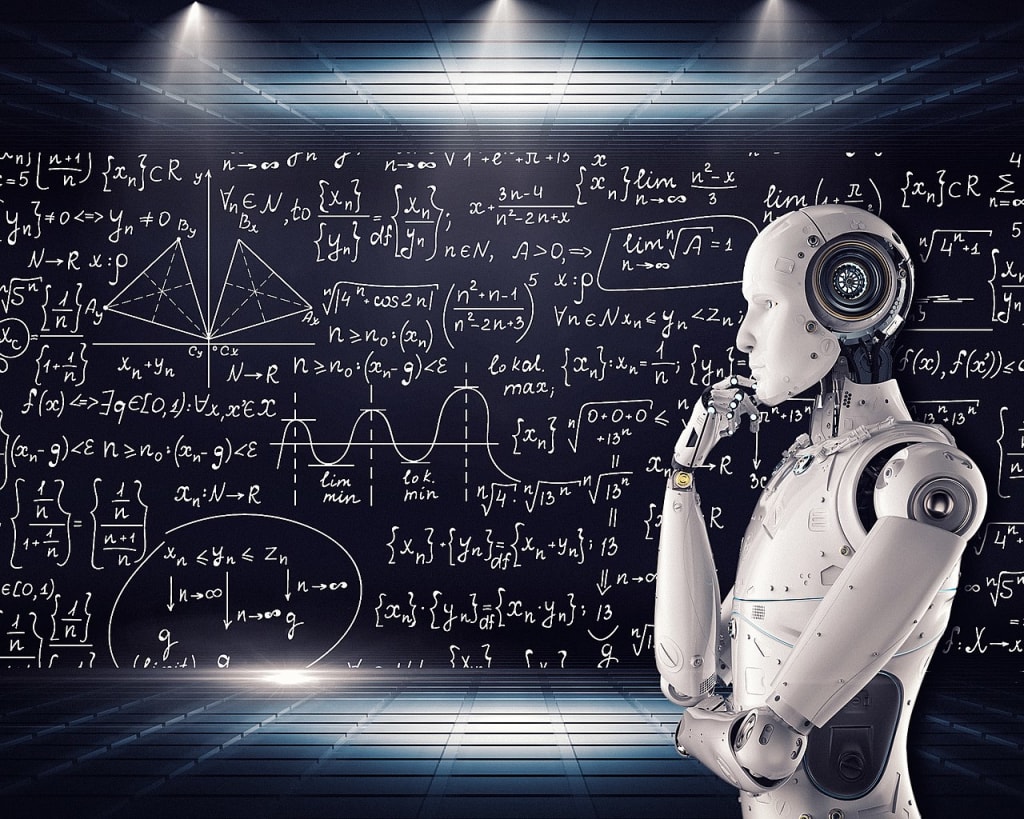
The Future of Artificial Intelligence: A Glimpse into Tomorrow’s World
Artificial Intelligence (AI) is no longer just the stuff of science fiction. Over the past few decades, it has rapidly evolved from a theoretical concept into a powerful tool that is reshaping nearly every industry. From self-driving cars to personalized healthcare, AI has demonstrated its potential to transform the world in profound ways. But the question remains: What will the future of AI look like, and how will it impact society, the economy, and even our understanding of consciousness itself? In this article, we explore the trajectory of AI, its potential benefits, its challenges, and the ethical questions it raises for the future.
The Evolution of Artificial Intelligence
AI's journey began in the mid-20th century, driven by the vision of pioneers like Alan Turing, who conceptualized machines that could mimic human intelligence. However, it wasn’t until the 2010s that AI began to make real-world breakthroughs. The development of deep learning, a subset of machine learning, was a major milestone. By enabling machines to learn from vast amounts of data, deep learning allowed AI systems to surpass human performance in certain tasks, such as image recognition and natural language processing.
Today, AI is integrated into everyday applications. Virtual assistants like Siri and Alexa, recommendation algorithms on platforms like Netflix and Amazon, and autonomous vehicles all use AI to perform tasks that were once thought to be exclusive to humans. But this is just the beginning. As AI continues to improve, its capabilities will only expand, offering new possibilities and challenges.
The Promise of AI: Enhancing Human Potential
One of the most exciting aspects of AI's future is its potential to augment human capabilities rather than replace them. In fields like healthcare, education, and the arts, AI can serve as a powerful tool to enhance our abilities and solve complex problems.
Healthcare Revolution
AI has the potential to revolutionize healthcare by making diagnosis and treatment more accurate and personalized. Machine learning algorithms can analyze vast amounts of medical data, including medical imaging, genetic information, and patient histories, to identify patterns that might go unnoticed by human doctors. AI-powered systems could help detect diseases like cancer at earlier stages, improving patient outcomes. Additionally, AI could help design personalized treatment plans based on an individual's unique genetic makeup, ensuring that therapies are more effective and have fewer side effects.
Education
In the realm of education, AI is poised to reshape how we learn and teach. Adaptive learning platforms powered by AI can tailor educational content to individual students’ needs, ensuring that no one falls behind. These systems can adjust the pace and difficulty of lessons based on student performance, offering a more personalized and effective learning experience. AI can also help educators by automating administrative tasks, allowing them to focus more on teaching and less on paperwork.
Creativity and the Arts
AI’s involvement in the creative industries is already underway. From AI-generated music and art to tools that assist in writing and filmmaking, machines are proving capable of contributing to creative processes. In the future, AI could collaborate with humans to produce groundbreaking works of art, blending human intuition with machine efficiency. Moreover, AI may help democratize creativity by making artistic tools more accessible to people who may not have traditional training in the arts.
AI and the Economy: Disruption and Transformation
AI is set to disrupt labor markets, but it will also create new opportunities. The automation of tasks traditionally performed by humans—such as driving, retail work, and administrative tasks—could lead to job displacement. However, the same technological advancements that eliminate certain jobs could create entirely new industries, just as the rise of the internet did.
Job Displacement vs. Job Creation
Historically, technological advancements have been disruptive, but they have also led to new forms of employment. For example, the rise of computers and the internet created entirely new sectors like IT support, cybersecurity, and software development. Similarly, AI is likely to create demand for jobs in AI research and development, machine learning engineering, and data science. Moreover, industries like healthcare, where human empathy and judgment are critical, will continue to rely on human workers alongside AI technologies.
However, managing the transition from a workforce reliant on human labor to one that integrates AI will be a challenge. Governments, businesses, and educational institutions will need to invest in reskilling and upskilling programs to help workers transition into new roles. The future of AI will require a careful balance between technological progress and social responsibility.
Productivity and Economic Growth
In industries where AI can automate routine tasks, productivity could see significant increases. Autonomous systems can operate 24/7, reduce errors, and optimize processes more efficiently than humans. This could lead to lower costs and higher profits for businesses, which could, in turn, spur economic growth. However, the distribution of these benefits will be crucial. If the wealth generated by AI is concentrated in the hands of a few, it could exacerbate economic inequality.
Ethical and Societal Implications
As AI becomes more powerful, ethical questions surrounding its use become more pressing. The decisions AI systems make could have significant consequences, and it is vital to ensure that these systems are developed and deployed responsibly.
Bias and Fairness
AI systems learn from data, and if the data they are trained on is biased, they can perpetuate or even exacerbate these biases. For example, facial recognition systems have been shown to be less accurate for people of color, leading to concerns about discrimination. Ensuring fairness in AI algorithms will require rigorous oversight, diverse datasets, and continual monitoring for unintended consequences.
Privacy and Surveillance
The data that powers AI systems can include sensitive personal information. As AI becomes more integrated into society, concerns about privacy and surveillance will intensify. AI-powered surveillance systems, for instance, could be used to monitor individuals on a massive scale, infringing on civil liberties. Striking the right balance between security and privacy will be one of the biggest challenges of the AI age.
Autonomy and Accountability
As AI systems become more autonomous, questions of accountability will arise. If an AI-driven car causes an accident, who is responsible—the manufacturer, the software developer, or the user? Similarly, if an AI system makes a decision that harms individuals or society, determining who is accountable will be complex. It will be essential to establish clear legal and ethical frameworks to govern AI deployment.
The Future of Consciousness and Intelligence
One of the most profound questions raised by AI is whether machines will ever achieve consciousness or human-like intelligence. While AI has made impressive strides in specific tasks, such as playing chess or Go, it still lacks the general intelligence and self-awareness that humans possess. Some scientists believe that it is only a matter of time before AI systems surpass human intelligence in all areas, a concept known as the “singularity.” Others argue that true consciousness may remain beyond the reach of machines.
Regardless of whether AI achieves true consciousness, it is clear that it will continue to challenge our understanding of intelligence and consciousness itself. As we develop more sophisticated AI, we will need to grapple with questions about the nature of thought, emotion, and self-awareness.
Conclusion: Embracing the Future of AI
The future of AI holds both immense promise and significant challenges. From transforming industries and creating new economic opportunities to raising complex ethical questions, AI will be a central force in shaping the future. It is up to us to guide its development in ways that maximize its benefits while minimizing its risks. By fostering collaboration, ensuring fairness, and prioritizing the well-being of all people, we can harness the full potential of AI to create a better world.
As we stand on the precipice of this AI-powered future, it is important to remember that technology is not an end in itself—it is a tool that should serve humanity’s best interests. By taking a thoughtful, responsible approach to AI development, we can ensure that its future is one that enhances our lives, not just our productivity. The future of AI is ours to shape, and with careful planning, it can be a future full of promise and possibility.
About the Creator
Explosions in Tehran Force Pakistani Students to Leave Iran
The intensity of the explosions caused by the missile attacks on Tehran was extremely high. In such a situation, it is natural for a person to feel frightened. Because of this situation, we immediately decided to leave.
By Real content7 days ago in Education
Leading With Purpose: Cultivating a Philanthropic Mindset in Modern Medical Leadership
Medical leadership today extends far beyond supervising clinical teams or managing hospital operations. Physicians in leadership roles influence institutional strategy, community engagement, research priorities, and public policy. In an era marked by health inequities, rising costs, and global crises, medical leaders must adopt a broader vision of responsibility. Developing a philanthropic mindset is no longer optional. It is a defining characteristic of effective and ethical leadership in healthcare.
By Dr. Seth Eidemiller7 days ago in Education
The BAFTA Awards
By now, in a stunning departure from recent years, most of the world is aware of what happened at the BAFTA film awards. Social Media Headlines will tell you the bare bones: that John Davidson, a Tourette's Syndrome advocate, shouted a racial slur at two Actors of Colour, Michael B Jordan and Delroy Lindo.
By Natasja Rose6 days ago in Psyche




Comments (1)
It's becoming clear that with all the brain and consciousness theories out there, the proof will be in the pudding. By this I mean, can any particular theory be used to create a human adult level conscious machine. My bet is on the late Gerald Edelman's Extended Theory of Neuronal Group Selection. The lead group in robotics based on this theory is the Neurorobotics Lab at UC at Irvine. Dr. Edelman distinguished between primary consciousness, which came first in evolution, and that humans share with other conscious animals, and higher order consciousness, which came to only humans with the acquisition of language. A machine with only primary consciousness will probably have to come first. What I find special about the TNGS is the Darwin series of automata created at the Neurosciences Institute by Dr. Edelman and his colleagues in the 1990's and 2000's. These machines perform in the real world, not in a restricted simulated world, and display convincing physical behavior indicative of higher psychological functions necessary for consciousness, such as perceptual categorization, memory, and learning. They are based on realistic models of the parts of the biological brain that the theory claims subserve these functions. The extended TNGS allows for the emergence of consciousness based only on further evolutionary development of the brain areas responsible for these functions, in a parsimonious way. No other research I've encountered is anywhere near as convincing. I post because on almost every video and article about the brain and consciousness that I encounter, the attitude seems to be that we still know next to nothing about how the brain and consciousness work; that there's lots of data but no unifying theory. I believe the extended TNGS is that theory. My motivation is to keep that theory in front of the public. And obviously, I consider it the route to a truly conscious machine, primary and higher-order. My advice to people who want to create a conscious machine is to seriously ground themselves in the extended TNGS and the Darwin automata first, and proceed from there, by applying to Jeff Krichmar's lab at UC Irvine, possibly. Dr. Edelman's roadmap to a conscious machine is at https://arxiv.org/abs/2105.10461