
Unveiling the Symbolic World of Flags
Exploring History, Culture, and Politics
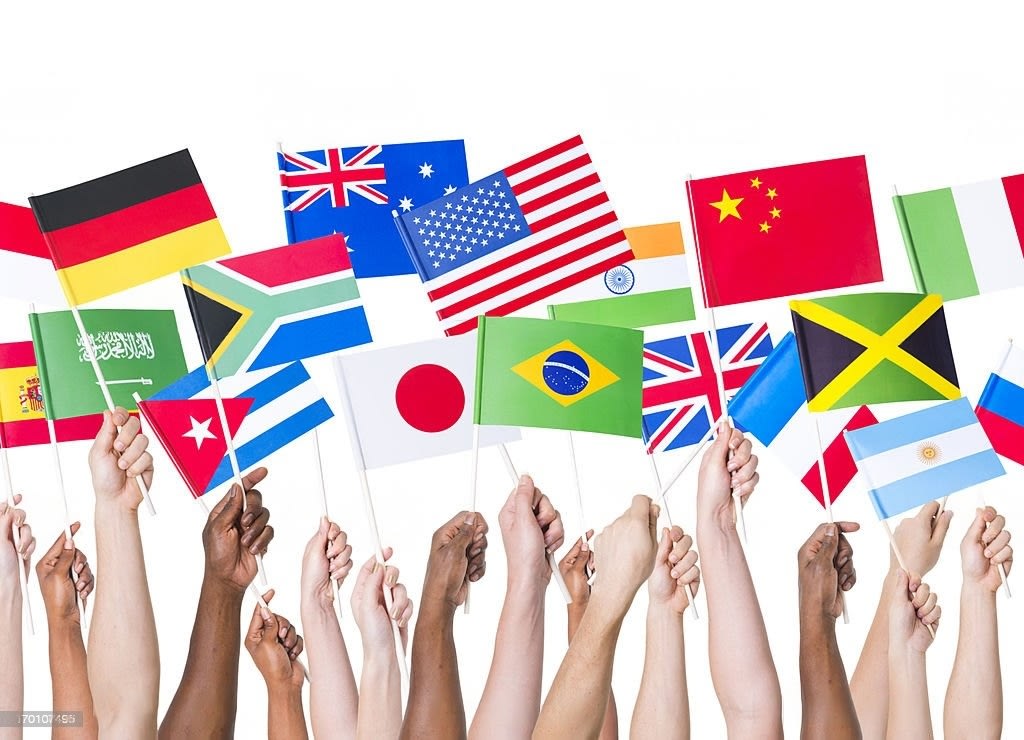
Flags—those banners that flap in the wind, telling you whose laws you have to obey. But flags don't have to be limited to countries. They are symbols, and symbols can represent any wacky idea your heart desires. As a history-loving nerd, I have a soft spot for flags, and if you're here reading this blog, you're probably a flag nerd too. So, let's delve into the captivating world of flags and have a conversation about them.
Once, I made a video discussing national anthems, and it was well-received. Inspired by that, I decided to conduct a Q&A session on Twitter where you all asked me zany questions related to flags. I'll do my best to answer them or use them as a starting point for discussing interesting and somewhat unrelated flag-related topics. So, let's get started!
When did flags start representing countries? Were they always this way? Well, flags originated as tools of warfare, primarily for coordination in military campaigns. They served as symbols for our teams, and losing a flag meant more than just losing a piece of cloth—it often meant defeat.
If we think about it, "capture the flag" might just be the oldest game mode in human history. However, in the past two centuries, flags have taken on an entirely different purpose—they have become tools for politics. Yet, their emotional impact on people remains unchanged.
It's interesting to note that flags represent a country's history and culture. So, it's not surprising that neighboring countries often share similar colors in their flags. If you've ever taken a closer look at the flags of the world, you would notice recurring color combinations.
Red, white, and blue, for example, are the most commonly used colors in flags. They seem to appear everywhere. And, as always, the Dutch can be blamed for this phenomenon. The Dutch fought their own war for independence against the Spanish and emerged as a republic.
The French, viewing the tricolor flag as a symbol of anti-monarchy and revolution, embraced it. On the other hand, Peter the Great of Russia, despite having different ideals, appreciated its aesthetics and adopted it as the Russian Civil flag. Similarly, when the southern Slavs gained independence from the Ottomans, they adopted the colors of the largest Slavic Empire.
As a result, Europe now boasts numerous tricolor flags, either imitating the Russians or the French, who themselves copied the Dutch. Interestingly, the red, white, and blue combination in the Anglo world was more of a coincidence, resulting from merging the Saint George's and Saint Andrew's crosses.
Flags in Arab countries are influenced by the flag of the pan-Arab Revolt, with the Ottomans shaping the national identities of many people. Green, a prominent color in Islam, represents paradise. White and black, in various ways, were used by the original caliphates. Ethiopia successfully fought off several invasions, inspiring independence movements and revolutionaries within Africa and beyond. Although the Ethiopian flag itself didn't exist until the late 19th century, its colors have a much older history.
Moving on, let's explore the flags of certain countries that share a common heritage. Ecuador, Venezuela, and Colombia are all descended from Grand Colombia, which was the dream of Simon Bolivar—a super state that unfortunately collapsed soon after achieving independence from Spain. The same can be said for Honduras, Nicaragua, and El Salvador, which were once part of the Federal Republic of Central America.
In fact, it's self-explanatory why their flags look so similar—they are all based on the Danish flag. The origin of the Danish flag is shrouded in mystery, but it proudly holds the title of the oldest continuously used flag in the world, spanning over 800 years. According to legend, it dropped from the sky, as if God was saying, "Hey, this is a pretty neat design, go use it!" And so, it has stuck around ever since.
There are numerous other intriguing connections between flags worldwide. For example, Central Asian nations often incorporate complex patterns inspired by elaborate rugs. However, time constraints prevent us from exploring all of them in detail.
Now, let's shift gears and discuss flag proposals. While it might be audacious for me to tell an entire nation they made the wrong choice when selecting their flag, I'll share my opinion anyway. In 1949, China opted for a flag design that, in my view, represents a totalitarian state due to its appearance. Outside of that, there aren't many flags I would change. Although, I must admit, I was disappointed when New Zealand decided not to alter its flag at all. Considering the country's unique land and fascinating blend of cultures, it often gets confused with the Australian flag.
The current flag bears the Union Jack, which is seen as one of the gravest sins a flag can commit. Personally, I believe the alternative design they considered, although not perfect, had a more appealing color scheme. However, these are just opinions, and ultimately, it's the people's choice that matters.
Now, let's explore flags that seem out of place among their neighboring countries. If we disregard countries that changed their aesthetic due to communism, we find several flags in the Balkans that stand out. In fact, it's safe to say the entire Balkan region is home to flags that are slightly different from the norm.
If we consider state flags, one that stands out as least fitting is Hawaii's flag. This is ironic because the flag was created when Hawaii was still a kingdom with a monarch. The monarch admired the British flag and desired to be a British ally. However, this association with the Union Jack has forever linked the islands to British colonialism, even though they were never formally colonized.
Interestingly, the flag that gained popularity in recent decades, which some mistakenly believe to be the original Hawaiian flag, is actually a more recent creation. The original flag for the kingdom was different, but it wasn't as visually appealing.
Speaking of unique flag designs, let's take a moment to appreciate the flag of Ohio. Growing up in Ohio, I always noticed that our state flag was different, but I never considered it strange until I grew older. It turns out that the flag's shape is quite unique—almost like Nepal's. However, I've always loved this flag because it helps the most average state in the U.S. stand out a bit.
When looking into why the flag is shaped that way, the best answer I found was simply that the original flag designer, John Eisenmann, wanted it to be like that. The design was created for the 1901 World's Fair and officially adopted as the state flag the following year. Some speculate that it might have been inspired by the pennants flown by the Ohio Cavalry during the Civil War, but this remains speculation as Eisenmann never explicitly revealed his inspiration. Perhaps Ohio just wanted to be different.
Lastly, let's touch upon ideology-based flags. In my opinion, pirate flags have the best designs. After all, my ideology is sailing the Seven Seas as a pirate king. Just look at all those Jolly Rogers—it's time to set sail!
About the Creator
Keep reading
More stories from Myke & Amy and writers in Education and other communities.
Uncharted Waters
Decades before its absorption into the United States, Hawaii had a unique history and significance. Initially, it served as an island territory exploited for its crops. Later, it became the headquarters of the U.S. Pacific Fleet, and today, it thrives as a popular tourist destination. However, an intriguing question remains: What if the United States never took over Hawaii? In an alternate timeline, what if Hawaii remained an independent kingdom? Let's explore this captivating idea.
By Myke & Amy3 years ago in Education
Why Process Standardization Is Becoming Essential for UAE Companies
Process standardization is becoming essential for UAE companies because rapid growth, regulatory pressure, and competitive markets demand consistent quality and predictable operations. Businesses that document and standardize their processes tend to scale faster, reduce errors, and maintain customer trust.
By Umar Quality Jounala day ago in Education
Bomb Scare
It was 2027, and the world never thought it would happen. A missle hit the United States, but it wasn't where they had anticipated. A little town in the northeast was hit by a missile strike, they didn't know why, and they didn't know exactly where it hit, but they did know it was a coastal community, somewhere between Maine and Delaware.
By Gregory Payton7 days ago in Fiction


Comments
There are no comments for this story
Be the first to respond and start the conversation.