
Unveiling the Building Blocks of Our Universe"
"Decoding Matter


Matter is a fundamental concept in the universe, a term that encompasses everything we see, touch, and interact with daily. But what exactly is matter? How does it behave, and what are its most basic building blocks? In this article, we will delve deep into the world of matter, examining its properties, classifications, and the scientific understanding that underlies it.
Defining Matter
At its core, matter is anything that has mass and takes up space. In other words, it is the substance of which physical objects are composed. From the chair you sit on to the air you breathe, everything is matter. Matter can exist in various forms, including solids, liquids, and gases, and it can change from one formo an other through physical or chemical processes.
The Building Blocks of Matter
Matter is not an infinitely divisible entity; it is composed of smaller, discrete units. These fundamental building blocks are called atoms. An atom is the smallest unit of an element that retains the chemical properties of that element. Elements are substances composed of a single type of atom. For example, oxygen is an element, and its fundamental unit is the oxygen atom.
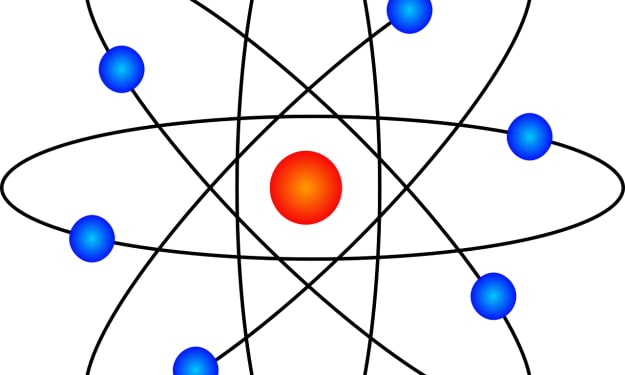
Atoms themselves consist of even smaller particles: protons, neutrons, and electrons. Protons and neutrons reside in the nucleus, which is the central part of the atom, while electrons orbit the nucleus. Protons carry a positive electric charge, electrons carry a negative charge, and neutrons have no charge. The number and arrangement of these subatomic particles in an atom determine its chemical behavior.
Matter is Classified
Matter can be classified into several categories based on its properties and behavior. These classifications help scientists make sense of the diverse substances in the universe. The primary classifications are:
Elements: Elements are the simplest form of matter. Each element is composed of a single type of atom. The periodic table of elements is a well-known representation of all known elements, each with its unique atomic number and atomic symbol.
Compounds: Compounds are substances formed by the chemical combination of two or more elements in fixed proportions. For example, water (H2O) is a compound composed of hydrogen and oxygen atoms.
Mixtures: Mixtures are combinations of two or more substances that are not chemically bonded. They can be homogeneous, where the components are uniformly distributed, or heterogeneous, where they are not evenly mixed. Air is an example of a homogeneous mixture, while a salad is a heterogeneous mixture.
States of Matter: Matter can exist in various physical states, mainly solids, liquids, and gases. Solids have a fixed shape and volume, liquids have a fixed volume but take the shape of their container, and gases have neither a fixed shape nor a fixed volume. Plasma is another state of matter, found in stars and lightning, which is highly ionized gas.
Properties of Matter
Matter exhibits various physical and chemical properties that help us identify and differentiate substances. These properties include:
Mass: Mass is the amount of matter in an object and is usually measured in kilograms or grams.
Volume: Volume is the amount of space matter occupies. It is typically measured in cubic units such as liters or milliliters.
Density: Density is the mass of an object per unit volume and is a useful property for comparing the relative heaviness of substances.
Melting and Boiling Points: These are the temperatures at which a substance changes its physical state, from solid to liquid and liquid to gas, respectively.
Solubility: Solubility is the ability of a substance to dissolve in a particular solvent. For example, sugar is soluble in water but not in oil.
Conductivity: Conductivity is the ability of a substance to conduct electricity or heat. Metals are good conductors of both electricity and heat.
Magnetism: Some materials, like iron, exhibit magnetic properties, attracting or repelling other magnetic materials.
Color and Odor: These properties are observable characteristics that can help identify substances.
Chemical Properties of Matter
Chemical properties describe how a substance behaves when it undergoes a chemical change. Some important chemical properties include:
Reactivity: Reactivity is the tendency of a substance to undergo chemical reactions with other substances. For example, sodium is highly reactive and can combust spontaneously in air.
Combustibility: Some materials can burn when exposed to oxygen, exhibiting the property of combustibility. Examples include paper, wood, and gasoline.
Corrosion: Corrosion is the deterioration of materials due to chemical reactions with substances like oxygen and moisture. Rusting of iron is a common example of corrosion.
Oxidation and Reduction: Some substances can undergo oxidation (loss of electrons) or reduction (gain of electrons) reactions, which are fundamental in chemistry.
The Conservation of Mass
One of the fundamental principles in the study of matter is the conservation of mass. This principle, attributed to the 18th-century French chemist Antoine Lavoisier, states that in a closed system, mass is neither created nor destroyed in chemical reactions. Instead, it is conserved. This means that the total mass of reactants is equal to the total mass of products in a chemical reaction.
The conservation of mass is a crucial concept in chemistry, and it has profound implications for our understanding of the behavior of matter in various processes, from simple combustion reactions to complex biochemical reactions.
The Quantum World: Matter at the Subatomic Level
As we delve deeper into the world of matter, we encounter the enigmatic realm of quantum physics. At the subatomic level, matter does not behave as we intuitively expect. The classical physics that governs our everyday lives begins to break down, and matter exhibits strange and fascinating properties.
Quantum mechanics describes the behavior of particles at this level, and some key features include:
Wave-Particle Duality: Particles, such as electrons, can behave as both particles and waves. This duality challenges our traditional notions of matter.
Uncertainty Principle: The uncertainty principle, formulated by Werner Heisenberg, asserts that it is impossible to simultaneously know both the position and velocity of a particle with absolute precision. This inherent uncertainty is a fundamental aspect of the quantum world.
Quantum States: Particles at the quantum level can exist in superposition, meaning they can be in multiple states simultaneously until observed.
Quantum Entanglement: When particles become entangled, changes in one particle's state instantaneously affect the state of the other, regardless of the distance between them. This phenomenon defies classical notions of causality.
Conclusion
Matter is a complex and diverse concept that forms the foundation of our understanding of the physical world. From the smallest subatomic particles to the vastness of the cosmos, matter plays a central role in every aspect of our lives. It can be observed and studied through its various properties, and as our knowledge of matter deepens, we continue to unveil its mysteries, both at the macroscopic and quantum levels. Understanding matter is not only a scientific endeavor but also a key to technological advancements, environmental sustainability, and the exploration of the universe itself.
About the Creator
Keep reading
More stories from Waseem835 Tv and writers in Education and other communities.
Understanding the Fundamental Building Block of Matter
Atoms are the bedrock of the material world. These tiny, invisible entities constitute the fundamental building blocks of matter, and their understanding is pivotal to comprehending the structure and behavior of the universe at the most fundamental level. In this lecture, we will delve into the nature of atoms, exploring their history, structure, and significance in our everyday lives.
By Waseem835 Tv2 years ago in Education
The Madness of King Trump
In light of what Trump has done in the wake of his unlawful attack on Venezuela and his unhinged quest to take over Greenland it becomes necessary for the military to refuse any and all orders coming out of the Dept. of Defense and the Trump Administration. Trump has once again proved to the rest of the world his delusions of grandeur have taken over from diplomatic solutions that would improve the quality of life for all populations.
By Dr. Williams5 days ago in Education
Emerging Trends in Hospitality Marketplaces Driving the Next Wave of Growth
Hospitality marketplaces are changing how travel businesses connect with guests. These platforms now shape pricing, visibility, and guest trust. As technology improves and travel habits shift, hospitality marketplaces are becoming more advanced and more selective. Businesses that understand these changes can stay ahead while others struggle to adapt.
By Jason Nissen6 days ago in Education


Comments
There are no comments for this story
Be the first to respond and start the conversation.