
Unsung Heroines: Women's Indispensable Role in Indonesia's Fight for Independence
Beyond the Battlefield: The Silent Strength Behind the Revolution

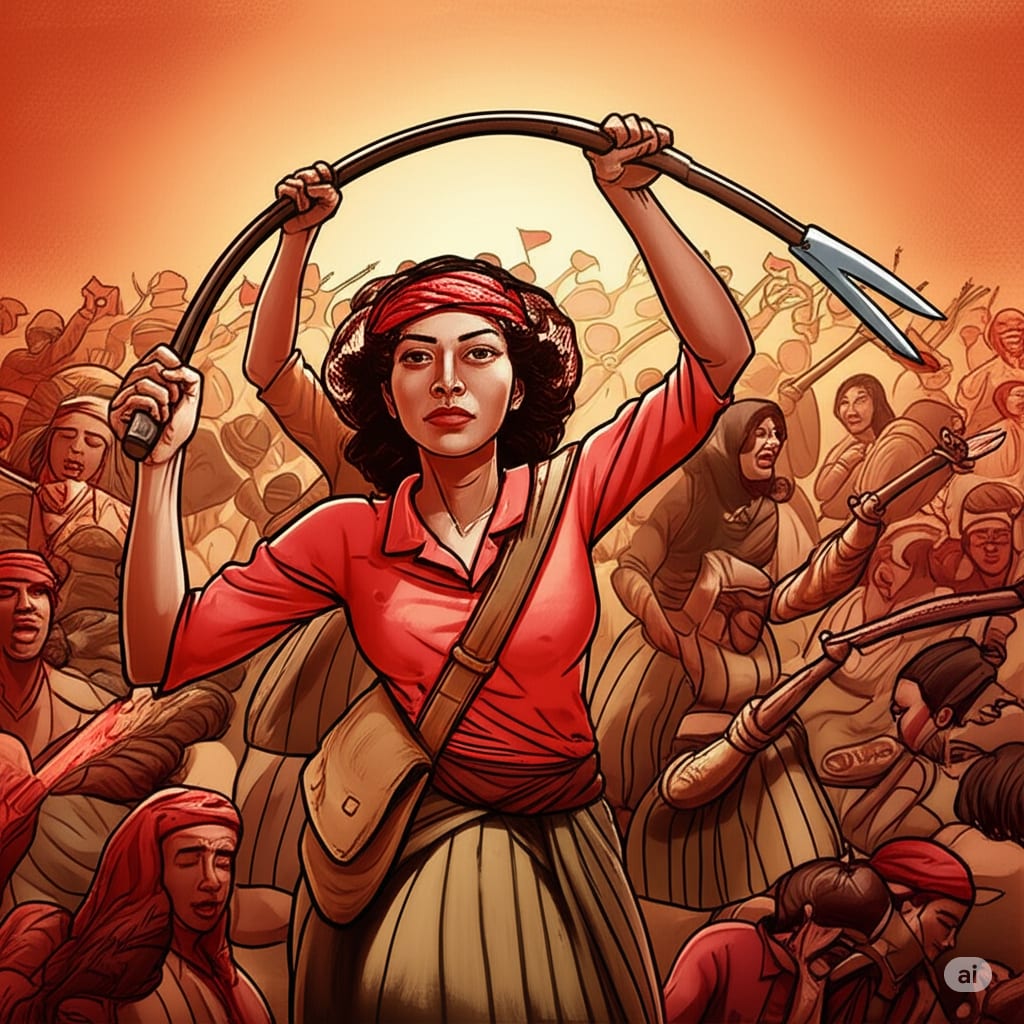
When we reflect on Indonesia’s long and arduous journey toward independence, the names that often echo in history books are those of male revolutionaries—Sukarno, Hatta, Sudirman. Yet beneath these prominent figures lies a web of contributions from women—courageous, resilient, and visionary—who played a crucial role in resisting colonial domination. These unsung heroines fought not just with weapons, but with words, compassion, intellect, and sheer determination. Their legacy, though underappreciated, is integral to the nation’s liberation from centuries of oppression.
Women’s involvement in Indonesia’s fight for independence did not begin in the 20th century. Even during the early resistance against Dutch colonization, female figures emerged with unyielding spirit. Among the earliest heroines was Cut Nyak Dhien, a noblewoman from Aceh. After the death of her husband in battle, she took up arms and led guerrilla warfare against the Dutch for years. Her leadership and tactical skills made her one of the fiercest enemies of colonial forces, proving that bravery was not defined by gender.
Similarly, Martha Christina Tiahahu, a teenager from Maluku, joined the resistance at the age of 17. She fought side by side with her father and other rebels, inspiring her community with her fearlessness. Captured by the Dutch and exiled to Java, she refused to eat or cooperate with her captors. She died at sea, a martyr whose spirit still lives on in the stories of her people.
However, not all battles were fought on the frontlines. Many Indonesian women contributed through intellectual resistance, education, and social mobilization. Raden Ajeng Kartini is perhaps the most iconic figure in this regard. Born into a noble Javanese family in the late 19th century, Kartini defied the traditions that restricted women's roles. Through letters written to her Dutch friends, she passionately advocated for women's rights, especially in education. Though she did not live to see independence, her vision of an empowered and educated Indonesian woman laid the foundation for future generations.
As the nationalist movement grew stronger in the early 20th century, women's organizations emerged across the archipelago. Groups like Putri Mardika, Istri Sedar, and Persatuan Perempuan Indonesia united women from different ethnic and religious backgrounds under a common cause—freedom and equality. These organizations held congresses, wrote in nationalist publications, and organized protests. They played a key role in political advocacy, raising awareness about colonial injustices and mobilizing support for independence.
During the Japanese occupation of Indonesia (1942–1945), women faced new challenges. Many were forced into labor or became victims of war crimes. Yet, even under these dire circumstances, their resilience never faltered. Women like Rasuna Said continued to speak out against injustice. Rasuna, a fiery orator and advocate for Islamic and women’s rights, was arrested for her political speeches long before independence. After independence, she became one of the first women to be appointed to Indonesia’s parliament.
One cannot overlook the countless unnamed women who worked behind the scenes—nursing wounded soldiers, cooking for fighters, delivering secret messages, and hiding revolutionaries from enemy eyes. These were mothers, daughters, and wives who risked their lives daily, without medals or recognition. Their homes became safehouses, their arms cradled children and rifles alike, and their prayers were whispered not in comfort, but in courage.
Another towering figure in the post-independence narrative is Fatmawati Sukarno, wife of Indonesia’s first president. She may be known for sewing the first national flag, but her role went far beyond that. Fatmawati was politically aware, deeply involved in women’s issues, and supported her husband during the most turbulent years of the revolution. Her presence in the nationalist movement reminded the nation that the symbol of freedom—the red and white flag—was stitched not just with thread, but with love and labor.
After Indonesia’s independence was proclaimed in 1945, many of these women continued to advocate for a more equitable society. The constitution acknowledged gender equality, but societal change came slowly. Women had to fight a new battle: not against foreign colonizers, but against entrenched patriarchy and systemic exclusion.
Even today, the recognition of women's roles in Indonesia's independence remains limited. History textbooks give them a few paragraphs, memorials rarely bear their names, and their stories are passed down quietly, like family secrets. Yet their contributions shaped the very fabric of the nation.
Why does this matter? Because forgetting the women of the revolution is to forget half of the nation’s soul. Their struggle teaches us that independence is not only won with weapons, but also through compassion, education, sacrifice, and unity. It reminds us that heroism is not defined by gender, and that the courage of women must never be a footnote in history.
About the Creator
Sky
hi!
Mastering X-Bar Theory in Grammar in 10 Minutes
Grammar can often feel like a maze of confusing rules, especially when we dive into syntax — the study of sentence structure. One of the foundational tools in modern linguistics is X-Bar Theory, a framework that helps explain how words and phrases combine to form sentences. While it might sound intimidating, understanding X-Bar Theory can become straightforward if approached step by step.
By Games Mode Onabout 7 hours ago in Education
Miss Persephone's Manual to a Seemingly Ordinary Life
Miss Persephone was found at the dining table, her blue eyes swollen, her tears arriving and retreating like the tides of the ocean. Earlier that day, her family had visited her in the retirement home where she had lived for eight years. It was her eightieth birthday.
By Imola Tóth4 days ago in Fiction


Comments (1)
You've highlighted Indonesia's female independence heroes. Cut Nyak Dhien's guerrilla warfare is truly inspiring. Martha's sacrifice is also remarkable.