
Unpacking the Factors Behind the Far-Right's Success in Germany
While a Political Firewall Against Extremists is Justified, Mainstream Parties Must Rebuild Electorate Trust

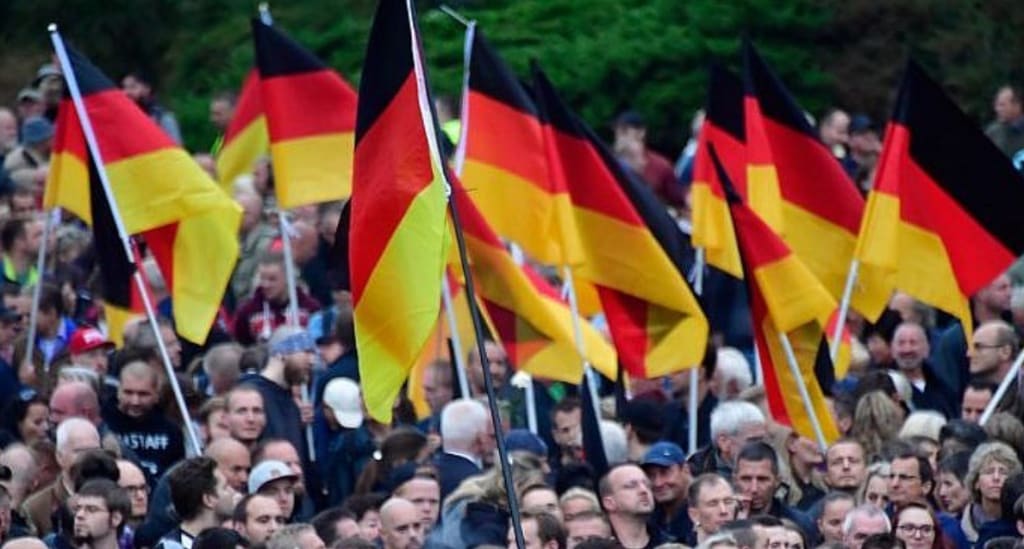
Germany's Far-Right Gains Ground in Regional Elections. The recent regional elections in Germany have yielded disappointing results for the ruling coalition, with the far-right Alternative for Germany (AfD) party achieving significant wins. According to Jan Hildebrand in Handelsblatt, the AfD, which is deemed “right-wing extremist” by German intelligence, comfortably secured victory in Thuringia and narrowly placed second in neighboring Saxony. This outcome marks a new low for Chancellor Olaf Scholz’s coalition government, as the SPD, FDP, and Greens collectively garnered only 13% of the vote in Saxony.
Commentators are expressing concern about the gravity of this situation, noting that the ruling parties appear disconnected from the growing frustration among the electorate. Christoph Hickmann in Der Spiegel points to Ukraine and migration as pivotal issues in the elections, with the AfD adopting a pro-Moscow stance and opposing migration.
The SPD has lost its liberal edge on migration policies; just days before the election, the first flight deporting Afghan asylum seekers with criminal convictions departed, yet this did not sway public sentiment. Voter frustration stems from everyday challenges, such as deteriorating infrastructure and unreliable public services. Many Germans feel that the government is unresponsive to their struggles, and a vote for the AfD has become a rejection of the current system. If the coalition fails to recognise these underlying issues, it risks making a significant miscalculation.
Alternative für Deutschland Achieves Historic Gains in Regional Elections
The Alternative für Deutschland (AfD) has made significant strides in the recent regional elections, securing nearly 33% of the vote in Thuringia and finishing second in Saxony with almost 31%. This marks the first time since World War II that a far-right party has emerged as a substantial political force in Germany.
Despite the shocking results, there was little immediate reaction from mainstream political leaders. Mario Voigt, the leader of the conservative Christian Democrats (CDU) in Thuringia, adopted a victorious stance despite his party's second-place finish, which garnered only 24% of the vote. He announced plans to initiate coalition negotiations with other “parties of the democratic centre,” explicitly excluding the AfD from discussions. Similarly, in Saxony, where the CDU narrowly won, leader Michael Kretschmer has also ruled out any collaboration with the AfD. This approach will necessitate the centre-right party to form complex alliances with two or three left-leaning parties in both states.
While maintaining a “firewall” around the AfD may seem justified from a democratic perspective, it raises questions about the mainstream parties' awareness of the growing disenfranchisement among large segments of the population.
In Thuringia, nearly half of the voters supported either the AfD or the newly formed pro-Russian Sahra Wagenknecht Alliance (BSW), which adopts leftist economic policies while taking a right-wing stance on immigration. Together, the AfD and BSW accounted for approximately 42% of the votes in Saxony. Chancellor Olaf Scholz of the centre-left Social Democratic Party (SPD) has asserted that building “stable governments without right-wing extremists” is essential, but this strategy seems more like a temporary fix than a long-term solution to winning back voters.
The SPD experienced a stark decline in the recent elections, securing only 6% and 7% of the vote in Thuringia and Saxony, respectively. Scholz characterized this loss as “bitter” but failed to acknowledge its broader implications, arguing that “dark predictions” about the SPD have not come to fruition. However, while the SPD may have surpassed the 5% threshold necessary for representation in parliament, its status as a mainstream political force is in jeopardy, particularly as polls indicate a decline in support compared to the AfD on a national level.
Discontent with mainstream politics has often been viewed as a remnant of East Germany’s past, encompassing regions like Saxony and Thuringia. Katrin Göring-Eckardt, vice-president of the Bundestag and a native of Thuringia, previously suggested that some East Germans are “stuck in dictatorship glorification.” However, the Greens, a party she represents, have been ousted from the Thuringian parliament and are polling at just 11% nationally. Dismissing voters’ concerns has proven to be a poor electoral strategy.
It is essential to note that eastern Germans are not anti-democratic; rather, there has been active public discourse leading up to the elections, with participation reaching record highs—three-quarters of eligible voters cast their ballots. East Germans are frustrated not with democracy itself but with feeling unheard and disregarded.
This sentiment is echoed across various demographics, particularly among younger voters, with 37% in Thuringia and 31% in Saxony supporting the AfD. This trend is consistent with previous European parliamentary elections, where the AfD attracted significant support among voters aged 16-24, coming in second with 16%—just one percentage point behind the conservatives.
The AfD also made notable gains among the working class during the European elections, a fact that has largely gone unrecognized by other political parties. Traditionally, the working class has been the SPD's core constituency, providing over 30% of the vote in elections from the late 1950s until 2005. The decline in support for the SPD is not a reflection of East Germans’ understanding of democracy.
When asked about their primary concerns, Germans cite immigration as their top issue, followed by energy prices, war, and economic stability. Many express feelings of anxiety regarding the rising crime rates, particularly violent crimes involving immigrants, which they perceive as a safety concern. However, the underlying issues extend beyond immigration; there is a broader apprehension about the future of the economy and politics, especially pronounced in the east but felt across the entire country.
These sensitive topics are challenging for left-leaning parties to address, yet it is imperative they engage in constructive discussions rather than allowing the AfD to dominate the narrative. This does not necessitate resorting to populism; rather, it requires centrist parties to foster open dialogues on pressing issues. The response to the regional elections must extend beyond merely preventing a far-right takeover; it serves as a wake-up call for Germany’s mainstream parties to engage with voters earnestly. It is crucial that this message resonates clearly in Berlin.
About the Creator
Trina Tuthill
Journlaist and radio presnter, podcast host - Passionate about social justice, feminism, family issues, culture, and music opinions and reviews.
Tips welcome
Keep reading
More stories from Trina Tuthill and writers in Education and other communities.
Mortgage rates: Five ways to save money.
The Bank of England unexpectedly raised interest rates by more than 0.5 percentage points. As a result, both current mortgage customers and prospective home buyers pay higher rates for their mortgages. The reason behind this decision is to prevent inflation from negatively impacting the economy. By raising interest rates, borrowing becomes more costly, which ultimately reduces loan demand. Consequently, this decrease in demand helps to lower inflation by reducing interest rates.
By Trina Tuthill3 years ago in Education
Image-to-text technology, also known as Optical Character
Image-to-text technology, also known as Optical Character Recognition (OCR), has transformed the way we interact with visual information. It allows machines to extract text from images, enabling various applications across multiple industries. From digitizing printed documents to reading text from scanned images, OCR plays a vital role in making printed content accessible, editable, and searchable. The need for such technology has grown exponentially with the increasing reliance on digital data and the rapid shift from physical to digital content in nearly all sectors of life. As the digital world continues to expand, image-to-text technology has paved the way for more seamless workflows, enabling businesses and individuals alike to save time, effort, and resources.
By Alexander Jackson6 days ago in Education



Comments
There are no comments for this story
Be the first to respond and start the conversation.