
Understanding Mental Health and Mental Illness Through Brain Scans
The Future of Mental Health: Insights from Neuroimaging.
Understanding Mental Health and Mental Illness Through Brain Scans
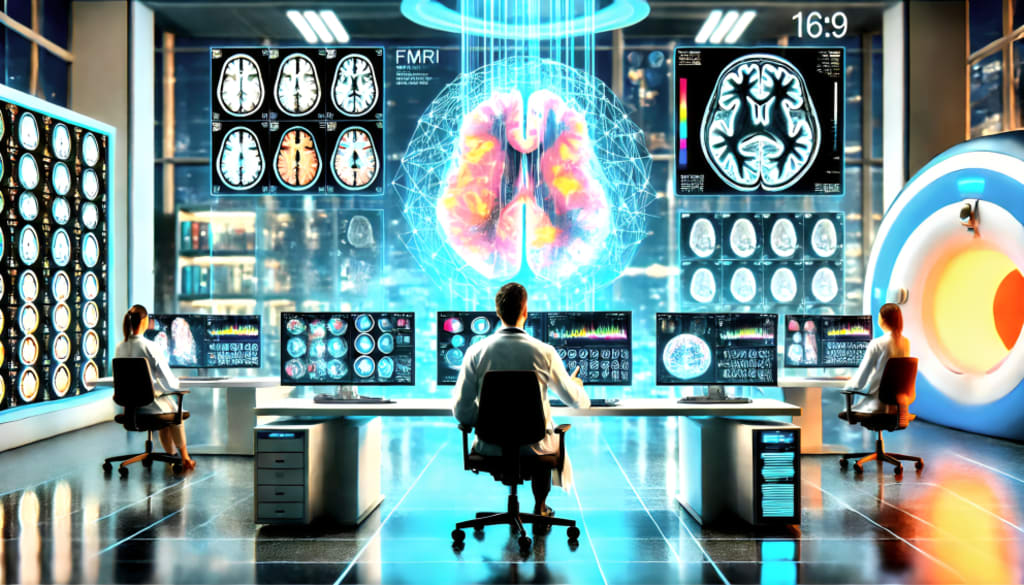
Within the last few decades, scientists have made considerable progress toward understanding the complexities of mental health and mental illness. Key to this increased understanding is the use of brain scans, allowing an insight into the physiological underpinnings of specific mental health conditions. This article focuses on brain scans and mental health and illness, showing their consequences on diagnosis and treatment and understanding the human mind.
The Importance of Mental Health
Emotional and psychological well-being as well as social well-being collectively shape mental health; they weigh significantly in how an individual thinks and feels relating to actions. Also, it provides some support in managing stress in interacting and making choices. However, mental issues exist, where mental illness can be defined as a more specific and diagnosable condition-categories that include depression, anxiety, schizophrenia, or bipolar disorder which seriously impede daily life and overall quality of living.
What Brain Scans Reveal
Brain scans allow researchers to monitor the activities of the brain in real-time and its structure through machine imaging such as functional magnetic resonance imaging (fMRI) and positron emission tomography (PET). Clinical application of these imaging technologies offers insights on how brain regions involved in various mental illness behave, opening up issues concerning previously understood patterns.
Functional Magnetic Resonance Imaging (fMRI): This technique determines changes in blood flow within the brain, showing which areas are more active during certain tasks or stimuli. For example, such studies have indicated that those suffering from depression might demonstrate inconsistent activity in the prefrontal cortex region, which is connected with making decisions and regulating emotions.
Positron Emission Tomography (PET): This kind of scan visualizes metabolic processes and can help find areas of the brain that may be hyperactive or under-active in different mental situations. Through PET imaging, dopamine receptors have shown significant changes in studies regarding their impact on schizophrenia, thus aiding in understanding this complex disorder with the health fraternity.
Significance for Diagnosis and Treatment
The information retrieved from the brain imaging has the potential to revolutionize the diagnosis and treatment of mental illnesses. It could significantly improve diagnostic criteria following the realization of the biological bases of mental illnesses and may lead to better identification of disorders that may produce very similar symptoms, while having relatively different causes.
Yet, brain scans can track the efficiency of their treatments. For instance, there is already substantial proof from studies that neurofeedback treatment, in which individuals are taught to modify their brainwave patterns, can have a direct effect on observable changes in brain activity, suggesting a direct relationship with treatments resulted in outcomes in neurology.
The mind and the brain combine worlds.
One of the most important and profound aspects of this technology is that it could prove to be the bridge between the psychological and biological perspectives concerning mental health. Traditionally, psychology tends to see the larger part of the world of mental illness through the behavioral eyes and the emotional side of symptoms and tends to neglect the physiological aspects behind the phenomena. Brain scans would provide actuality to show that mental illnesses might really have neurobiological signatures that differentiate them, and incorporate them into a better understanding of mental health.
Bridging the Gap Between Mind and Brain
Similarly, brain scans may also be used to test the effectiveness of a treatment. For example, studies have shown that neurofeedback therapy, wherein people modify their brainwave patterns, may cause visible changes in their brain and may therefore imply a direct relationship between treatment interventions and neurological outcomes.
Ethical Considerations and Limitations
There is very great promise in using brain scans in mental health research, but ethical issues need to be considered. There is a danger of misinterpretation of brain scans and of stigmatization of individuals because of this, as well as an overreliance on biological explanations for highly complicated human behavior. Mental health is an issue that is biological, psychological, and social, and it is important that brain imaging findings be seen in a wider context.
Advanced imaging technology may be available but quite costly, restricting access to relatively few individuals. Careful equitable approaches must continue to evolve in the field.
The Future of Mental Health Research
As research is going further in neuroimaging, it is going to have a very bright future in diagnosis and treatment of mental health. Innovatory methods such as machine learning algorithms, which analyze imaging data, can actually broaden the scope of predictive models that identify individuals who are at risk and personalize all the more effective interventions they receive.
The conclusion that brain scans are the be-all and end-all of seeking knowledge of mental health and mental illness can be undoubtedly held. Thus, an inner working of the brain could be more visualized, possible insights accessed that would further improve diagnosis toward targeted treatments and allow one a deeper appreciation of the mind. With all of these advancements and a commitment to ethical application of neuroscience into mental health care, a better quality of life will certainly be brought to many suffering individuals.
About the Creator
Keep reading
More stories from Sabz Ali Khan and writers in Education and other communities.
Mental Health: A Comprehensive Perspective
Introduction Mental health is an essential dimension of human health, although often it is neglected, making it difficult to integrate with the majority of things related to health, education, and other policy discussions now. However, society's awareness is increasing, and it is beginning to be understood that mental health is not merely the absence of mental illness. Its understanding encompasses a complex interplay among emotional, psychological, and social domains, which affects people of all ages and communities. Unfortunately, since stigma tends to inhibit help-seeking behavious for most affected individuals, it further creates these conditions to be more chronic. This paper tries to speak about the multidimensionality of mental health, the personal and societal impacts, and the demands of ailments in a holistic setting: such means of mutual understanding, compassion, and, thus, effective support systems actually reflect the conviction that mental health is highly essential for human life.
By Sabz Ali Khanabout a year ago in Education
Building a Mobile App with Gemini 3: From Idea to a Real Phone Install
Introduction: Why “AI builds apps” is often misunderstood When people talk about using AI to build apps, the expectation is often unrealistic. Many imagine typing a single prompt and receiving a fully polished mobile application ready for the App Store. In practice, that is not how real development works.
By Coleen Kemmer7 days ago in Education
Step-by-Step Guide to Going Pro in Poker in 2026: From Novice to Expert
In 2026, poker continues to thrive as a competitive and lucrative field for skilled players. With hybrid formats that combine the convenience of online access with the prestige of live events, the game offers greater flexibility and opportunities than ever. If you're thinking of turning your passion into a full-time career, now is a great time to get serious.
By Micah Raskin4 days ago in Education
If You Love Me, You'll Do It
I met Jason when I was five years old. I could say that I loved him from the moment I saw him. He was so handsome to me and I felt in awe by his presence. When they introduced him as the new kid in school, I wanted to be his friend right away. I remember it like it was yesterday. I remember his smile and how he didn't seem shy. He appeared confident and ready to learn. I waved at him and said "hello," before anyone else could even say a word. He sat next to me, and I asked him if he wanted to be friends. He looked so happy as he said, "Yes!"
By Sidney Smith (Sid Smith)6 days ago in Fiction



Comments
There are no comments for this story
Be the first to respond and start the conversation.