
Understanding Finite Element Analysis: A Beginner’s Guide to FEA
Finite Element Analysis
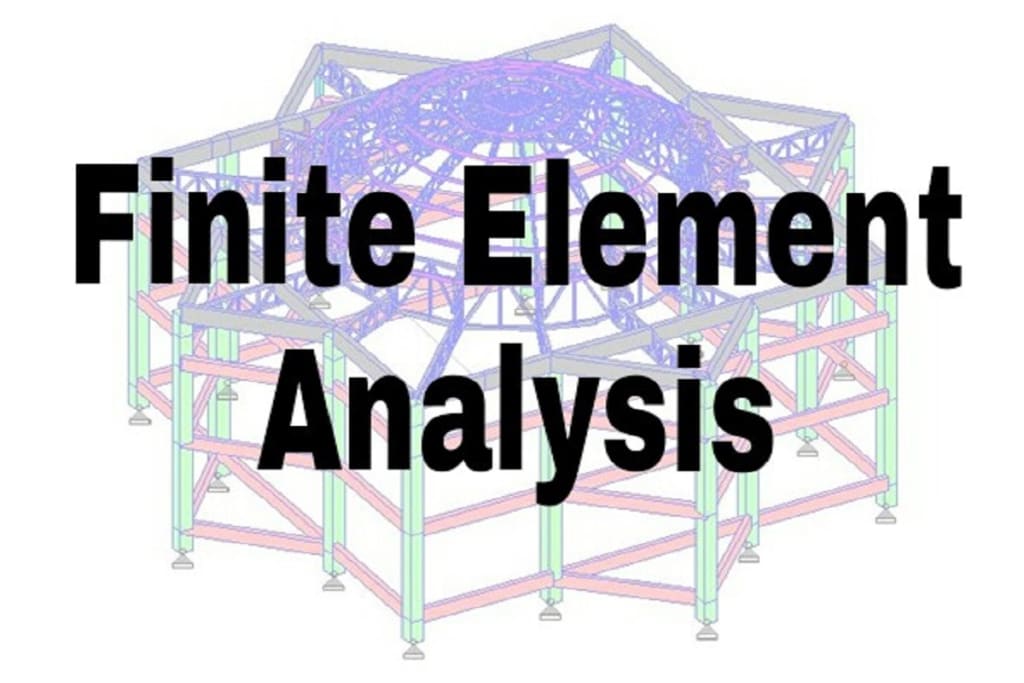
Finite Element Analysis (FEA) is a powerful computational tool that engineers and scientists use to analyze and predict the behavior of structures and systems under various conditions. Whether you are designing a bridge, a car, or a medical device, FEA helps to simulate the real-world behavior of these objects, providing insights that can lead to improved designs, enhanced safety, and cost savings. For beginners, Finite Element Analysis can seem like a complex topic, but breaking it down into manageable components can help you understand its core principles and applications. This article serves as an introduction to FEA, explaining its basic concepts, processes, applications, and benefits.
What is Finite Element Analysis?
At its core, FEA is a numerical method used for solving problems related to solid mechanics, heat transfer, fluid dynamics, and other fields of physics. The idea is to break down a large, complex problem into smaller, simpler parts called "finite elements." These elements are then analyzed using mathematical equations to predict how a structure will behave under different conditions. The results of these analyses help engineers make informed decisions about material choices, design modifications, and performance under load.
The term "finite element" refers to the small, discrete parts into which the entire structure or system is divided. Each element represents a tiny portion of the overall model and behaves according to specific mathematical rules. Once all the elements are analyzed, the results are combined to give a detailed prediction of how the entire system will perform.
Key Concepts of Finite Element Analysis
1. Meshing
The first step in an FEA simulation is to create a "mesh." This involves dividing the structure into small, manageable elements, typically in the shape of triangles, quadrilaterals, or tetrahedra. The quality of the mesh is crucial to the accuracy of the analysis. A fine mesh (with more elements) provides more detailed results but requires more computational power. Conversely, a coarse mesh (with fewer elements) is computationally faster but may provide less accurate results.
2. Nodes
Nodes are the points where the elements connect. They define the boundaries of each element and are used to calculate the displacements, stresses, and strains that the structure experiences during analysis. The number and distribution of nodes affect the accuracy of the results.
3. Material Properties
In FEA, the material properties of the elements must be defined. This includes characteristics such as elasticity, tensile strength, thermal conductivity, and density. Accurate material properties are essential for simulating real-world behavior accurately. Different materials behave differently under stress, and FEA allows engineers to model these variations precisely.
4. Boundary Conditions
Boundary conditions are constraints applied to the model to simulate real-world physical conditions. These may include fixed supports, applied forces, or temperature variations. Boundary conditions help ensure that the simulation results reflect realistic conditions that the structure will encounter.
5. Solving the System
Once the mesh, material properties, and boundary conditions are defined, FEA uses mathematical equations to solve the system. These equations govern the behavior of the elements under various loads and forces. The solver calculates the displacements, strains, stresses, and other quantities for each element, and these results are combined to provide a comprehensive view of the structure’s behavior.
6. Post-Processing
After the solver finishes, the results are presented in a readable format. Post-processing involves visualizing the results using graphs, contour plots, and 3D models. Engineers can then interpret these results to assess whether the design meets safety, performance, and durability requirements.
Types of Analysis in Finite Element Analysis
FEA can be used for a wide range of analyses, depending on the problem at hand. Some common types of analysis include:
- Structural Analysis: This is the most common use of FEA, where engineers analyze how a structure will respond to forces, such as stress, strain, and displacement. This includes linear and nonlinear static analysis, as well as dynamic analysis to assess how a structure responds over time.
- Thermal Analysis: FEA is used to simulate heat transfer and temperature distribution within a system. Engineers use thermal analysis to evaluate the effects of heat on materials and structures, including the potential for thermal expansion or contraction.
- Fluid Dynamics Analysis: FEA can be applied to fluid flow simulations, allowing engineers to understand how fluids move through systems like pipes, ventilation systems, or even biological tissues.
- Electromagnetic Analysis: FEA can also be used to simulate electromagnetic fields in applications such as antenna design, electric motors, or electronic devices.
- Fatigue and Durability Analysis: FEA helps predict the life expectancy of materials and structures by simulating how they will behave under cyclic loading conditions, which is crucial for industries such as aerospace, automotive, and manufacturing.
The FEA Process: A Step-by-Step Overview
The FEA process generally follows a systematic approach, consisting of several key steps:
1. Pre-processing (Modeling and Setup)
- Define the geometry of the model.
- Create the mesh by dividing the model into finite elements.
- Assign material properties to each element.
- Set up boundary conditions, such as forces, supports, and environmental conditions.
2. Solving (Analysis)
- The solver calculates the response of each element to the applied conditions using the governing equations.
- The solver generates a set of results for each element, which are combined to provide a global solution for the entire structure.
3. Post-processing (Results Interpretation)
- Analyze the results through graphs, charts, and visualizations, such as deformation plots or stress distribution maps.
- Interpret the results to identify potential design flaws, stress concentrations, or areas of improvement.
4. Optimization
- Based on the analysis, engineers may modify the design to optimize its performance, minimize weight, reduce material costs, or improve safety.
Applications of Finite Element Analysis
FEA is used across a wide variety of industries, including:
- Aerospace: In the design of aircraft, spacecraft, and components, FEA helps ensure structural integrity under extreme conditions, such as high-speed airflow and intense vibrations.
- Automotive: FEA is used to optimize car body structures, suspension systems, and crash tests, ensuring safety and performance.
- Civil Engineering: Engineers use FEA to model bridges, buildings, and other infrastructure to assess their ability to withstand loads, such as wind, traffic, and seismic activity.
- Manufacturing: FEA helps simulate the performance of tools, molds, and machines, improving design and reducing the need for physical prototypes.
- Biomedical Engineering: FEA is used to design implants, prosthetics, and other medical devices by simulating the mechanical properties of human tissue and materials.
Benefits of Using FEA
- Cost and Time Savings: FEA allows for virtual testing of designs, reducing the need for expensive physical prototypes and experimental testing. This speeds up the design process and minimizes costly errors.
- Enhanced Accuracy: By providing detailed insights into how a system will behave, FEA helps engineers identify potential issues before they occur in the real world.
- Improved Design Optimization: FEA allows engineers to experiment with different materials, geometries, and configurations to find the best possible design.
- Better Safety: By simulating how structures respond to extreme conditions, FEA helps ensure that safety standards are met and that the risk of failure is minimized.
- Versatility: FEA can be applied to a wide range of engineering disciplines, from mechanical and civil to aerospace and biomedical, making it an invaluable tool in many industries.
Conclusion
Finite Element Analysis is a powerful and versatile tool that has revolutionized the way engineers approach design and problem-solving. By breaking down complex systems into smaller, manageable elements, FEA analysis allows for accurate predictions of how structures will behave under various conditions. From aerospace to automotive, FEA plays a crucial role in optimizing designs, ensuring safety, and improving overall efficiency. Whether you are a student, engineer, or industry professional, understanding the basics of FEA is an essential skill in today’s technologically advanced world.
About the Creator
Keep reading
More stories from simutechgroup and writers in Education and other communities.
Computational Fluid Dynamics Consulting: Empowering Innovation Through Simulation
What Is Computational Fluid Dynamics (CFD)? Computational Fluid Dynamics (CFD) is the science of predicting fluid flow, heat transfer, and other phenomena by solving mathematical equations that govern these processes. Leveraging CFD simulations allows engineers to visualize and analyze how fluids interact with surfaces, structures, and systems in real-world conditions.
By simutechgroupabout a year ago in Education
The Lean Advantage: How Small Improvements Create Massive Business Wins
In today’s fast-moving market, businesses don’t always need massive overhauls to see major growth. The real competitive advantage often comes from Lean process improvement—small, consistent changes that reduce waste, improve speed, and strengthen customer value. With a proactive approach, companies can spot inefficiencies early, prevent recurring problems, and build smarter systems before minor issues become costly setbacks.
By Duke Valentour6 days ago in Education
Autonomy Is The Real Privilege
Good morning, freedom-seekers! Today we’re gonna be looking at autonomy. A strange word, I know; one many would probably look at blankly and run away from on sight. We’re gonna figure out what it actually means, consider how it’s achieved, and decipher just how deeply most of us are tangled up in dependence without realising it.
By That ‘Freedom’ Guy5 days ago in Humans




Comments
There are no comments for this story
Be the first to respond and start the conversation.