
Understand JSX in React.js
A Beginner's Guide to JSX Syntax and Usage in React Applications

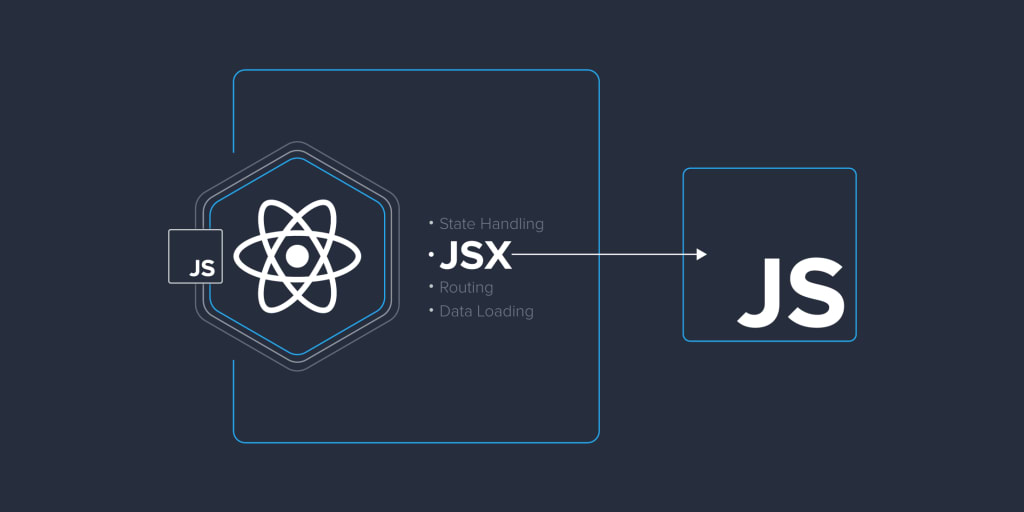
React.js is a popular front-end JavaScript library used for building user interfaces. One of its core features is JSX, a syntax extension that allows developers to write HTML-like code within their JavaScript files. JSX is an essential part of React development, and understanding its syntax and how it works is crucial for building high-quality applications.
What is JSX?
JSX is a syntax extension for JavaScript that allows developers to write HTML-like code within their JavaScript files. It was developed by Facebook as a way to make building user interfaces with React easier and more intuitive. Instead of manually manipulating the DOM (Document Object Model), developers can use JSX to define components and their respective properties in a declarative manner.
Here is an example of a simple JSX component:
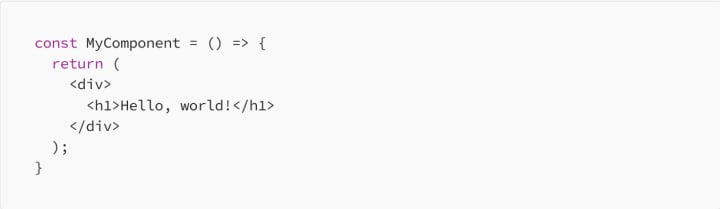
In this code snippet, we have defined a functional component called MyComponent that returns a div element containing an h1 element with the text "Hello, world!".
JSX is not HTML
While JSX looks like HTML, it’s important to note that it’s not the same thing. Under the hood, JSX is transformed into JavaScript function calls that create React elements. For example, the previous code snippet is equivalent to:

In this case, we can see that the JSX is transformed into a call to React.createElement() with the appropriate arguments. This means that JSX is just a syntactic sugar on top of React, making it easier to read and write components.
JSX allows for dynamic content
One of the most powerful features of JSX is that it allows for dynamic content. This means that you can use JavaScript expressions inside your JSX code to compute the values of attributes or children. For example:
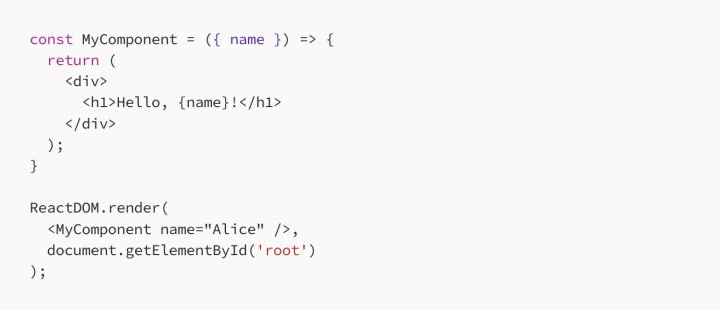
In this code snippet, we have defined a functional component that takes a name prop and uses it to render a personalized greeting. The name prop is accessed inside the JSX code using curly braces, which indicates that it's a JavaScript expression.
JSX and HTML attributes
JSX allows developers to specify HTML attributes using camelCase instead of kebab-case. For example, instead of writing class as an attribute, you would use className. This is because class is a reserved keyword in JavaScript, so it can't be used as an attribute name.
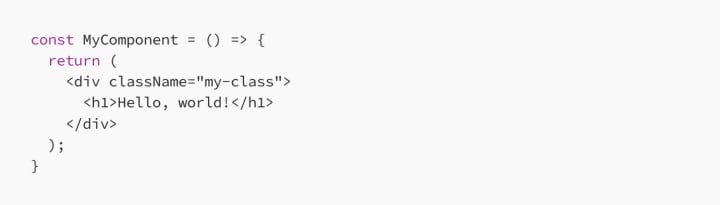
In this code snippet, we have used the className attribute to add a CSS class to the div element.
JSX and JavaScript expressions
JSX allows developers to use JavaScript expressions inside curly braces {} to render dynamic content. For example:

JSX and React components
JSX is the primary way that React components are defined. A React component is simply a function that returns JSX code. For example:
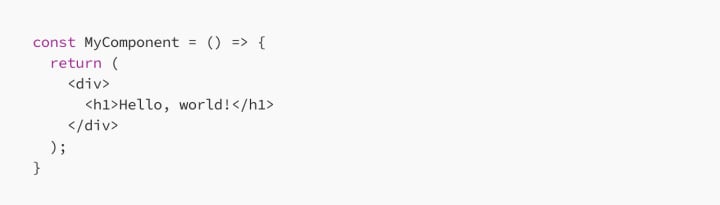
In this code snippet, we have defined a functional component called MyComponent that returns a div element containing an h1 element with the text "Hello, world!". This is a very simple example, but React components can be much more complex and can include state, props, and lifecycle methods.
JSX and the virtual DOM
One of the key benefits of using JSX in React is that it allows React to optimize updates to the DOM through the use of the virtual DOM. When a component’s state or props change, React re-renders the component’s JSX code, which creates a new virtual DOM tree. React then compares this new tree to the previous tree and calculates the minimum number of changes needed to update the real DOM. This process is called reconciliation, and it’s what allows React to be so fast and efficient.
Conclusion
JSX is an essential part of React development, and understanding its syntax and how it works is crucial for building high-quality applications. JSX allows developers to write HTML-like code within their JavaScript files, making it easier to read and write components. It also allows for dynamic content and works seamlessly with the virtual DOM, which is a key part of React’s performance optimization. With JSX, developers can build complex user interfaces with ease, making React a powerful tool for building modern web applications.
The best resources to get more detailed knowledge about JSX
React documentation on JSX: https://reactjs.org/docs/introducing-jsx.html
Official JSX syntax reference: https://jsx.github.io/
Understanding JSX by Wes Bos: https://wesbos.com/react-jsx/
Getting started with React by Kent C. Dodds: https://kentcdodds.com/blog/getting-started-with-react
Learn React by building a tic-tac-toe game (which uses JSX): https://reactjs.org/tutorial/tutorial.html
These resources should provide a solid foundation for understanding JSX and its role in React development. Good luck and happy coding!
About the Creator
FARDA KARIMOV
I'm a front-end engineer creating visually appealing and user-friendly web experiences. On Vocal Media, I share insights and advice on front-end development and design trends. Join me to explore the world of front-end development.
Keep reading
More stories from FARDA KARIMOV and writers in Education and other communities.
Biggest mistakes that you shouldn’t make as a Front-end developer
Front-end development is a rapidly evolving field with new technologies and techniques emerging all the time. While this presents exciting opportunities for developers to build innovative and engaging user interfaces, it also means that there are many opportunities to make mistakes. In this article, we’ll take a look at some of the biggest mistakes that front-end developers make and how to avoid them.
By FARDA KARIMOV3 years ago in Education
Misplaced Optimism: A Year of Accountability Promised — and Withheld at LAUSD
“We must hold the Superintendent accountable” – Karla Griego (2024) Ten years ago, I ran for a seat on the LAUSD Board of Education to change the district I believed was failing its students, especially those with Special Education needs. My opponent was Tamar Galatzan, an entrenched incumbent who was backed by the charter school industry. I achieved the lowest cost per vote, just 69 cents, in the entire city during that election cycle. While it wasn’t enough to win the seat, our campaign helped knock Galatzan out of office. This helped to clear a pathway for change and raised expectations that accountability might finally follow.
By Carl J. Petersen7 days ago in Education




Comments
There are no comments for this story
Be the first to respond and start the conversation.