
"Types and Uses of Printers"
"Understanding Different Types and Functions of Printers"

A printer is a peripheral device that transfers digital data from a computer or other electronic devices onto paper. This output is commonly referred to as a "hard copy." Printers are essential in homes, schools, and businesses for creating physical records of digital documents, including text, images, spreadsheets, and presentations. They come in a variety of models and technologies to cater to different printing needs, ranging from simple text printing to high-resolution photo output.
Printers can be broadly categorized based on their output capabilities: color printers and black-and-white printers. Color printers are capable of printing in full color, making them suitable for photographs, posters, brochures, and other materials that require vibrant visuals. On the other hand, black-and-white printers, often used in offices, are primarily designed for printing text documents and are generally more economical when color is not needed.
Over the years, printer technology has evolved significantly. Today, there are three main types of printers widely in use: Dot Matrix Printers, Inkjet Printers, and Laser Printers. Each type functions differently and is suited to specific tasks.
--
1. Dot Matrix Printers
Dot Matrix Printers are among the earliest types of printers and work using a technology similar to that of a typewriter. These printers have a print head that moves back and forth or in an up-and-down motion on the page and prints by striking an ink-soaked ribbon against the paper, forming characters out of dots. Each character is made up of a matrix of tiny dots, which is how the printer gets its name.
These printers are known for their ability to create carbon copies or duplicate forms because the impact of the print head can press through layers of paper. Due to this unique ability, Dot Matrix Printers are still used in environments such as banks, billing departments, and logistics companies, where multi-part forms are required.
However, Dot Matrix Printers have some drawbacks. They are noisy, relatively slow, and produce lower print quality compared to modern printers. Also, they generally print in black and white, although some models support basic color printing with multi-colored ribbons.
--
2. Inkjet Printers
Inkjet Printers are among the most popular types of printers used in homes and small offices. These printers spray tiny droplets of ink directly onto the paper to form characters and images. The nozzles in the print head control the amount and placement of the ink with high precision, allowing for detailed and high-quality output.
There are two common technologies used in inkjet printing: thermal bubble and piezoelectric. Thermal bubble inkjet printers use heat to create a bubble that forces ink out of the nozzle, while piezoelectric inkjets use vibrations to push the ink out. Both methods are effective in creating crisp images and text.
One of the main advantages of inkjet printers is their high-quality color printing. They are ideal for printing photographs, colorful charts, graphics, and even art prints. Inkjet printers are relatively affordable, and their compact size makes them a good choice for personal use.
However, ink cartridges can be expensive, and the cost per page can be higher than other printer types. The ink may also smudge if not handled properly, and over time, print heads may get clogged, requiring cleaning or replacement.
3. Laser Printers
Laser Printers use a completely different mechanism from inkjets or dot matrix printers. They rely on a laser beam and electrostatic technology to transfer toner powder onto paper. The laser beam creates an image on a rotating drum by altering the electrical charge on its surface. The drum then attracts toner (powdered ink) and presses it onto the paper, which is then heated to fuse the toner permanently.
Laser printers are known for their speed, efficiency, and high-quality text output. They are ideal for environments where high volumes of printing are needed, such as offices and schools. Laser printers are available in both monochrome and color versions, though color laser printers are generally more expensive than their monochrome counterparts.
These printers offer lower cost per page over time, especially for black-and-white printing. They also produce sharp, smudge-free text, making them perfect for professional documents. On the downside, the initial purchase cost of a laser printer, especially color models, is higher. Toner cartridges are
About the Creator
Keep reading
More stories from Muhammad Yar and writers in Education and other communities.
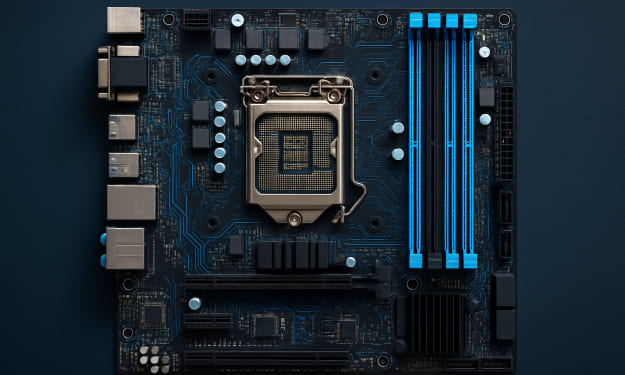
. Core Component of Computer System 2. Motherboard: The Computer’s Central Hub 3. System Board in Modern Computers 4. Mainboard Connects All Computer Parts 5. Understanding the Computer Motherboard Structure
Motherboard or System Board The motherboard, also referred to as the system board, mainboard, or logic board, is one of the most critical components in a computer system. It is a large, flat piece of circuitry made from fiberglass or similar non-conductive materials, with numerous circuits and components mounted on its surface. Often considered the "backbone" of the computer, the motherboard acts as the central hub to which all other computer components are connected, enabling them to communicate and work together effectively.
By Muhammad Yar10 months ago in Education
Why ISO Certification Is Becoming a Business Standard for Companies in the UAE
Businesses in the UAE operate in a competitive environment. Clients expect reliability. Regulators expect compliance. International partners expect structured operations. Because of these expectations, companies are adopting management systems that improve how they operate.
By Umar Quality Jounala day ago in Education



Comments
There are no comments for this story
Be the first to respond and start the conversation.