
Tuskegee Syphilis Study: Using Human as Guinea Pigs
The Tuskegee experiment was aimed to study the progression of syphilis


In 1928, the "Oslo Study of Untreated Syphilis" examined the pathological effects of untreated syphilis on several hundred white males. This study was retrospective in nature, as researchers relied on information from the medical histories of patients who had already contracted syphilis but had remained untreated for a significant duration of time.
Inspired by the findings of the Oslo Study, the U.S. Public Health Service Syphilis Study at Tuskegee decided to initiate a prospective study to complement it. However, the Tuskegee study was conducted unethically, as participants were deceived and denied proper treatment for their condition, leading to severe health complications and in some cases, death.
The infamous Tuskegee experiment was initiated in 1932 at a time when syphilis, a contagious venereal disease, had no known cure. Approximately 600 African American men from Macon County, Alabama were enlisted in the project after being promised free medical care. The study's primary objective was to examine the complete progression of the disease.
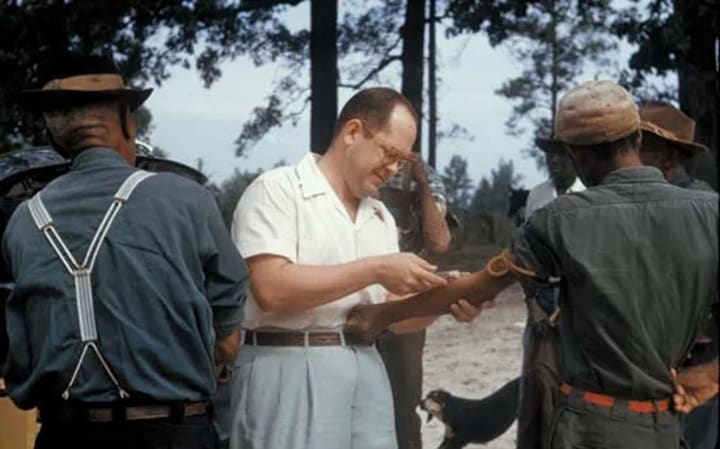
The promise of free medical care was used as an incentive to encourage participation in the Tuskegee study. Although the men received both medical and mental care that they would not have otherwise had access to, the PHS deceived them by withholding their syphilis diagnosis and administering disguised placebos, ineffective methods, and diagnostic procedures under the guise of treating "bad blood." This unethical conduct on the part of the PHS resulted in the participants being deprived of proper treatment for their condition and left to suffer the debilitating effects of untreated syphilis.
The majority of the participants were sharecroppers who had little to no prior experience with medical care. The study was conducted by doctors from the U.S. Public Health Service (PHS), who informed the participants that they were receiving treatment for "bad blood," a term that was commonly used in the area to describe various health issues. The study included 399 men who had latent syphilis, as well as a control group of 201 men who did not have the disease.
Even though penicillin became the recommended treatment for syphilis in 1947, 15 years into the study, the participants were not given the proper medication. Instead, they were only provided with placebos such as aspirin and mineral supplements. Although health workers monitored their condition, PHS researchers convinced local physicians in Macon County not to treat them. As a result, the Tuskegee Institute (now known as Tuskegee University) was chosen as the research location.

The researchers intentionally withheld effective care from the participants to observe the full progression of the disease. This resulted in the men experiencing severe health issues such as blindness, insanity, and other debilitating effects caused by their untreated syphilis.
When the study was finally revealed to the public, it was discovered that 28 participants had died from syphilis, and 100 others had passed away as a result of related complications. Additionally, at least 40 spouses had been diagnosed with the disease, and 19 children had contracted it at birth due to their parents' untreated condition. These staggering figures serve as a stark reminder of the tragic impact of the study's unethical conduct.
In 1973, Congress conducted hearings on the Tuskegee experiments. The following year, the surviving participants of the study and the heirs of those who died received a $10 million out-of-court settlement. Additionally, new guidelines were implemented to safeguard human subjects in research projects funded by the U.S. government.

The Tuskegee experiment had a lasting impact on the African American community, leading to widespread distrust of public health officials and vaccines. In an effort to promote racial reconciliation, President Bill Clinton issued a public apology in 1997, acknowledging that "The United States government did something that was wrong—deeply, profoundly, morally wrong… It is not only in remembering that shameful past that we can make amends and repair our nation, but it is in remembering that past that we can build a better present and a better future."
The last participant of the Tuskegee study passed away in 2004, marking the end of a dark chapter in the history of medical research in the United States.
About the Creator
Rare Stories
Our goal is to give you stories that will have you hooked.
This is an extension of the Quora space: Rare Stories
X(formerly Twitter): Scarce Stories
Writers:
....xoxo
Keep reading
More stories from Rare Stories and writers in Education and other communities.
Inside the rise and fall of Zzyzx: The Abandoned Ghost Town Used For Health Scam.
When Curtis Howe Springer names his new found resort Zzyzx, he intended it to be the last word in the English language. The word is pronounced "ZYE-zix" and is located in the Mojave Desert in California. While the name may seem mysterious and exotic, the origins of Zzyzx are rooted in a dark history of fraud and deception.
By Rare Stories3 years ago in Education
The Class that Kicked my Ass
The most difficult undergraduate course I took was Linguistics, and the most difficult graduate school course for me was History and Theory of Rhetoric. The language of language was difficult to learn; it’s dense, it has its own symbols. Diagramming and scansion are only the tip of the iceberg. Gaining a basic understanding of inflection and the difference between inflected and uninflected language was an easy threshold, as were consonance and asonance (we’ll go in-depth with those very soon). When we got down to phonemes and their meanings, I was out of my depth. I’m returning to the text now, hoping to gain passage through thresholds previously impenetrable.
By Harper Lewis2 days ago in Education
Transforming Rentals into Profit Powerhouses
Owning rental property offers a reliable income stream, yet many landlords leave untapped the potential earnings. Thoughtful renovations can elevate rental appeal, increase monthly income, and reduce vacancies. By approaching property upgrades strategically, owners can turn standard rentals into highly competitive, profitable assets. Planning renovations with clear objectives ensures that every improvement contributes directly to long-term financial performance.
By Manny Khoshbin2 days ago in Education


Comments
There are no comments for this story
Be the first to respond and start the conversation.