
Tunnel Rats: The Short, Brave Soldiers Who Destroyed Underground Bombs.
These daring military engineers delved into the complicated Viet Cong tunnels to obtain intelligence and disable bombs, often at their personal risk.

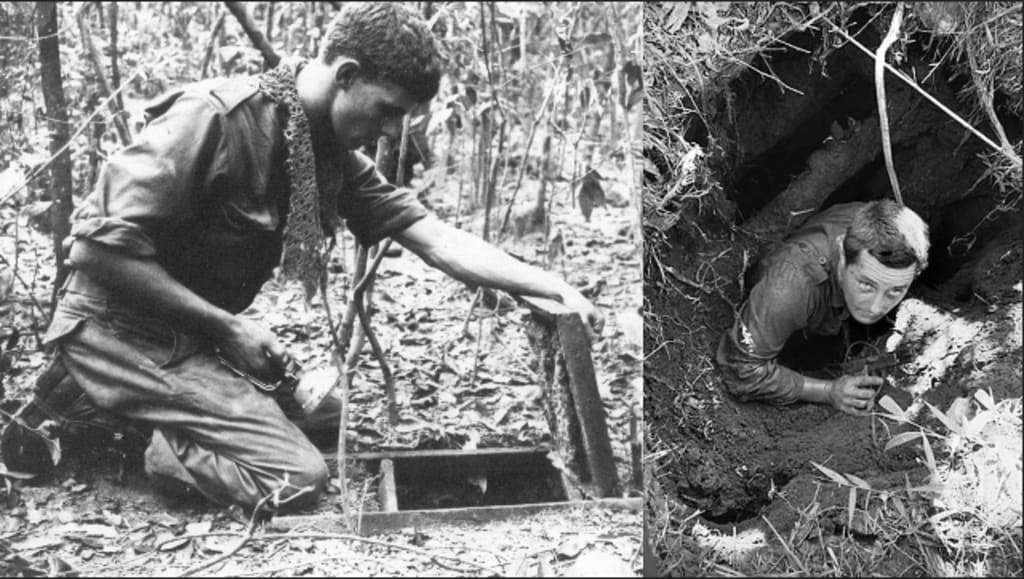
One of the most difficult challenges for a soldier during the Vietnam War was faced by a select few soldiers known as "tunnel rats."
These unsung Vietnam War heroes were American, Australian, and New Zealand soldiers who were specially trained as combat engineers and crawled through the confined Viet Cong underground to undertake risky secret search and destroy missions.
The tunnel rats delicately probed for potentially armed mines in order to disarm them, hoping to survive with both legs intact.
The Enemy Tunnels
To oppose the French colonial invasion of Vietnam, Viet Minh forces initially created the Cu Chi tunnels, a sophisticated system of underground tunnels. However, what began as a very primitive network of tunnels quickly evolved into a sophisticated labyrinth beneath Vietnam when it was later used by the Viet Cong to battle US and coalition forces.
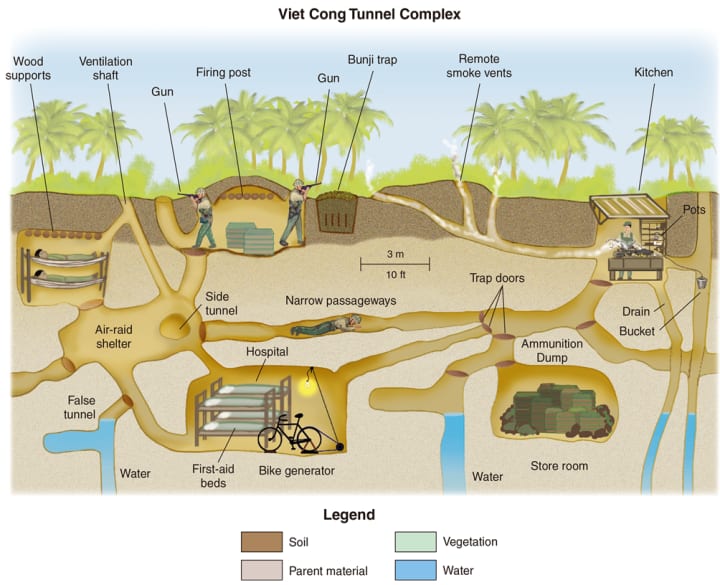
By the time the Vietnam War began in the 1960s, the tunnels had grown to incorporate hospitals, storage facilities, training camps, and barracks. Later, effective ventilation shafts were created, allowing Viet Cong men to dwell underground for months at a time.
The tunnels may be destroyed above ground, but because the tunnels were so complicated and snake-like, an above-ground demolition was often insufficient to completely dismantle the labyrinth. Someone would have to descend into the tunnels to obtain information that could be used to better plan their attack. As a result, the tunnel rats were formed.
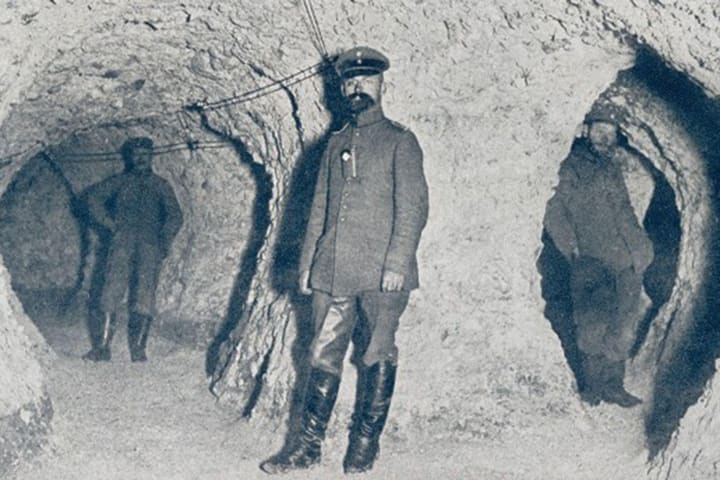
However, the tunnels proved to be an even more unknown and uncharted territory, with danger lurking around every corner. In addition to hostile combatants, the tunnels were rigged with booby traps, as the Viet Cong were well aware that American forces would attempt to use the underground against them.
U-bends had been installed along the tunnels, allowing sections of the tunnels to flood and imprison a soldier. Similarly, access points where poisonous gas might be delivered to kill or render a soldier unconscious were designed.
Traps that were less sophisticated were also deployed. Various venomous snake species, known to the Vietnamese but unknown to foreigners, were put into the tunnels.
Aside from the deliberate threats, there were also natural ones. Because soldiers were underground, they were vulnerable to insects, some of which were toxic, such as scorpions, while others were bothersome, such as ants. The tunnels were used as nesting grounds by bats and other species, providing yet another distraction from the task at hand.
Tunnel rats were obliged to be creative, and they frequently managed to avoid these attacks.
The Tunnel Rat's Profile
The Australian Army initially referred to them as "Tunnel Runners" and later "Ferrets," but the term eventually evolved into the well-known "Tunnel Rat." The rats were made up of engineering soldiers who had attended the Australian Army's School of Military Engineering. The majority of men were volunteers, and they tended to be shorter in stature, making it simpler to maneuver through the crowded surroundings.
However, many tunnel rats had no formal training and were sometimes successful in obtaining intelligence, an enemy hospital, or weapons caches. Tunnel rats, on the other hand, were responsible for a considerable amount of the weaponry successfully retrieved from the Viet Cong.
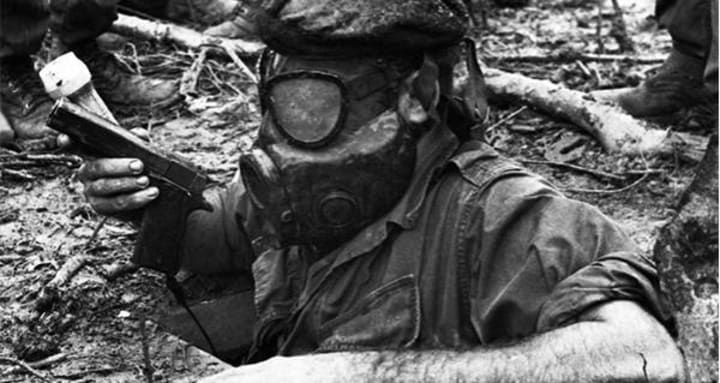
Troops frequently entered the tunnels equipped only with an army-issue pistol or revolver; thus, the soldiers were creative to devise their own weapons. Their homemade weapons; were usually sawed-off shotguns and crude bayonets. The soldiers were also outfitted with gas masks.
Often, when faced with a Viet Cong soldier below ground, tunnel rats had to resort to hand-to-hand combat, as firing a weapon in such a small space could spell disaster for their eardrums and the stability of the space around them.
The tunnel rats were forced to use their creativity and incredible bravery to battle in a previously unknown style of guerilla warfare. Indeed, given the elusive and concealed odds stacked against them, it's a miracle they carried out their duties.
About the Creator
Rare Stories
Our goal is to give you stories that will have you hooked.
This is an extension of the Quora space: Rare Stories
X(formerly Twitter): Scarce Stories
Writers:
....xoxo
Keep reading
More stories from Rare Stories and writers in Education and other communities.
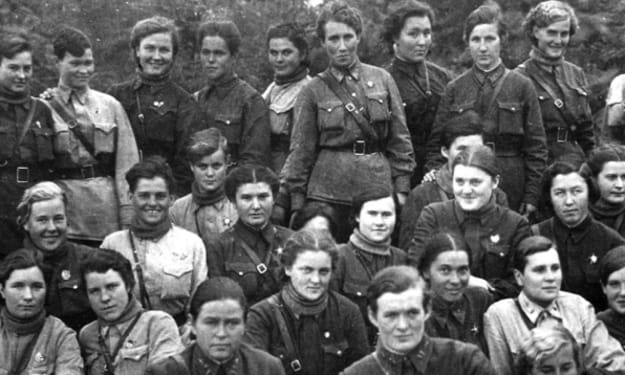
Who were The Night Witches, The Dangerous Women in Combat
The Night Witches were a fierce group of female navigators and pilots who held their own against the Soviet military's male-dominated ranks. Their achievements came about as a result of the Soviet Union's dire desire to grow and modernize, and their sacrifices won them praise from the people.
By Rare Stories3 years ago in Education
Why SLA Discipline Is the New Competitive Advantage in B2B Outsourcing
Have you ever worked with an outsourcing partner who technically met the SLA, yet the problem still landed on your desk? I’ve spent close to ten years in B2B digital marketing, mostly with companies that scale fast and feel operational strain early. At some point, almost every team reaches the same moment: leads pile up, follow-ups slip, internal teams stretch thin, and outsourcing enters the conversation. More often than not, I get pulled in to help evaluate options and sanity-check decisions.
By Mushavvirkhan Balooch5 days ago in Education


Comments
There are no comments for this story
Be the first to respond and start the conversation.