
Trump
Administration Bars Harvard from Enrolling International Students*
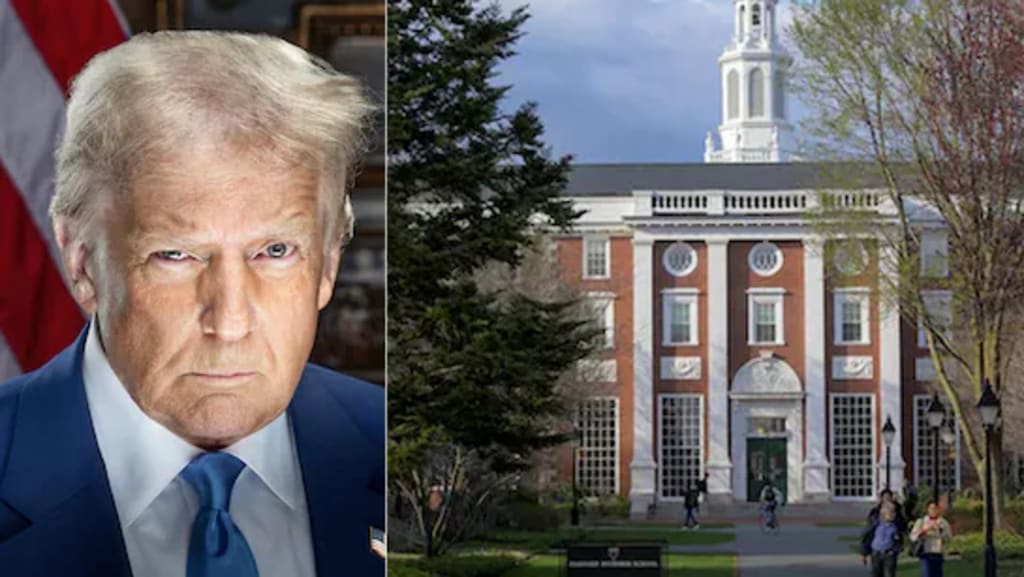
*Trump Administration Bars Harvard from Enrolling International Students: A Comprehensive Overview*
On May 22, 2025, the Trump administration took the unprecedented step of revoking Harvard University's certification to enroll international students. This decision, executed by the Department of Homeland Security under Secretary Kristi Noem, has sent shockwaves through the academic community, affecting nearly 6,800 international students currently enrolled at Harvard [1] .
Allegations and Justifications
The administration cited several reasons for this action, including Harvard's alleged non-compliance with federal requests, controversial campus policies, and purported support for pro-Palestinian demonstrations [1] . Additionally, the university was accused of fostering an unsafe environment, promoting antisemitism, and coordinating with the Chinese Communist Party—claims made without concrete evidence [1] .
Secretary Noem emphasized that allowing international students is a privilege, not a right, and that Harvard's actions had compromised national security and public safety [2] . The Department of Homeland Security further demanded that Harvard provide detailed records on the activities of its international students, particularly those involved in protests or other forms of activism [3] .
Impact on International Students
The immediate consequence of this decision is that Harvard is barred from accepting new international students, and current international students must transfer to other institutions or risk deportation [1] . This move has created significant uncertainty and distress among the affected students, many of whom are now scrambling to find alternative educational opportunities.
In response, a federal judge has temporarily blocked the administration from terminating the legal status of international students nationwide, providing a brief respite for those affected [4] . However, the long-term implications remain unclear, and the situation continues to evolve.
Harvard's Response
Harvard University has strongly condemned the administration's actions, labeling them as illegal and damaging to its mission [1] . The university has vowed to support its international community and is exploring legal avenues to challenge the decision. Harvard has also been given 72 hours to comply with federal document requests, but it remains uncertain whether compliance will lead to reinstatement of its certification [1] .
In the meantime, Harvard has advised incoming international students to consider accepting offers from foreign universities as a backup plan, a significant departure from its usual admissions policy [5] . The university has also increased its support services for international students, including hiring additional staff and partnering with legal clinics to provide guidance [6] .
Broader Context and Implications
This action against Harvard is part of a broader crackdown by the Trump administration on elite universities and international students. Earlier, the administration froze over $2 billion in federal funding to Harvard and threatened to revoke its tax-exempt status [7] . The administration has also been accused of using immigration laws to silence dissent and suppress free speech, particularly targeting pro-Palestinian voices [8] .
These developments have raised concerns about the erosion of academic freedom and the politicization of higher education. Critics argue that such actions undermine the United States' reputation as a global leader in education and innovation, potentially deterring international students from seeking education in the country.
Conclusion
The Trump administration's decision to bar Harvard from enrolling international students marks a significant escalation in its ongoing conflict with elite educational institutions. While the immediate future of affected students remains uncertain, the broader implications for academic freedom, international education, and the United States' global standing are profound. As the situation continues to unfold, universities, policymakers, and students alike are grappling with the challenges posed by this unprecedented action.
About the Creator
Inside IT Hardware Manufacturers & Parts Sourcing Platforms
Understanding how complex hardware ecosystems operate has long been a passion of mine especially where electronics, aerospace systems, and critical supply chains intersect. One part of that ecosystem that often gets overlooked is how IT hardware manufacturers and parts procurement platforms work together to keep everything running smoothly.
By Beckett Dowhan2 days ago in Education
The Blue Gold Bangladesh Aquaculture Revolution and the 4 Million Ton Frontier (2025-2033)
Bangladesh is a land defined by its rivers, but in 2026, those waters are producing more than just a local staple they are driving a multi-billion dollar economic engine. As one of the world’s leading producers of inland fish, Bangladesh has transitioned from traditional pond culture to a sophisticated, tech-driven aquaculture powerhouse. According to the latest research, the Bangladesh aquaculture market size reached 2.8 Million Tons in 2024 and is now on a high-velocity path to reach 4.0 Million Tons by 2033. Exhibiting a steady CAGR of 3.7% during 2025-2033, the nation is moving toward "Smart Fishing," where sustainability meets global export standards.
By Neeraj kumar2 days ago in Education
A Love Forboding
The chipped stone slope caused unbearable footing. I slid, skirting on my heels. I cast my shield, relinquishing my guard to stay upright. Left with my double-edge and a prayer to the maker, I skated toward my objective. The earthly stubble gave way to solid ground. I found myself restored, a trail of dust in my wake.
By James U. Rizzi7 days ago in Fiction


Comments
There are no comments for this story
Be the first to respond and start the conversation.