
Traphall Romance
How a Global Love Sound Was Born, Who’s Leading It, and Where It’s Headed

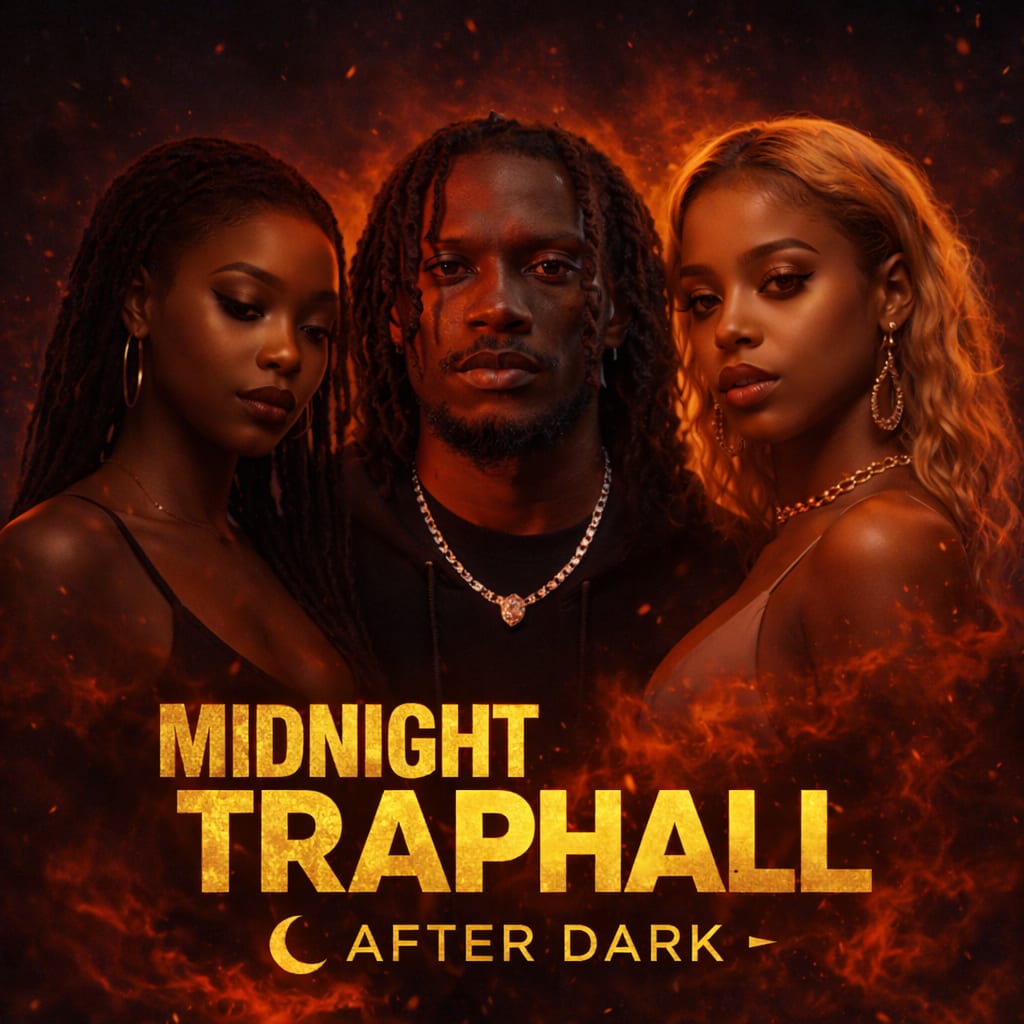
Traphall Romance: How a Global Love Sound Was Born, Who’s Leading It, and Where It’s Headed
Genres don’t usually start in boardrooms. They start in bedrooms, cars, late-night studio sessions, and cities where cultures overlap. Traphall Romance is no exception. It’s not a sound that was formally announced — it’s one that quietly emerged from emotion, from artists who wanted their music to hit hard and feel deep.
To understand Traphall Romance, you first have to understand its roots: trap music and dancehall.
Trap music grew out of the American South in the early 2000s, shaped by artists who documented street realities over heavy 808s, rolling hi-hats, and dark melodies. It was raw, unapologetic, and often emotionally cold on the surface, even when vulnerability was hidden underneath. Dancehall, on the other hand, came from Jamaica — rhythmic, expressive, sensual, and deeply tied to movement, love, and social life. Where trap felt heavy and internal, dancehall felt alive and external.
As migration, the internet, and global streaming erased borders, these two worlds began colliding. Caribbean artists influenced by U.S. hip-hop started experimenting with trap drums. American artists with Caribbean heritage leaned into dancehall rhythms. By the mid-2010s, this fusion began getting labeled online as “traphall” — a blend of trap’s sonic aggression with dancehall’s bounce and cadence.
But early traphall was still mostly about energy, bravado, and lifestyle.
The romance came later.
When Trap Fell in Love
Around the same time trap music was evolving into trapsoul and melodic rap, something interesting happened. Artists realized that listeners weren’t just responding to hard beats — they were responding to honesty. Pain songs lasted longer. Love songs traveled further. Vulnerability created loyalty.
This is where Traphall Romance was born.
Instead of just flexing or dancing, artists began telling stories about toxic love, late-night texts, obsession, loyalty, lust, and emotional confusion, all over traphall-inspired production. The beats stayed dark, minimal, and hypnotic, but the lyrics softened. Sing-rap flows replaced aggressive delivery. Choruses became intimate confessions instead of chants.
The sound didn’t belong to one country. It came from diaspora culture — Caribbean, African, American, and European artists who grew up listening to everything at once. That’s why Traphall Romance doesn’t feel regional. It feels personal.
The Role of the Internet and Streaming
Traphall Romance would not exist without the internet.
SoundCloud, Audiomack, and later Spotify became breeding grounds for artists who didn’t fit neatly into rap, R&B, or dancehall categories. Playlist culture accelerated the movement. Songs with similar moods — dark love, late-night vibes, emotional tension — were grouped together even when the artists had never met or collaborated.
Streaming platforms didn’t necessarily name the genre, but listeners did. Fans began describing songs as “traphall,” “romantic trap,” or “dancehall trap R&B” in comments and captions. Over time, those descriptions hardened into identity.
This is important because Traphall Romance is listener-driven, not industry-driven. Labels didn’t invent it. Algorithms didn’t either. People connected to it because it matched how modern love actually feels — messy, global, emotional, and often unresolved.
Who’s Leading the Sound Right Now?
Unlike older genres with clear pioneers, Traphall Romance is being led by a wave, not a single face.
In the Caribbean and its diaspora, artists have continued to blur the line between dancehall rhythm and trap structure. In West Africa, a new generation of artists has added Afro-melodic phrasing, emotional storytelling, and minimalist production to the formula. Across Europe and North America, underground singers and rapper-singers are shaping the sound in bedrooms and small studios, releasing songs that prioritize mood over mainstream formulas.
One of the most interesting things about Traphall Romance is that its leaders are often independent or semi-independent artists. They don’t chase radio hits. They chase feeling. Their music lives best at night, in headphones, in quiet moments.
Artists like Harlem Richard$ represent this evolution clearly — blending trap textures, dancehall energy, Afro-influenced melody, and deeply romantic themes into a cohesive emotional sound. While mainstream platforms haven’t formally crowned leaders yet, the data shows consistent listener engagement with this type of music, especially among younger audiences who prefer mood-based listening over genre loyalty.
Why Traphall Romance Resonates So Deeply
Modern love isn’t simple. It exists in DMs, voice notes, late-night Uber rides, and long-distance situationships. Traphall Romance reflects that reality.
It doesn’t romanticize love as perfect. It presents love as addictive, confusing, passionate, and sometimes destructive. The heavy beats represent emotional weight. The melodic vocals represent vulnerability. The dancehall influence keeps the music physical and sensual, even when the lyrics hurt.
This duality is why listeners stay. You can cry and vibe to the same song.
The Future of Traphall Romance
Traphall Romance is still early in its life cycle, which makes its future especially exciting.
First, expect greater global crossover. As African, Caribbean, and Latin artists continue collaborating, Traphall Romance will absorb new rhythms and languages while keeping its emotional core intact.
Second, expect playlist recognition. As streaming platforms lean further into mood-based curation, Traphall Romance will likely be absorbed into late-night, emotional, and romantic playlists — where it already performs well.
Third, expect visual expansion. This genre is cinematic by nature. Artists are already leaning into short films, narrative EPs, and cohesive visual identities to tell love stories across multiple releases.
Finally, expect Traphall Romance to influence mainstream pop and R&B the same way trap once did — quietly at first, then everywhere.
Final Thoughts
Traphall Romance isn’t just a genre. It’s a reflection of how love sounds in a globalized, digital age. It’s trap that learned how to feel. Dancehall that learned how to hurt. Romance without fairy tales.
And if history tells us anything, the sounds born from truth tend to last the longest
About the Creator
K.y.e Dynasty Records
I'm a creator ,an indepenpent record label from the caribbean showcasing the undiscovered talents in the hidden islands
Keep reading
More stories from K.y.e Dynasty Records and writers in Education and other communities.
Harlem Richard$ Is Telling a Love Story This Summer
Harlem Richard$ Is Telling a Love Story This Summer — and It’s Called NICKAYLA In a music landscape crowded with fast drops, short attention spans, and songs designed to trend for a moment and disappear just as quickly, Harlem Richard$ is moving differently. With his upcoming six-track EP NICKAYLA, the Ghanaian artist isn’t just releasing music — he’s documenting a feeling. A real one. The kind that doesn’t fade after one listen.
By K.y.e Dynasty Records2 months ago in Education
Can Training Farmers End Hunger?
What if one of the most powerful solutions to global hunger is not food aid, but knowledge? Around the world, millions of smallholder farmers grow the food that feeds their communities. Yet many of them struggle with low crop yields, unpredictable weather, poor soil quality, and limited market access. If farmers are at the center of food production, could empowering them with better skills be the key to ending hunger?
By Convoy of Hope7 days ago in Education
Best Termux Ethical Hacking Tools for Learning Cybersecurity
If you have been using Termux for a while, you already know how powerful it can be. It looks simple. Just a terminal on Android. But once you start installing packages and learning basic Linux commands, you realize it can turn your phone into a small cybersecurity lab.
By Stephano kambeta6 days ago in Education


Comments
There are no comments for this story
Be the first to respond and start the conversation.