
Topical Agents in Skin Lightening
Efficacy and Safety

Introduction
In a world where first impressions often begin with a glance, skin tone plays a pivotal role in our appearance and self-confidence Hyperpigmentation, resulting from factors like sun exposure, acne scars, and hormonal changes, can lead to uneven skin tone, prompting individuals to seek effective solutions Topical agents have emerged as popular choices for skin lightening, offering targeted treatments for various pigmentation concerns However, while these agents promise brighter and more even skin, their efficacy and safety profiles vary Understanding the mechanisms, benefits, and potential risks associated with these agents is crucial for both practitioners and patients At Reflection Facethetics Clinic, under the expert guidance of Dr. Deepika Bartunia, we delve into the science behind these treatments to provide informed and personalized care
Understanding Topical Skin Lightening Agents
Topical skin lightening agents inhibit melanin production, the pigment responsible for skin colour. They target various stages of melanin synthesis, offering solutions for different types of hyperpigmentation. Commonly used agents include:
• Hydroquinone- A potent tyrosinase inhibitor, hydroquinone is considered the gold standard in skin lightening. It effectively reduces hyperpigmentation but requires cautious use due to potential side effects like ochronotic with prolonged use.
• Kojic Acid- Derived from fungi, kojic acid inhibits tyrosinase activity, leading to reduced melanin production. While effective, it may cause skin irritation and increased sun sensitivity.
• Niacinamide (Vitamin B3)-Known for its anti-inflammatory properties, niacinamide reduces melanin transfer to skin cells, lightens dark spots, and improves skin texture.
• Vitamin C- is an antioxidant that not only brightens the skin but also protects against UV-induced pigmentation.
• Arbutin- A naturally occurring compound that inhibits tyrosinase, arbutin is gentler on the skin compared to hydroquinone and is suitable for sensitive skin types.
Efficacy and Safety Profiles
Hydroquinone
Hydroquinone is widely regarded for its effectiveness in treating hyperpigmentation. However, its use is associated with potential side effects, including skin irritation and ochronotic with prolonged use. It's recommended to use hydroquinone under professional supervision, with periodic assessments to monitor skin response.
Kojic Acid
Kojic acid offers moderate efficacy in skin lightening but may cause contact dermatitis, especially in individuals with sensitive skin. Recent regulations have set a maximum concentration of 1% in cosmetic products to mitigate potential risk.
Niacinamide
Niacinamide is a well-tolerated agent that not only lightens skin but also improves skin barrier function and reduces inflammation. It's suitable for all skin types, including sensitive skin.
Vitamin C
Vitamin C provides antioxidant protection and a brightening effect. It can be unstable in formulations, requiring proper storage and usage to maintain efficacy.
Arbutin
Arbutin is a safer alternative to hydroquinone, offering similar benefits without the associated risk. It's effective in treating dark spots and is suitable for long-term use.
Dr. Deepika Bartunia's Approach
At Reflection Facethetics Clinic, Dr. Deepika Bartunia emphasizes a personalized approach to skin lightening treatments. She conducts thorough skin assessments to determine the most suitable agents based on individual skin types and concerns. Combining topical treatments with other modalities like chemical peels and laser therapies, she ensures comprehensive care for optimal results.
If you're considering skin lightening treatments, it's essential to consult with a qualified professional to determine the best course of action. At Reflection Facethetics Clinic, we offer personalized consultations to address your unique skin concerns.
About the Creator
Keep reading
More stories from singhaiudhyog and writers in Education and other communities.
Hair Transplant Myths Busted
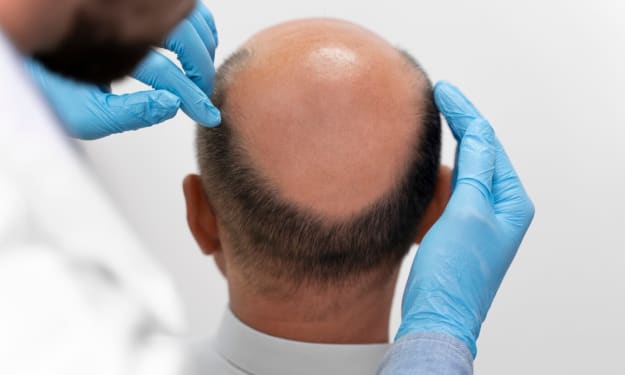
Hair loss can be stressful, leading many to consider a hair transplant as a lasting solution. However, with countless stories and videos circulating online, it can be hard to separate fact from fiction. To clear the air, we spoke to Dr. Mahesh Gosavi, MBBS, MD Skin and VD – a renowned Hair Specialist in Navi Mumbai at Dr. Gosavi's Aesthetic Clinic. In this guide, he helps us bust some of the most common myths about Hair Transplant in Navi Mumbai. Whether you're just starting your research or seriously considering the procedure, we also cover essential details like Hair Transplant Cost in Navi Mumbai to help you make an informed decision.
By singhaiudhyog10 months ago in Education
THE POST- ONTOLOGICAL THOUGHT AND THE ABYSS OF NOTHINGNESS — ALEXIS KARPOUZOS
The meta-ontological thought of Alexis Karpouzos is constituted at a level where the traditional distinction between ontology and nihilism collapses. The nothing, as it appears in this context, is neither the opposite of Being nor its limit, but the groundless condition of its appearance. It is a nothing that is not conceived metaphysically as lack, negation, or absence, but corresponds to the mathematical zero: neither positive nor negative, non-polar, and at the same time capable of encompassing all possible values without identifying with any of them. This nothing does not negate the world; it makes possible its indeterminate genesis.
By alexis karpouzos4 days ago in Education
Switzerland Cosmetics Market Opportunities, Challenges, and Consumer Trends 2026-2034
The Switzerland cosmetics market has been on a steady growth trajectory, reaching a market size of USD 832.8 million in 2025. IMARC Group projects this market to expand to USD 1,330.1 million by 2034, representing a compound annual growth rate (CAGR) of 5.07% during 2026–2034. This growth is fueled by rising disposable incomes, the rapid expansion of e-commerce platforms, and the increasing demand for high-quality skincare, makeup, and wellness products that cater to diverse consumer preferences.
By Neeraj kumar7 days ago in Education



Comments
There are no comments for this story
Be the first to respond and start the conversation.