
Top Industries Set to Lead Asset Tokenization Growth in the Coming Five Years
Asset Tokenization Trends: Sectors Likely to Experience Significant Growth in the Next Five Years

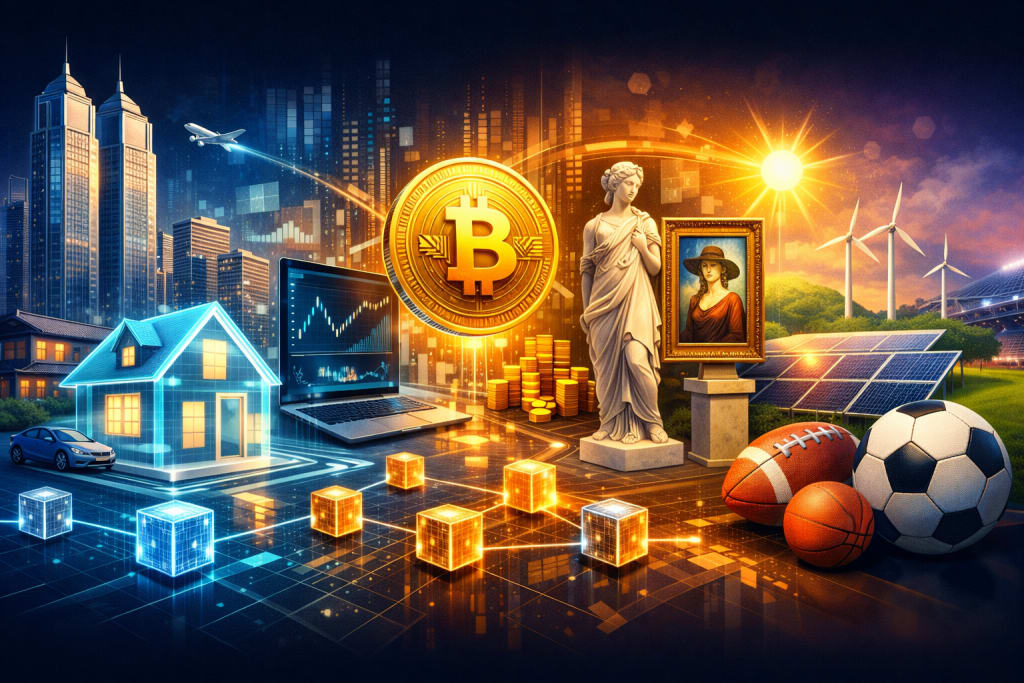
Asset tokenization—digitizing ownership rights of real‑world assets on blockchain—has moved beyond experimental frameworks and niche applications. As institutional interest rises and regulatory clarity improves in leading markets, tokenization is poised to reshape how value is stored, traded, and accessed globally. Although the concept spans an expansive range of asset types, some industries are uniquely positioned to lead this evolution due to their size, liquidity constraints, unmet investor demand, or structural inefficiencies.
This blog examines the top industries expected to drive asset tokenization growth through the next five years, detailing drivers, challenges, use cases, and the potential magnitude of impact. The goal is to provide a nuanced perspective on where tokenization can generate meaningful economic and structural shifts—without oversimplified hype.
Understanding Asset Tokenization
Asset tokenization involves converting ownership rights of a physical or financial asset into digital tokens that reside on a blockchain. These tokens can represent tangible assets such as real estate, commodities, and infrastructure or intangible assets such as intellectual property, royalties, and carbon credits. Tokenization enables fractional ownership, meaning investors can acquire portions of an asset rather than the whole, lowering entry barriers and attracting a diverse investor base.
Key benefits of asset tokenization include:
- Liquidity: Illiquid assets can be traded on secondary markets, providing investors with exit opportunities and enabling asset owners to unlock capital without full liquidation.
- Transparency: Blockchain technology ensures immutable, auditable records, enhancing investor trust and regulatory compliance.
- Accessibility: Fractional ownership allows smaller investors to participate in markets traditionally reserved for institutions.
- Efficiency: Smart contracts automate transactions, compliance, and revenue distribution, reducing operational costs and human error.
These characteristics make tokenization particularly relevant for sectors that involve high-value, illiquid, or complex assets.
Moreover, real estate tokenization is not just a technical innovation; it is a paradigm shift in the way value is represented, traded, and governed. By bridging the physical and digital worlds, it transforms ownership from a static legal notion into a liquid, programmable asset class. For global investors and asset owners, tokenization offers new ways to diversify portfolios, mitigate risks, and access capital markets that were previously inaccessible.
1. Real Estate: Liquidity for a Traditionally Illiquid Asset Class
Real estate is often cited as the most promising initial use case for tokenization—and for good reason. With a global market valued in the hundreds of trillions, real estate represents a vast reservoir of value often locked behind high entry costs, illiquid ownership structures, and slow transaction processes.
Why Real Estate Leads
Real estate embodies characteristics that make it ripe for tokenization:
- High asset values: Individual properties are expensive, restricting ownership to high‑net‑worth individuals or institutional investors. Fractional ownership through tokens lowers these barriers.
- Illiquidity: Traditional real estate transactions require weeks to months to settle, with costs that disproportionately affect smaller investors.
- Opaque markets: Pricing inefficiencies and limited transparency persist across markets. Tokenization can catalyze better price discovery.
- Cross‑border relevance: Property markets are global, but regulatory impediments make cross‑border investing difficult. Blockchain‑enabled frameworks can standardize processes and reduce friction.
Leading Use Cases in Tokenized Real Estate
- Residential Tokenization: Single homes or condo units segmented into digital tokens, allowing fractional ownership with tradable stakes on secondary digital marketplaces.
- Commercial Real Estate (CRE) Tokens: Large office buildings, retail centers, and mixed‑use properties divided into tokens can attract diversified capital from smaller investors previously shut out by high entry thresholds.
- Real Estate Investment Trust (REIT) Tokenization: Existing REIT structures converted to tokenized shares could enable enhanced liquidity and faster settlement.
Market Opportunities and Projections
Industry estimates suggest tokenized real estate could grow by double‑digit annual percentages as asset managers and traditional institutions experiment with hybrid products combining security regulations and blockchain settlement rails. By broadening participation and increasing transaction velocity, tokenization could reshape property markets at scale.
Key Challenges Ahead
Regulatory harmonization—especially regarding securities classification—and the development of compliant trading venues are prerequisites for real estate tokenization to fully materialize. Custody solutions, investor protection, and interoperability across platforms will also shape adoption.
2. Financial Instruments: Bonds, Equities, and Structured Products
The financial services industry, already digitized in many respects, stands on the brink of a deeper transformation through tokenization. Securities tokenization essentially layers blockchain infrastructure on top of traditional instruments such as stocks, bonds, and derivatives.
Drivers Behind Tokenized Financial Instruments
- Operational efficiency: Settlement times that historically span days (T+2 or more) could shorten to near real‑time through blockchain settlement layers.
- Accessibility: Smaller denominations and fractional positions democratize access to products historically limited to institutional players.
- Transparency and auditability: Blockchain’s immutable ledger facilitates real‑time reconciliations, reducing operational risk.
- Programmability: Smart contracts can embed compliance, dividend distribution, or automated corporate actions—streamlining complex processes.
Tokenized Bonds and Debt
Governments and corporations have explored tokenized debt issuances as pilot projects. Tokenization can simplify distribution and secondary trading, particularly for bonds in emerging markets where capital formation suffers from high transaction costs.
- Sovereign tokenized bonds enable broader investor participation with lower administrative overhead.
- Corporate debt tokens can attract retail investors into asset classes traditionally dominated by institutional players.
Equity and Structured Products
Tokenized equities allow fractional share ownership with blockchain‑based settlement. Structured products—such as convertible notes, options, and derivatives—can also be represented as composite tokens with embedded payoff logic via smart contracts.
Regulatory Considerations
Securities regulators globally are grappling with frameworks that define tokenized securities. In some markets, existing securities laws can accommodate digital securities within current frameworks, provided issuers comply with disclosure, custody, and trading venue requirements.
Impact on Capital Markets
Successful integration of tokenized financial instruments into mainstream markets could reduce settlement risk, lower transaction costs, and expand investor participation. For institutional investors, tokenization offers potential for new liquidity pools and innovative product structures.
3. Private Equity and Venture Capital: Unlocking Value in Illiquid Stakes
Private equity (PE) and venture capital (VC) markets are emblematic of illiquid asset classes with high barriers to entry. Funds typically lock in capital for several years, with distributions contingent on exit events such as IPOs or acquisitions.
The Tokenization Value Proposition for PE/VC
Tokenization can transform private equity by introducing secondary markets for traditionally locked‑in interests:
- Fractional ownership: Smaller investors gain access to startup and growth opportunities historically reserved for large accredited investors.
- Secondary liquidity: Portfolio interests can become tradable within compliant digital marketplaces, providing earlier exit options.
- Transparency and alignment: Smart contracts can automate distributions, track performance, and reinforce governance terms.
Use Case Examples
- Tokenized Fund Shares: A PE or VC fund could issue digital tokens representing ownership interests, enabling divisible ownership and potentially facilitating secondary trading.
- Single‑Asset Tokenization: Instead of tokenizing a fund’s broad portfolio, a specific high‑performing asset could be tokenized to unlock value before a full exit.
Potential Growth Catalysts
Limited partners (LPs) seeking liquidity prior to fund maturity could gravitate toward tokenized secondary market options. Meanwhile, general partners (GPs) may leverage tokenization as a mechanism to attract new capital by offering more flexible, divisible investment products.
Challenges and Structural Requirements
Tokenized PE/VC interests must navigate securities regulations, tax treatment, and investor protection frameworks. Custodial solutions and compliant marketplaces are critical enablers. Additionally, valuation standards for privately held assets must adapt to more frequent trading intervals.
4. Commodities: Digital Twins of Physical Goods
Commodities such as precious metals, energy products, and agricultural goods are foundational to the global economy. Historically, price discovery and trading occur through exchanges where physical settlement or futures contracts are traded.
Tokenization’s Role in Commodities Markets
Tokenization introduces the concept of digital twins—blockchain‑backed representations of real physical commodities stored and audited by trusted custodians.
Advantages for Commodities
- Improved accessibility: Retail and institutional investors can hold smaller units of valuable commodities like gold or platinum through tokens.
- Efficiency in trading: Transactions can settle more quickly compared to traditional exchange processes.
- Trackability: Supply chain provenance and ownership history become transparent, reducing fraud and enhancing trust.
Prominent Use Cases
- Precious Metals Tokens: Gold, silver, and platinum tokenized with physical backing stored in secure vaults.
- Energy Tokens: Tokenization of energy production rights (e.g., oil barrels or renewable energy credits) allows for new forms of trade and settlement.
- Agricultural Commodities: Bulk grains and soft commodities could be tokenized to streamline trade financing and improve market access for producers.
Impact on Derivatives and Hedging
Tokenized commodity representations could integrate with derivatives markets, enabling hedging strategies with greater efficiency and accessibility. Blockchain‑native derivatives might emerge, altering how price risk is managed globally.
Operational and Regulatory Considerations
Commodity tokenization initiatives must ensure robust custodial frameworks and audit mechanisms. Regulatory oversight varies by jurisdiction, especially where tokens may be classified as securities or commodities.
5. Intellectual Property and Royalties: Monetizing Creative and Scientific Works
Intellectual property (IP)—including patents, trademarks, music rights, and publishing royalties—has historically been difficult to trade due to valuation challenges and fragmented licensing structures. Tokenization offers a framework to unlock IP liquidity and create transparent royalty streams.
Why IP is a Strong Candidate for Tokenization
- Intrinsic divisibility: Revenue rights from an IP asset can be divided into discrete tokenized units, enabling distributed ownership.
- Recurring revenue clarity: Blockchain can automate royalty distributions to token holders based on predefined logic.
- Global accessibility: Creators can reach a broader investor base without intermediaries taking large cuts.
Key Domains for Tokenized IP
- Music and Media Royalties: Artists or rights holders tokenize future royalty streams, allowing investors to receive pro rata payments.
- Patent Licensing Rights: Tokenized patents could enable fractional investment in innovation, with revenue tied to licensing performance.
- Publishing and Content Monetization: Tokens can represent future digital content revenue, with smart contracts automating revenue sharing.
Market Dynamics and Opportunities
Tokenization could democratize investment in creative and scientific advancements. Investors may gain exposure to revenue streams that were previously opaque or restricted. Creators, in turn, could access capital without traditional intermediaries.
Challenges to Broader Adoption
Valuation of IP rights can be subjective and variable over time, introducing pricing complexity. Legal clarity regarding rights transfer, revenue distribution, and cross‑border licensing will influence tokenization frameworks.
6. Supply Chain and Trade Finance: Enhancing Transparency and Settlement
Supply chain and trade finance have long suffered from fragmentation, delays, and documentation silos. Letters of credit, bills of lading, and other trade instruments require extensive manual verification and are susceptible to fraud.
Tokenization as a Structural Solution
By representing trade documents and financing rights as tokens, participants can achieve:
- Improved traceability: Every transfer of ownership or financing right is recorded on an immutable ledger.
- Faster settlement: Blockchain‑based settlement can reduce days of waiting inherent in traditional processes.
- Reduced fraud: Digital identities and token metadata minimize document forgery.
Specific Use Cases
- Tokenized Bills of Lading: Replacing paper bills with digital, tokenized equivalents expedites logistics handovers and financing.
- Invoice Financing Tokens: Invoices tokenized and sold to multiple financiers increase liquidity and reduce funding costs for suppliers.
- Trade Credit Tokens: Standardizing trade credit instruments on blockchain enhances transparency of credit risk.
Industry Adoption Indicators
Large multinational corporations and consortia have piloted blockchain trade platforms, indicating a strong institutional push toward digital transformation. Tokenization can address longstanding inefficiencies, particularly in cross‑border trade.
Barriers to Implementation
Widespread adoption requires industry‑wide standards, legal recognition of digital trade documents, and integration with existing enterprise resource planning (ERP) systems.
7. Renewable Energy and Carbon Credits: Tokenizing Sustainability
The global push for climate action and decarbonization has fueled growing markets for renewable energy certificates (RECs) and carbon credits. However, these markets often face challenges related to transparency, double counting, and verification, which can hinder efficiency and investor confidence.
The Case for Tokenization in Sustainability Markets
Blockchain’s inherent immutability and transparency offer a solution for these challenges. By tokenizing environmental assets:
- Carbon credit tokens represent quantified emissions reductions with verifiable audit trails, allowing investors and regulators to track the origin and validity of each credit.
- Renewable energy tokens correspond to units of green energy produced and consumed, ensuring traceability from the producer to the end user.
Benefits for Stakeholders
Investors benefit from clarity on the provenance and authenticity of sustainability assets. Regulators and auditors gain access to transparent, tamper-proof records. Corporations engaging in carbon markets can demonstrate tangible environmental impact through verifiable on-chain data.
Emerging Innovations
Some tokenization models integrate environmental data—such as emissions reduction metrics or grid inputs—directly into tokens. This enables automated compliance reporting and real-time trading, reducing administrative overhead and boosting market efficiency.
Strategic Importance
As corporate and national climate commitments intensify, tokenized sustainability assets are poised to become a cornerstone of environmental markets, offering scalable, transparent solutions to long-standing verification and trust issues.
8. Art, Collectibles, and Luxury Goods: Redefining Ownership and Provenance
Tokenization in the art, collectibles, and luxury sectors addresses challenges of authenticity, provenance, and divisible ownership—issues that have long hindered market growth.
The Promise of Tokenized Collectibles
High-value items such as fine art, rare collectibles, and luxury goods often face fraud, opaque valuation, and illiquidity. Blockchain-backed tokens can:
- Verify provenance by embedding ownership history on-chain, reducing the risk of forgery.
- Enable fractional ownership, allowing multiple investors to share stakes in expensive assets.
- Create new markets where digital “shares” of physical items trade on secondary platforms, enhancing liquidity.
Luxury Goods and Authentication Tokens
High-end watches, designer products, and rare wines can be paired with digital tokens certifying authenticity and ownership. This approach helps combat counterfeiting and provides transparent records for resale markets.
Creative Rights and Digital Art
Beyond digital art NFTs, tokenization extends to physical works linked to digital representations. Smart contracts can automate royalty distributions to creators upon secondary sales, ensuring ongoing compensation.
Challenges to Mainstream Adoption
Despite its promise, adoption is hindered by subjective valuations, limited regulatory clarity on rights transfer, and technical complexities in linking physical items with tamper-proof digital tokens.
9. Insurance: Tokenizing Policies and Claims
Insurance, built on pooled risk and complex contractual terms, stands to gain significantly from tokenization. By digitizing policies and claims, insurers can streamline operations, reduce costs, and enhance transparency.
Key Tokenization Applications in Insurance
- Policy Tokens: Representing digital insurance coverage, these tokens can automate renewals, premium payments, and claims processing.
- Parametric Insurance Tokens: For policies triggered by measurable events, such as weather indices, smart contracts can automatically execute payouts.
- Risk Securitization: Insurance risk can be tokenized and distributed to capital markets, broadening investment avenues and diversifying exposure.
Benefits for Stakeholders
Insurers experience reduced administrative costs and improved transparency. Policyholders gain faster claims processing and greater trust in contract execution. Reinsurers and investors can participate in tokenized risk markets for portfolio diversification.
Regulatory and Operational Considerations
Tokenization initiatives must align with insurance regulations, including solvency requirements, consumer protection norms, and data privacy laws, ensuring that blockchain integration does not compromise compliance.
10. Gaming and Digital Economies: Native Digital Assets and Play‑to‑Earn Models
Gaming represents one of the earliest and most developed sectors for tokenized assets, creating native digital economies with real-world value. In the coming years, integration between game tokens and broader financial systems is expected to accelerate.
Tokenization Within Gaming Environments
- In-game asset tokens: Characters, items, land, and currencies represented as tradable tokens with verifiable scarcity.
- Interoperability: Tokens that move across games or platforms retain persistent value, enhancing utility beyond individual titles.
- Play-to-Earn (P2E): Users earn tokens through gameplay, which can convert to real-world value, fostering new economic incentives.
Broader Economic Implications
Gaming marketplaces already exhibit robust secondary liquidity, demonstrating how tokenized assets can support vibrant economies. Linking these digital markets with mainstream financial systems can further enhance participation and valuation.
Integration with DeFi and Web3
Game tokens increasingly interface with decentralized finance (DeFi), enabling staking, yield generation, and trading that mirrors traditional financial instruments, effectively bridging virtual and real-world economies.
Regulatory Landscape
Ensuring consumer protection and compliance is critical, particularly in distinguishing utility tokens from securities under local regulations. Clear frameworks are needed to maintain trust while enabling growth in gaming-related tokenization.
Looking Ahead: Structural Considerations for Adoption
The next five years are likely to be decisive for the trajectory of asset tokenization. The pace, scale, and sectoral penetration of tokenized assets will depend on several interrelated structural factors:
1. Regulatory Frameworks
Global regulatory approaches to digital tokens remain highly divergent. Tokens may be classified as securities, commodities, or entirely new asset classes depending on jurisdiction. This divergence can either accelerate or constrain institutional participation. Clear, consistent guidance on custody requirements, trading venues, investor protections, and tax treatment will be crucial for fostering confidence among institutional and retail participants alike. Regulatory clarity will also reduce legal ambiguity and encourage innovation while mitigating systemic risk.
2. Institutional Infrastructure
The integration of tokenized assets into traditional financial systems will depend on banks, custodians, exchanges, and clearinghouses adopting blockchain-based settlement layers. Such infrastructure creates operational bridges between legacy finance and tokenized ecosystems, enabling smoother asset transfer, custody, and reporting. Participation by established financial institutions will serve as a strong signal of market maturity and legitimacy, incentivizing broader adoption.
3. Interoperability and Standards
Cross-platform interoperability is essential to prevent fragmentation and ensure scalability. Token standards that support uniform identity verification, compliance, and auditability across platforms will facilitate seamless trading and settlement. Protocols that harmonize financial instruments with real-world assets will allow tokenized ecosystems to function cohesively, reducing friction for market participants and enabling broader market integration.
4. Market Liquidity and Secondary Trading
Tokenization’s promise of enhanced liquidity is contingent on the development of robust, compliant secondary markets. For assets to trade effectively, these markets must balance accessibility with investor protection, providing mechanisms for transparent pricing, secure settlement, and dispute resolution. Well-structured secondary markets will also enable fractional ownership to realize its full potential, unlocking value from traditionally illiquid assets.
5. Technological Maturation
The advancement of blockchain infrastructure, including Layer-2 scaling solutions, decentralized identity systems, and high-throughput protocols, will support complex tokenized ecosystems. Efficient and secure technology reduces transaction costs, mitigates security risks, and enables sophisticated functionalities such as programmable compliance, automated royalty distribution, and real-time settlement across global markets.
Conclusion:
Asset tokenization has traversed early experimental phases to become a strategic priority for multiple industries. While real estate and financial instruments stand at the forefront due to clear efficiency gains and market demand, other sectors such as private equity, commodities, intellectual property, and renewable energy are rapidly converging on viable tokenization frameworks.
What unifies these diverse sectors is a common promise: greater liquidity, transparency, and accessibility without sacrificing regulatory compliance or operational integrity. Over the coming five years, as markets, regulators, and institutions align incentives around digital ownership, tokenization’s impact will extend far beyond niche applications, reshaping how assets are created, exchanged, and valued in the global economy.
About the Creator
Gabrielle
Blockchain enthusiast and NFT writer dedicated to merging technology with art on decentralized platforms, driving innovation for a creative future. Embracing the potential of digital expression.
Comprehensive Curriculum of a Reliable Online Pharmacy Technician Course Explained
If you’re planning a career as a pharmacy technician, choosing the right online course is crucial. A well-structured pharmacy technician course not only helps you prepare for certification exams but also equips you with the practical knowledge and skills needed for real-world pharmacy settings.
By Meaghan Howe2 days ago in Education
The First UK Baby Born from a Deceased Donor’s Uterus
In a historic medical breakthrough, a baby boy named Hugo was born in the United Kingdom just days before Christmas 2025, weighing 7 pounds and making global headlines. His birth was not only a moment of joy for his family but also a landmark achievement in modern medicine. Hugo is the first baby in the UK to be born using a uterus transplanted from a deceased donor, marking a new era in reproductive science and offering hope to millions of women around the world.
By Irshad Abbasi 2 days ago in Education
Belle of the Bayou
Bad move, cher. Not just the slip of her kitten heel on the rainy February cobblestones in the Fourth Ward. She got caught snooping. Detective Deleon clucked and strutted like a rooster in his rush to clear her from the scene, waving cigar smoke to and fro as he gesticulated amid the thick air of the speak easy. An experienced crime reporter, Marie knew better than to let the coppers catch her on the wrong side of the line, but curiosity had gotten the better of her.
By Maia Gadwall the metAlchemist6 days ago in Fiction




Comments
There are no comments for this story
Be the first to respond and start the conversation.