
Top 5 Key Date Quartersin the State Quarters Series (1999-2008)
Don't spend a fortune! Expert Laura Bennett reveals the 5 key date State Quarters worth hunting for. Learn how to identify rare errors like the Wisconsin Extra Leaf and see real auction prices

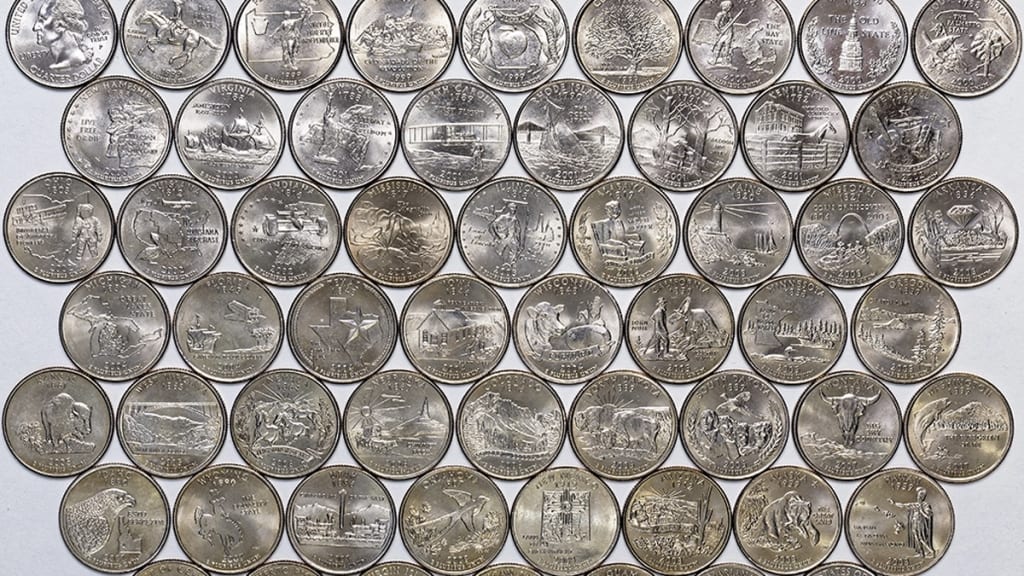
We all have that jar, drawer, or old album filled with State Quarters. Between 1999 and 2008, it felt like a national hobby to check your change for the next state. Most of those coins are, frankly, worth exactly 25 cents. But a handful are hidden treasures, worth serious money to collectors.
I’ve seen the look of surprise countless times—someone brings in a collection, and among hundreds of common quarters, we find one special coin. That “aha!” moment is why I love this series. It proves you don’t need to be an expert to find value; you just need to know what to look for.
This guide will cut through the clutter and show you the five key date State Quarters that are truly worth hunting for. You’ll learn what makes them rare, how to spot them, and what they could be worth.
What Makes a Modern Quarter Valuable?
For old coins, the rule is simple: the fewer made, the more valuable. For State Quarters, it’s a bit different. With billions minted, we have to think about modern rarity.
A modern key date is created by a mix of three things:
- Low Mintage: Was it one of the states with the fewest coins made?
- Conditional Scarcity: Even from a large mintage, how many survived in perfect, uncirculated condition?
- Errors & Varieties: Did a minting mistake, like a famous extra leaf, create a rare version?
This means a quarter can be common in your pocket change but rare and valuable in a pristine, unmarked state.
Here’s my take: “Don’t believe the myth that all early quarters are valuable. Focus is key. The real opportunity isn't in a handful of worn coins, but in identifying the specific, scarce dates and understanding the massive price difference a high grade makes.”
The Top 5 State Quarters You Should Know
Forget scrolling through endless lists. Based on mintage data, auction records, and collector demand, these five issues are the consistent standouts. Think of this as your prioritized checklist.
1. The 2004-P Iowa Quarter: The Low-Mintage Leader
- Why it’s rare: It has the lowest mintage of any regular State Quarter—just 213 million from the Philadelphia mint. Compared to states with over a billion coins, that’s scarce.
- What to know: In your change, it's still just a quarter. Its value jumps in uncirculated condition (MS-65 and above). Look for one with strong details and no nicks or scratches.
- The bottom line: The foundational key date of the series. Every serious collector wants one in high grade.
2. The 2008-P Oklahoma Quarter: The Scarce Sleeper
- Why it’s rare: The second-lowest Philadelphia mintage at 222 million. It’s also known for often having a weak strike, making a sharply detailed coin even harder to find.
- What to know: Check the bird (the scissor-tailed flycatcher) on the reverse. A coin where all the feathers are crisp is a much rarer find than the mintage suggests.
- The bottom line: A classic example of "conditional scarcity." Many were made, but few are perfect.
3. The 2004-D Wisconsin "Extra Leaf" Quarter: The Famous Error
- Why it’s rare: A minting error created the appearance of an extra leaf on the cornstalk. This "Extra Leaf" variety is famous and highly sought-after. *Crucially, the regular 2004-D Wisconsin quarter is common—only the error version is valuable.*
- What to know: There are two types: "Extra Leaf Low" and "Extra Leaf High." You must have a good eye or a loupe to spot it. Because of its value, counterfeits exist. Always buy this variety certified in a slab (PCGS/NGC).
- The bottom line: The superstar error coin of the series. Authentication is non-negotiable.
4. The 1999-P Delaware Quarter: The First and Finest
- Why it’s rare: Massive mintage, but enormous demand as the first coin of the series. While easy to find worn, it is surprisingly difficult to find in gem uncirculated condition (MS-67 or higher) without bag marks.
- What to know: This coin’s value is all about top-tier quality. Collectors building premium sets will pay a significant premium for a flawless example.
- Bottom line: Proves that for modern coins, grade can be everything.
5. The 2005 Minnesota Quarter: The Quality King
- Why it’s rare: From both mints (P & D), this coin is celebrated for its excellent strikes and beautiful frosty luster. This consistent eye appeal makes high-grade examples perpetually desirable.
- What to know: It’s not about mintage with this one—it’s about superior quality. A Minnesota quarter that looks exceptional is a great candidate for grading.
- Bottom line: A favorite for collectors who appreciate a beautifully made coin.
Your Game Plan: How to Hunt and Handle These Coins
Knowing what to look for is step one. Here’s your action plan for how to find and deal with these key dates.
Where to Look:
- Coin Roll Hunting: For circulated examples of Iowa or Oklahoma, this can be fun. Buy rolls from your bank and search.
- The Secondary Market: For high-grade examples or the Wisconsin error, you’ll need coin dealers, shows, or trusted online auctions.
The Golden Rule: Grade Before You Trade.
If you think you have a valuable key date, professional grading is essential. Services like PCGS or NGC will:
- Authenticate it (vital for errors like Wisconsin).
- Assign a definitive grade (which sets the price).
- Seal it in a tamper-proof slab, making it easy and safe to sell.
How to Check Value:
Forget old price guides. Values change. To get a real-world price:
- Search sold listings on eBay or auction sites like Heritage Auctions.
- Look for recent sales of the same coin in the same grade.
- For a quick estimate, a reliable coin value checker that uses live market data is a smart starting point.
Conclusion: Collect with Purpose
The State Quarters program was a gateway to coin collecting for millions. The next step is moving from simply filling a map to collecting with purpose.
Start by checking your old coins for the 2004-P Iowa and 2008-P Oklahoma quarters. Grab a magnifying glass and scrutinize every 2004-D Wisconsin quarter. You might get lucky.
Remember, in modern coins, quality beats quantity every time. One perfectly preserved key date is a smarter centerpiece for a collection than jars of worn coins.
About the Creator
Laura Bennett
Numismatist and data science expert passionate about uncovering the stories behind historical coins through analytics. Bachelor’s degree in Archaeology and a Master’s in Data Science from Harvard University. https://coin-identifier.com/
Keep reading
More stories from Laura Bennett and writers in Education and other communities.
Collecting the 1979 & 1980 Susan B. Anthony Dollar: What You Need to Know
You know that small, kinda-chunky dollar coin that looks like a quarter on a growth spurt? The one with Susan B. Anthony on it from 1979 or 1980? If you've ever found one in an old drawer or jar, you've probably had the same thought: "Is this thing worth anything, or is it just a dollar?"
By Laura Bennett22 days ago in Education
When Healing Leads the Way: How Outcome-Driven Healthcare Reshapes Systems, Costs, and Trust
Healthcare is at a crossroads. Rising costs, overwhelmed providers, and frustrated patients have exposed deep flaws in systems that prioritize financial performance over human well-being. For decades, success in healthcare was often measured by revenue, service volume, and utilization rates. While economic sustainability is essential, problems arise when profit becomes the primary goal rather than a byproduct of adequate care. Shifting the focus from profits to outcomes fundamentally changes how healthcare operates, who it serves, and how success is defined.
By Evan Weiss St Louis2 days ago in Education
Lean Management Principles in Healthcare: A Practical Guide to Better Patient Care
Lean management principles in healthcare focus on improving patient outcomes by reducing waste, streamlining workflows, and strengthening team collaboration. Originally developed in manufacturing, Lean has become a powerful approach for hospitals, clinics, and medical practices that want to deliver higher-quality care with fewer delays and less frustration.
By Brady Beitlich3 days ago in Education



Comments
There are no comments for this story
Be the first to respond and start the conversation.