
Tiny Habits, Massive Impact: The Quiet Path to Real Change
How Small Daily Actions Quietly Shape the Life You’ve Always Wanted

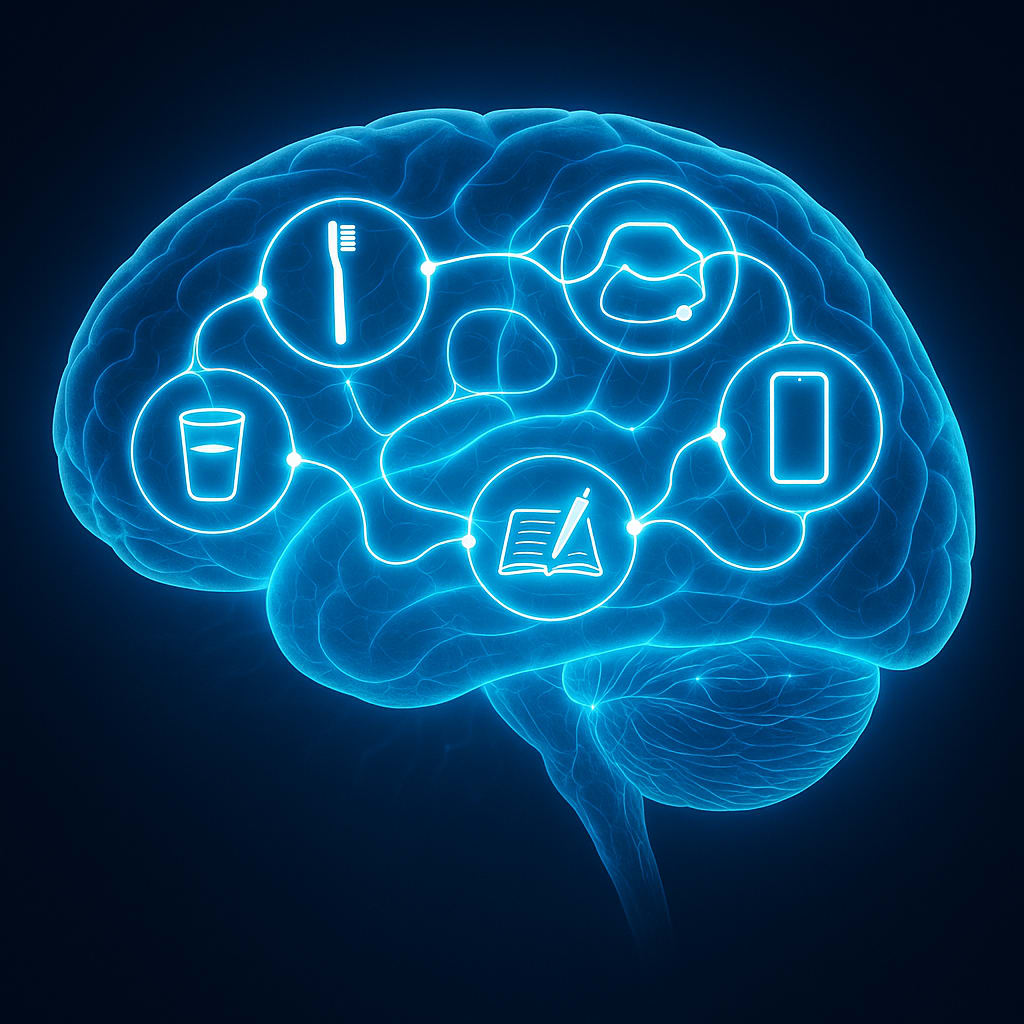
We often think change has to be loud. Big. Immediate. But the truth is—transformation starts in silence. In small, almost invisible moments.
And in those moments live the most powerful force in our lives: habits.
Whether we realize it or not, we are the sum of the things we do daily. Not once in a while. Not on New Year’s Eve. But what we do on a random Tuesday when nobody’s watching.
This isn’t about changing everything overnight. It’s about building something so small, so consistent, that it becomes unbreakable.
Let’s explore why small habits matter more than big goals—and how you can turn them into quiet superpowers.
Big Goals Feel Exciting. Small Habits Create Results.
You’ve heard it before: “I’ll start working out from Monday.”
Monday comes. You do one workout. By Thursday, the motivation is gone, and the plan is forgotten.
Why does that happen?
Because goals rely on motivation, and motivation is unreliable. It fades when you’re tired, busy, or discouraged. But habits rely on systems—and systems are repeatable.
BJ Fogg, behavior scientist at Stanford and author of Tiny Habits, found that when people start with small, consistent actions, they’re far more likely to stick with them. For example:
Don’t aim to meditate for 30 minutes. Start with just one mindful breath.
Don’t try to eat a perfect diet. Start by drinking one glass of water every morning.
Don’t force 10,000 steps a day. Just wear your shoes and step outside.
These micro-actions may feel insignificant. But they’re frictionless. You don’t need to “feel ready.” You just do them. And they build momentum.
Small Doesn’t Mean Weak: The Power of Compounding
James Clear, author of Atomic Habits, uses a striking example:
“If you get 1% better every day for a year, you’ll end up 37 times better.”
That’s the compound effect—where small efforts, repeated consistently, lead to massive long-term change.
Think of it like this:
A plane shifting its direction by just 1 degree ends up in a completely different country.
A tree doesn’t grow an inch every day. You don’t notice it for months—but one season, it towers over you.
Success isn’t an explosion. It’s accumulation.
Your Brain is Wired for Habit Loops
Let’s look at the brain.
The Basal Ganglia is the region responsible for habit formation. It remembers patterns. Every time you repeat an action—like unlocking your phone, drinking coffee, or checking notifications—it gets logged and automated.
The habit loop has 3 parts:
Cue – a trigger (you feel bored)
Routine – the habit (you open Instagram)
Reward – dopamine hit (you feel entertained)
The trick is to hijack that loop by inserting a new routine.
For example:
Cue: You wake up
Routine: Instead of scrolling your phone, write one sentence in your journal
Reward: Feel clarity and peace before the day startsDo this for 3 weeks, and your brain starts rewiring itself. Studies show that consistency, not intensity, is what forms neural pathways.
Real-Life Proof: Small Habits Build GiantsLet’s look at people who made tiny habits work:
Stephen King writes 500 words a day. Over 60 novels later, he still sticks to that number.
Warren Buffett reads 5+ hours daily. Not once in a while—daily. His success is the result of decades of slow knowledge compounding.
Serena Williams mastered footwork through repetitive drills every single day as a child. Her world-class precision came from basics—not tricks.
These people didn’t rely on massive changes. They leaned into small mastery, repeated consistently.
How to Build Tiny Habits That Stick
Here’s a 3-step habit formula based on BJ Fogg’s model and years of behavior science:
1.Anchor it to an existing routine
Link your habit to something you already do.
Example: “After I brush my teeth, I’ll drink a glass of water.”
2.Make it so small you can’t fail
If it feels too easy, that’s the point.
Example: “I’ll do 1 pushup a day.” You can always do more, but never less.
3.Celebrate instantly
Tell your brain it did something good. Smile. Say “Yes!” Or do a fist pump.
That emotional reward increases dopamine, helping lock the habit in place.
Consistency isn’t just physical—it’s emotional reinforcement that tells your brain: this matters.
Final Thought: Change is Built in Silence
You don’t have to overhaul your life to change it. You don’t need to be extreme. You need to be consistent.
Small habits don’t shout. They whisper.
But those whispers—repeated daily—become the loudest echoes of success in your future.
So next time you want to change your life, don’t think big.
Think tiny. Think today.
And then do something so small, you can’t fail.
Because sometimes, the quietest actions speak the loudest over time.
About the Creator
Natik Ahsan
Welcome to a world of wonder, curiosity, and nature's quiet magic.
Here, I explore stories that open minds, spark thought, and invite gentle conversation.
Thank you for being here—your presence means everything.
Keep reading
More stories from Natik Ahsan and writers in Education and other communities.
Can We Cool the Earth by Dimming the Sun?
What if we could press a planetary “pause” button on global warming?As climate anxiety grips communities worldwide and the effects of global heating accelerate, a bold question is being asked in science labs across the UK: Can we reflect sunlight back into space to cool the Earth—safely, temporarily, and deliberately?
By Natik Ahsan9 months ago in Education
The Education Situation: A Small Rant
A note: This is meant to be only a description of my thoughts and feelings towards education and my reflections on leaving the teaching profession. I understand every school/district/state/etc. is different, I am simply sharing my experiences having been a young teacher for 4 years here in Florida. For any other struggling teacher who reads this, you are not alone. I only set out to share my perspective with others who can relate and understand and to vent my frustration about a system that chewed me up and spit me out.
By Elise Spiller2 days ago in Education
The Rise of Online Learning in Education
Online learning has become a fundamental part of education. Many institutions now view it as essential: one report notes that 65% of colleges consider online programs critical to their strategic plans. This shift is driven by both technological advances and changing learner needs. Surveys confirm strong student demand for digital options – for example, a study found that 95% of undergraduates wanted at least one online course per semester. In other words, schools are expanding online offerings because doing so improves access and meets modern expectations, all while maintaining high-quality instruction.
By Kashif Khan7 days ago in Education



Comments (1)
Tqsm for putting up this piece of writing.I love reading such type of information.