
Timeless Resilience: The Renaissance of the Russian Watch Industry in 2026
Revitalizing Heritage, Innovation, and Global Competition
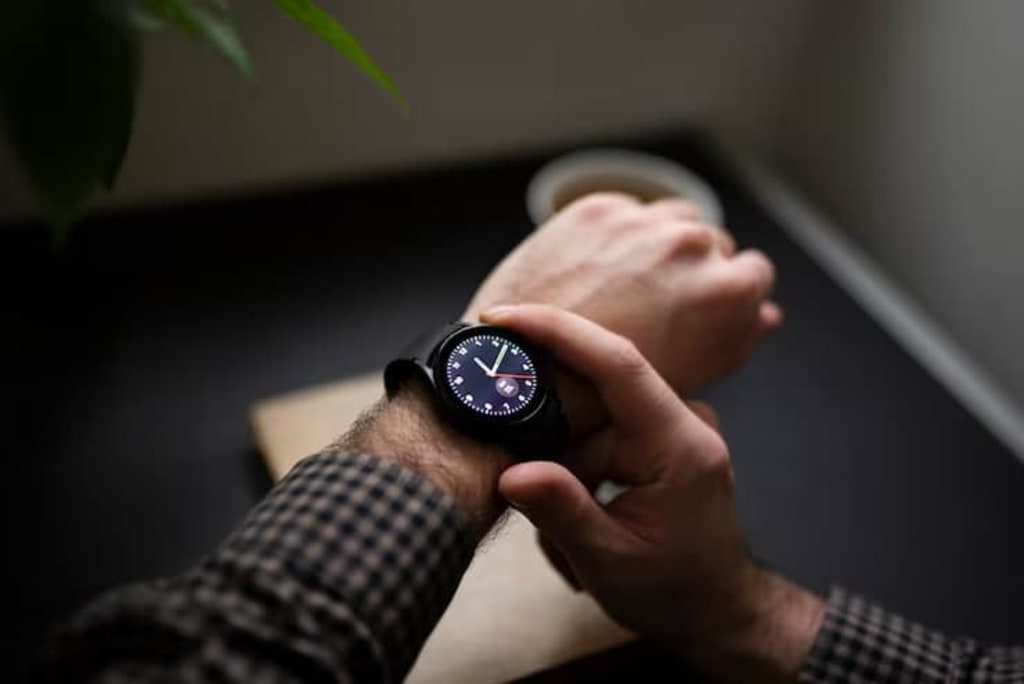
Horology in Russia has always been more than just a matter of keeping time; it is a storied tradition that spans from the space-faring "Sturmanskie" to the deep-sea "Amphibia." However, as we move through 2026, the Russian watch market has entered a transformative era. What was once a landscape dominated by Swiss luxury giants and Japanese quartz mass-market brands has been radically reshaped by geopolitical shifts and a powerful resurgence of national pride. Driven by a "Mechanical Renaissance" and the rise of local independent watchmakers, the Russia watch market is currently valued at approximately $1.12 Billion in 2026. This is a market where the "Tick-Tock" of history meets the cutting edge of modern design, creating a unique ecosystem that is both fiercely domestic and surprisingly innovative.
The Economic Pivot: From Swiss Luxury to Domestic Sovereignty
The primary engine behind the 2026 watch market surge is the fundamental realignment of the luxury and mid-range segments. Following the exit or suspension of many Swiss conglomerates, Russian consumers have redirected their purchasing power toward domestic "High-Horology" and accessible luxury. Growing at a steady CAGR of 4.8%, the sector is benefiting from a new generation of collectors who view Russian timepieces as both a store of value and a symbol of cultural identity. By early 2026, the demand for high-end mechanical watches from brands like Raketa and Konstantin Chaykin has reached an all-time high, with waiting lists for iconic models spanning several months.
This economic shift has also led to a major professionalization of the "Pre-Owned" and "Vintage" segments. In 2026, the resale of Soviet-era classics and certified pre-owned Swiss watches has become a multi-million dollar sub-industry. Platforms like Avito and specialized boutiques in Moscow and St. Petersburg are utilizing blockchain-based authentication to provide trust in a market where physical supply is often constrained. For the Russian economy, this means the growth of a sophisticated service sector from master watchmakers to restoration specialists ensuring that the art of horology remains a vibrant part of the national industrial fabric.
The Mechanical Renaissance: Raketa, Vostok, and the Movement Shift
Perhaps the most visible change for anyone looking at a Russian wrist in 2026 is the return to mechanical complexity. While the global world leans into smartwatches, the Russian market is seeing a massive push back toward the "Soul of the Machine."
The Raketa Revival: Based in Saint Petersburg, the Petrodvorets Watch Factory (Raketa) has become the poster child for the 2026 revival. By manufacturing nearly every component in-house—including the balance spring—Raketa has positioned itself as a true "Manufacture," rivaling European brands in technical verticality. Their 2026 collections, inspired by Soviet avant-garde and polar exploration, have become must-have items for global enthusiasts who bypass traditional channels to acquire them.
The Movement Realignment: With access to Swiss ETA and Sellita movements restricted, 2026 has seen a surge in "Sino-Russian" technical partnerships. Russian brands are now integrating high-grade movements from Seagull and Peacock, often modifying them in Moscow workshops to meet "Russian Chronometer" standards. This hybrid engineering has allowed the mid-range market to remain affordable while offering complications like tourbillons and moon phases that were previously inaccessible.
The "Joker" Effect: Independent master Konstantin Chaykin continues to elevate Russian horology on the global stage. In 2026, his "Wristmons" series has inspired a wave of independent micro-brands across Russia, focusing on "Creative Horology" rather than just utility. These small studios are using 3D printing and CNC machining to create bespoke cases, proving that Russian watchmaking is as much about art as it is about engineering.
How AI is Reshaping the Future: The Digital Horologist
In 2026, even an industry as traditional as watchmaking has not escaped the reach of Artificial Intelligence. AI is now being used to bridge the gap between ancient craft and modern retail.
AI-Driven Authentication: In the booming secondary market of 2026, AI algorithms are used to scan macro-photographs of movements to detect "Franken-watches" (watches made of mismatched parts). This technology has become essential for collectors of vintage Poljot and Vostok pieces, ensuring the historical integrity of their investments.
Generative Design and Prototyping: Small Russian micro-brands are using AI to design case geometries that optimize ergonomics and water resistance. By simulating thousands of pressure tests in a digital environment, these brands can bring professional-grade dive watches to market in a fraction of the time it took a decade ago.
Virtual "On-Wrist" Experiences: With the growth of e-commerce in 2026, Russian watch retailers are using AR (Augmented Reality) powered by AI to allow customers in Vladivostok to "try on" a luxury piece from a Moscow boutique. The AI adjusts for skin tone and lighting, providing a hyper-realistic preview that has driven online sales to record levels.
Infrastructure and the Road Ahead: The Smartwatch Challenge
While mechanical watches are the heart of the 2026 renaissance, the industry faces the inevitable challenge of the Smartwatch Dominance. In the mass-market and fitness segments, Chinese tech giants like Huawei and Xiaomi have captured significant share. To counter this, Russian firms are experimenting with "Hybrid" solutions mechanical watches with "smart" straps or integrated NFC chips for contactless payments via Mir Pay.
Despite these challenges, the outlook for the Russian watch sector remains overwhelmingly positive. The government’s focus on "Technological Sovereignty" has led to subsidies for precision instrument manufacturing, which directly benefits watch factories. We are seeing the first signs of a unified "Russian Quality Mark" for timepieces, ensuring that any watch bearing the "Made in Russia" label in 2026 meets rigorous standards of durability and accuracy.
Conclusion: A New Era of Russian Time
As we look at the state of the watch market in Russia in 2026, the picture is one of a sector that has reclaimed its time. By pivoting toward in-house manufacturing, embracing the creativity of independent masters, and utilizing AI to protect and promote the craft, Russia has built a horological ecosystem that is resilient and culturally resonant. The "Moscow Minute" of 2026 is one where the watch is no longer just a tool for punctuality, but a testament to survival and style. Whether it is a rugged Vostok on a naval officer or a bespoke Chaykin at a gala, the message is clear: Russian watchmaking is not just ticking it is thriving.
About the Creator
Keep reading
More stories from Neeraj kumar and writers in Education and other communities.
The Neural Network: China’s Automotive Wiring Harness Revolution in 2026
The automotive industry is often judged by its exterior design or engine horsepower, but in 2026, the real battle for dominance is happening under the chassis. As China solidifies its position as the world’s leading Electric Vehicle (EV) powerhouse, the Automotive Wiring Harness the literal nervous system of the vehicle has undergone a radical transformation. What was once a bundle of simple copper wires has evolved into a high-tech, high-voltage network capable of supporting rapid charging and autonomous driving. Driven by the 15th Five-Year Plan and the "Smart Mobility" mandate, the China automotive wiring harness market is currently valued at over $18.4 Billion in 2026. This "Neural Revolution" is not just about connectivity; it is about the survival of the fittest in an era where vehicles are becoming "computers on wheels."
By Neeraj kumarabout 3 hours ago in Education
The 1943 Copper Cent vs. The 1944 Steel Penny: How to Spot the Legendary Mistakes
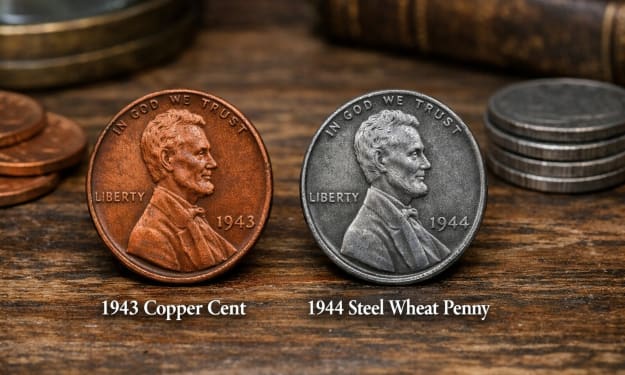
For over eight years as a Senior Numismatic Analyst, few questions ignite the passion of a collector like the legends of the 1943 Copper Cent and the 1944 Steel Penny. These coins represent the most famous mint errors in American history, born from the unprecedented material shifts of World War II. I've examined countless coins brought to me with hope, only to find they were clever counterfeits. The truth is, genuine examples of these errors are extraordinarily rare, but knowing exactly what to look for is the first step from fantasy to fact. This guide will cut through the myths and give you the concrete, professional methods to understand and identify these numismatic legends.
By Laura Bennett5 days ago in Education
The Core of Command: How Training, Tactics, and Character Shape Military Leaders
Military leadership is not about titles or authority alone; it is about the ability to influence, inspire, and execute with purpose. Commanders are made through intentional development, relentless training, and personal reflection. Their growth as leaders is built on three essential pillars: structured training, tactical excellence, and a strong moral compass. These elements work together to create individuals who can lead teams in high-pressure environments with clarity, confidence, and conviction.
By Eric Schnabel7 days ago in Education


Comments
There are no comments for this story
Be the first to respond and start the conversation.