
Time, Money, Energy, and More | The different BIM Dimensions in AEC Industry
“Historically, the construction Industry has underperformed.”

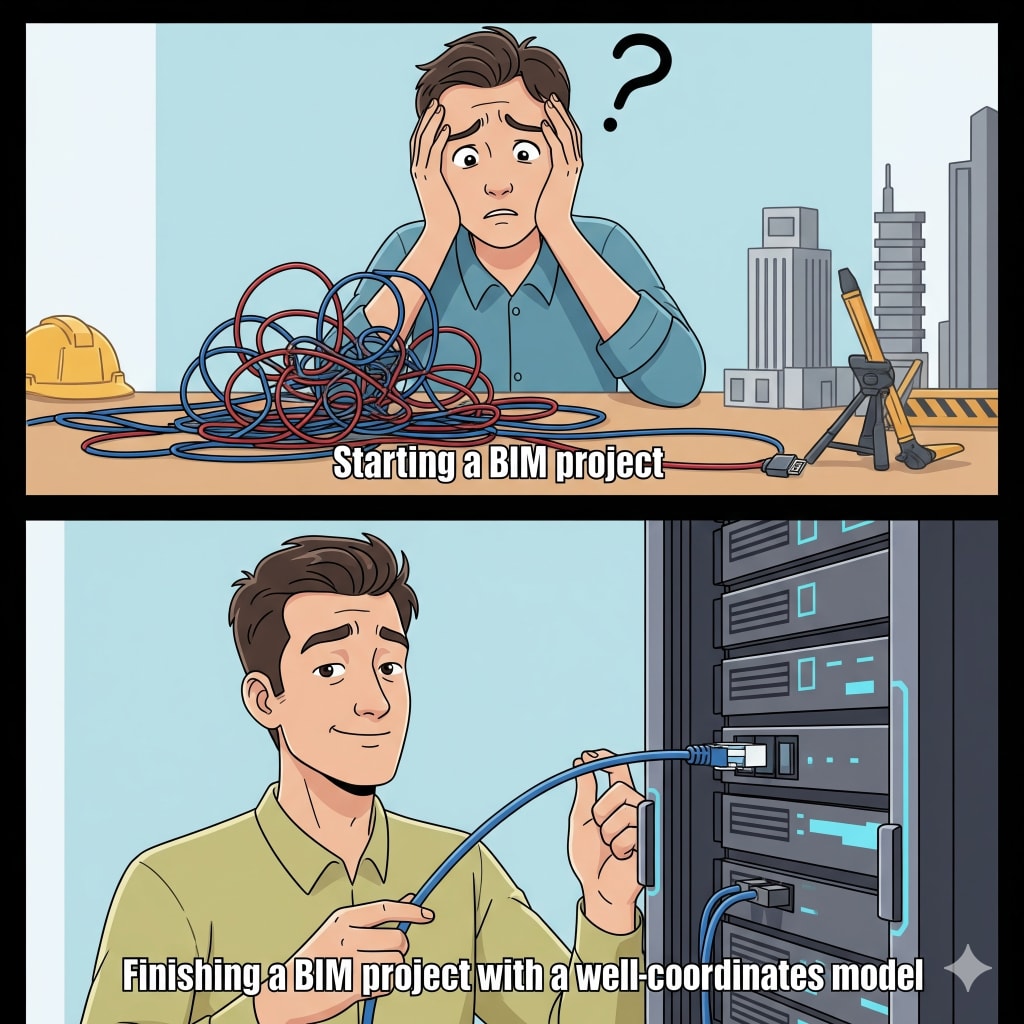
A 2020 McKinsey report describes how the AEC industry is undergoing a technical revolution to streamline its workflows and improve efficiency. And BIM plays a significant role in that revolution.
The traditional workflows of the AEC industry have used data sets as design drivers – site conditions, budget constraints, and timelines. What was lacking was a means to interlink these data sets in a shared environment. This is now possible with BIM Technology.
BIM models include different kinds of data as BIM Dimensions. How does that work? Read on.
What are Dimensions in BIM?
To optimize the BIM model for different use cases – project stage or complexity – specific parameters are added to the 3D model. These parameters are pre-defined use cases, added as BIM dimensions.
BIM dimensions range from 3D (Geometry), 4D (Time), 5D (Money), 6D (Sustainability), 7D (Facility Management), and more.
BIM Modeling tools, like Revit, assist with project visualization and the physical detail of the design elements. These features are similar to CAD. It is beyond 3D that BIM is utilized to its true potential.
4D BIM: What is it and How it Helps?
BIM tools allow architects and engineers to link the 3D model to the project schedule. Building elements are hence categorized according to the project timeline.
4D Simulation helps in visualizing project timelines and evolution. It allows the reviewing of project assemblies to detect points of conflict and facilitates an efficient construction process.
Top 3 Reasons to Use 4D BIM
1. Allows for seamless collaboration between architects, contractors, and on-site teams.
2. Project timelines are set more realistically, avoiding project delays.
3. Improves site safety and working efficiency.
5D BIM: What is it and How it Helps?
Another great feature of BIM is that it allows the linking of Cost Estimation with the model. Hence, along with the project geometry and construction timeline, you also have the project budget attached.
This enables the stakeholders to visualize the project budget over time. 5D BIM Modeling also helps in comparing the estimated budgets with actual costs to keep the overruns in check.
Top 3 Reasons to Use 5D BIM
1. Cost and Budget analysis is automated.
2. Changes in the budget are immediately notified with changes in design.
3. Reduced overruns with regular cost reporting.
What is 6D BIM and Why is it Important for the AEC industry?
Beyond construction, BIM also allows tracking and use of building information in its operations phase. 6D BIM integrates the energy consumption of a building into the model. Architects and engineers can now deliberate on the best means of energy production and consumption in the building.
Using 6D BIM helps in optimizing energy consumption in a building. This helps in design optimization in the initial phase itself. In the long run, this improves operational costs and helps with energy management.
Top 3 Benefits of 6D BIM
1. Better strategies for building components during the design phase.
2. Better management of building infrastructure and operations (post-handover)
3. Reduced energy consumption in the building in the long run.
Common Queries
1. What are the 4 levels of BIM?
a) Project Evaluation
b) Project Planning
c) Design Execution
d) Operations and Maintenance
2.What is 6D and 7D in BIM?
6D BIM includes energy consumption data in the building design, while 7D BIM integrates facilities in a building to be used through its life cycle.
3. What does 5D mean in BIM?
The 5th Dimension of BIM is that of the project cost. 5D BIM is the integration of the BIM Model with the estimation of the project.
4. What does 4D in BIM mean?
4D BIM is made by linking the 3D BIM model with the project schedule (time). 3D Model + Time = 4D BIM.
5. What is 9D BIM?
9D BIM is also known as lean construction and includes information to optimize the process of project management.
6. What is BIM LOD?
BIM LOD means Level of Development, which makes it easier to define a standard for contractors and project managers working with BIM.
About the Creator
RB
AEODC is a global hub advancing the AEC industry through cutting-edge BIM and virtual Design & Build tech, connecting all stakeholders to foster innovation, collaboration, and efficiency across every project stage.
This is what happens in your brain when you can't recall and word
You’re sure you know your third grade teacher’s name— it’s like you’re hovering over it in your mind, but it just won’t materialize. Researchers call this tantalizing torment a “tip-of-the-tongue state,” and it's something everyone experiences. But what's actually happening when a word gets caught here? And how can you best get it unstuck? Most of the time, our brains seamlessly summon words from vast stores of knowledge, paring their meaning and sounds, and stringing them into sentences.
By Munesh Yadav2 days ago in Education
How to Succeed at the Benson Directory®
Congratulations and welcome to the Benson Directory® employee #22391! As our newest call handler, you will have the privilege of speaking with dozens of unique and interesting people on a daily basis as well as the opportunity to earn bonuses for high performance. Contained within this handbook you will find a set of ease to follow instructions designed to help you settle in to your new role and begin paving the way to success.
By S. A. Crawforda day ago in Fiction



Comments
There are no comments for this story
Be the first to respond and start the conversation.