

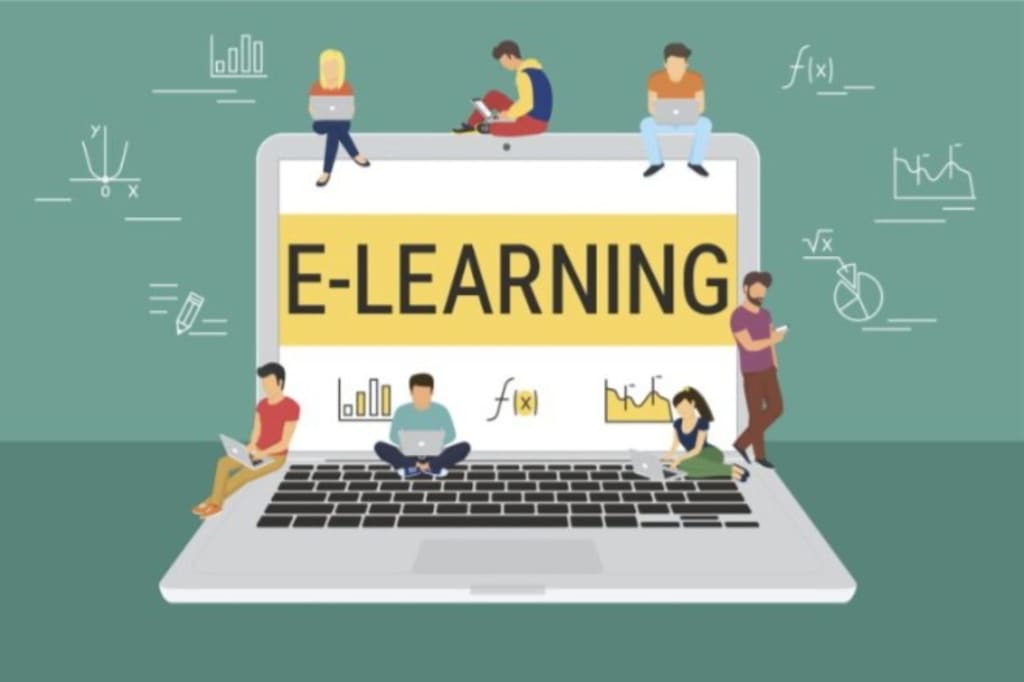
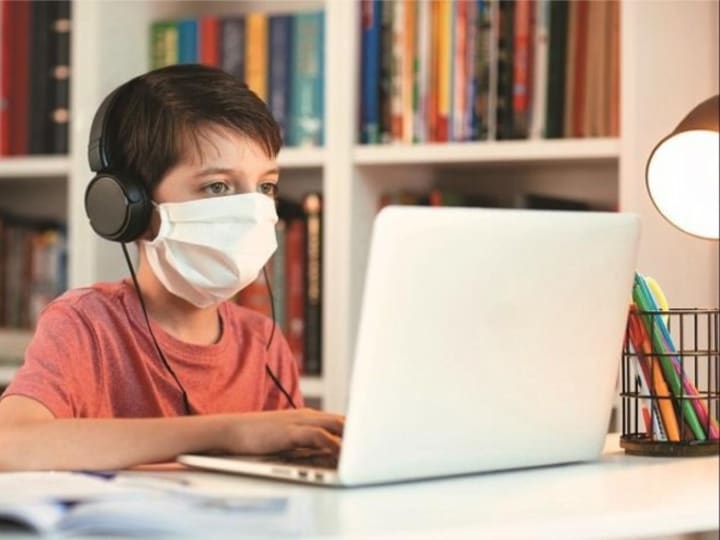
Due to the corona outbreak, the movement of students in the campus was stopped overnight last year. The assessment season was underway under various Central and State Boards of Education across the country. Unscientific assessments at the higher secondary level had to be accepted despite reluctance. Even today, at the upper primary level, study is stagnant, everyone has passed the class without evaluation. Although the situation was not normal before the second wave came, everything was started for the sake of the economy, only education was outcast. Excuse protection. Although in rural and suburban schools most of the time students come for mid-day meal every month.
This situation necessitates a new approach to digital education and web-mediated learning, especially in the field of school education. In 2021, the number of e-learning consumers will reach 98 million, while the number of video-mediated learning users will increase by 75% over the previous year. The use of self-propelled channels for students from class IX to XII through the free-to-air channel through Edusat, initiated by the central government, reaches another height. Various programs of mobile, voice mediated learning, online learning were adopted at the initiative of the state government. Twelfth grade students are paid to buy tabs, although late. But according to a survey of students in five states, 80% of students have no contact with e-learning materials, 90% of students cannot be assessed in terms of e-learning materials because 50% of students are not able to do their homework and 70% of students are bored by teachers.
The class doesn't want to listen. Mobile learning, computer mediated learning could not reach everywhere in rural India. Marginal students are not able to take advantage of this as their prior knowledge and ability verification techniques have become different. Learning apps that are being used privately have not yet been developed by the Department of Education. Students from poor families are not even close to it.
More than a year has passed. When one assessment after another had to be stopped last year, the boards of central and state governments needed to plan for the next assessment system. Content-centric offline and online worksheets should have been created with the help of technology. Students in classes IX to XII could learn by completing the worksheet as well as participate in continuous assessment. Those who do not have access to online system, they could collect work papers at school one day on weekends and upload them on the portal. As well as creating e-portfolios for students using virtual laboratories, updated augmented reality, e-journal writing, story writing, online quizzes, mobile learning for puzzles, self-efficacy channels and state-level news channels. Local teachers in rural schools could do this effort effortlessly from last November to February. But for this we need a Central Student Portal. In 2012 to 2013 several states started work on the portal in two projects of the Ministry of Human Resource Development. Like visiting Central Student Portal in Rajasthan, Himachal Pradesh, Uttarakhand. Work on the portal has been underway in the state for the last three-four years, but the overall assessment through teaching and active participation of the students has not been done yet. Continuous assessment of students would have been easier if the active participation of each student could be made mandatory through this portal in post-Corona situations.
According to parents, children do not want to read books in lockdown. The government can easily solve this problem if it wants. Children love cartoons, subjects like Bengali, English, Sanskrit, history could be taught in cartoons and quizzes. Using various concepts of science and mathematics, quizzes, magic, puzzle programs could be made to reach the students through radio and TV. With the e-feedback loop across the evaluation would be done. Class students of different channels do not want to listen, if the education department wanted, audio lessons could reach them through podcasts on mobiles without net connection. After listening to them, they could answer from different options, the evaluation would also go ahead.
Extremes can disrupt education in the future. Therefore, it is very necessary to form a parallel e-learning system through sound planning. Otherwise, primary and upper primary students will go far beyond the scope of education.
About the Creator
Keep reading
More stories from Dr. Tulika Sarkar and writers in Education and other communities.
A Child's School Fear is a worrying mental health problem....
It was nine o'clock in the morning. Suddenly Sneha's chest began to throb. Also she was feeling nauseatic. She began to stroll from one room to another. The time was also running out. With all these things in her head, she went to take a bath. Everything seemed to be moving slowly that day, it would be wrong to say 'Everything', all her work was going on at a slow pace. She tried to vomit but failed. As she sat down to eat, her father asked her, "What? Feeling nervous?"
By Dr. Tulika Sarkar3 years ago in Education
How Genomics Powers Humanitarian Impact Across Global Communities
Genomics powers humanitarian impact by using genetic science to solve urgent human problems. Genomics is the study of all genes in a living being. It helps experts understand how diseases spread, how bodies respond to treatment, and how crops survive harsh weather. Today, genomics powers humanitarian impact in health care, agriculture, disaster response, and public planning. It brings science closer to communities that face daily risks.
By Mark Bouzyk3 days ago in Education



Comments
There are no comments for this story
Be the first to respond and start the conversation.