
The Velvet Revolution Inside China’s $351 Billion Luxury Automotive Pivot (2025–2033)
“China Luxury Auto Industry: Growth & Forecast”
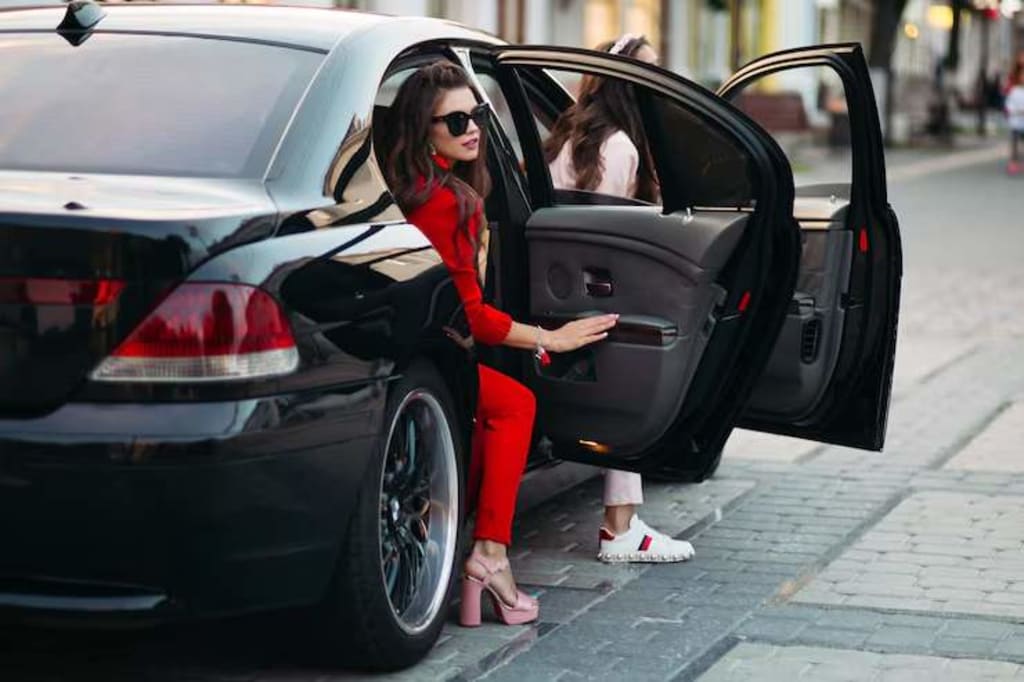
In 2026, the streets of Shanghai's Jing'an District are no longer just a parade of traditional German engineering. While the silver three-pointed star and the blue-and-white roundel still hold prestige, they are now sharing the asphalt with a new breed of "Tech-Luxury" titans.
China’s luxury car market has entered its most transformative decade. Valued at USD 195.0 Billion in 2024, the market is projected to skyrocket to USD 351.0 Billion by 2033, maintaining a robust CAGR of 6.70%. But beneath these billion-dollar figures lies a profound shift in what "luxury" actually means to the world’s most influential consumer base.
The Death of the "Status Symbol" (And the Birth of the "Tech Platform")
For decades, a luxury car in China was a loud statement of wealth a status symbol that spoke before the driver did. In 2026, that definition has matured. For the Millennial and Gen Z buyers who now drive over 50% of luxury sales, a car is no longer just a vehicle; it is a mobile technology platform.
Intelligence Over Horsepower: The 2026 luxury buyer prioritizes L3 Autonomous Driving and "Intelligent Cockpits" over 0–100 km/h speeds. Features like AI-driven personal assistants, AR-HUDs (Augmented Reality Head-Up Displays), and seamless integration with the Huawei or Xiaomi ecosystems are now the primary "premium" benchmarks.
The "Third Space": With urban congestion still a reality, luxury cars are being marketed as a "Third Space" a sanctuary between the office and home. This has led to an explosion in demand for ultra-premium interiors featuring zero-gravity seats, cinema-grade sound systems, and even in-car "wellness" modes that adjust lighting and scent based on the driver's stress levels.
The NEV mandate: Luxury Goes Green
The Chinese government’s unwavering support for New Energy Vehicles (NEVs) has fundamentally rewired the luxury sector. In 2026, the "New Energy" penetration in the luxury segment has officially crossed the 50% threshold.
Incentive Evolution: While direct cash subsidies have "normalized," the non-monetary incentives remain powerful. In Tier-1 cities like Beijing and Shanghai, the "Green Plate" (which bypasses registration lotteries and traffic restrictions) remains the ultimate luxury perk.
The Rise of Domestic "Ultra-Luxury": 2026 has seen the rise of domestic brands that are successfully challenging the "Old Guard." Brands like Yangwang (by BYD) and Aito (Huawei-backed) are selling vehicles priced above RMB 1,000,000 (USD 140,000), proving that Chinese consumers are now willing to pay European prices for Chinese innovation.
Regional Dynamics: Beyond the Tier-1 Bubble
While Guangdong Province (home to Guangzhou and Shenzhen) remains the undisputed leader in luxury consumption due to its high concentration of HNWIs (High-Net-Worth Individuals), the growth story of 2026 is moving inland.
The Tier-2 and Tier-3 Surge: Cities like Chengdu, Wuhan, and Hangzhou are seeing the fastest growth rates. Rising disposable incomes in these "New First-Tier" cities have led luxury brands to aggressively expand their dealership networks and "Experience Centers" outside of the traditional coastal hubs.
Direct-to-Consumer (DTC): The traditional dealership model is under fire. In 2026, many luxury NEV brands utilize a "Mall-Based" showroom model combined with direct online ordering. This transparent pricing and "no-haggle" experience appeal deeply to younger, tech-savvy buyers.
The German "Grit": BMW and Mercedes in 2026
It has not been an easy road for the traditional European giants. In early 2026, both Mercedes-Benz and BMW have recalibrated their China strategies after facing cooling demand for their internal combustion engine (ICE) models.
Localization is Key: To survive, the "Big Three" (Audi, BMW, Mercedes) have shifted from "Made in China" to "Created in China." Mercedes-Benz has launched its first locally built GLE Electric, while BMW’s "Neue Klasse" platforms are being tailored specifically for Chinese software tastes.
Joint Venture Innovation: We are seeing "Reverse Technology Transfers," where legacy European firms are partnering with Chinese tech giants (like the VW-XPeng collaboration) to catch up on software and battery speed.
Challenges: Navigating the 2033 Horizon
The path to a USD 351 Billion market is paved with several 2026-era obstacles:
Price Wars vs. Brand Equity: The aggressive price wars of 2024–2025 have compressed margins. Luxury brands must now perform a delicate balancing act: maintaining "Premium Pricing" while offering enough "Tech-Value" to justify the cost.
Data Security: As cars become data-harvesting machines, the Chinese government has tightened Data Sovereignty laws. Luxury OEMs must now ensure all "Connected Car" data is stored on local Chinese servers, adding a layer of regulatory complexity.
The Semiconductor Squeeze: While the global chip crisis has eased, the demand for high-end AI chips for autonomous driving remains high, making luxury brands vulnerable to geopolitical trade tensions.
Future Outlook: The Autonomous "Lounge" (2027–2033)
As we look toward the 2033 horizon, the market will likely be defined by Level 4 Autonomy. The car of 2033 won't be something you "drive" to show off; it will be a private, autonomous lounge that handles the commute while you sleep, work, or entertain. With 40% of all luxury cars expected to be fully electric by 2030, the "Luxury" label will eventually be synonymous with "Sustainability" and "Intelligence."
Conclusion: A New Blueprint for Global Wealth
China’s luxury car market is no longer a localized success story; it is the global blueprint. The trends we see in Shanghai today the obsession with in-car software, the dominance of luxury SUVs, and the "Green Plate" prestige will eventually dictate the strategies of dealerships in London, New York, and Dubai.
At USD 351 Billion, the China luxury car market is more than a sector; it is a testament to the nation’s rapid ascent into a high-tech, high-wealth future. For the global automotive industry, the message is clear: if you can win in China in 2026, you can win anywhere.
About the Creator
Keep reading
More stories from Neeraj kumar and writers in Education and other communities.
The Silent Surge Mapping China USD 28.35 Billion E-Bike Future (2025–2033)
The 2025-2026 "Cash for Clunkers" Boom The most critical driver of market volume in the last 18 months has been the National Electric Bicycle Trade-In Program. Launched in late 2024 and expanded in early 2025, this government initiative aimed to replace millions of aging, lead-acid battery bikes with safer, lithium-ion, and smart-connected models.
By Neeraj kumarabout an hour ago in Education
Charting a Confident Future: How Professional Investment Management Supports Long-Term Financial Goals
Long-term financial goals require direction, structure, and a clear understanding of how investments behave over time. Professional investment managers help clients define these goals with clarity by exploring what financial independence, security, and future planning mean to each individual. They examine personal circumstances, risk tolerance, and time horizons so clients gain a deeper appreciation of the journey ahead. As this understanding forms, investors feel more grounded and capable of moving forward with purpose.
By Winston Feng6 days ago in Education
The Light Beyond the Blackboard
In a quiet village surrounded by wide green fields and dusty roads lived a boy named Ayaan. Every morning before the sun fully rose, he helped his father deliver milk to nearby houses. While other children walked past him wearing clean uniforms and carrying backpacks, Ayaan often wondered what it felt like to sit inside a classroom.
By NAIB REHMAN2 days ago in Education


Comments
There are no comments for this story
Be the first to respond and start the conversation.