
The Urgent Need to Combat High-Level Corruption in Africa
Africa’s undeclared Pandemic


The prevalence of high-level corruption in Africa is causing significant damage to struggling economies on the continent, with devastating consequences for citizens. Elected officials, bureaucrats, and industry leaders are engaging in illicit activities that leave states unable to provide essential services. In Malawi, for instance, corruption has hindered the provision of effective healthcare, quality education, accessible justice, and a responsive democracy. Similarly, South Africa is grappling with rolling blackouts due to corruption and mismanagement, exacerbating the country's unemployment crisis.
In addition to the localized corruption within state-owned entities, Africa as a whole suffers from substantial losses due to illicit financial flows. The UN Conference on Trade and Development estimates that the continent loses approximately $88.6 billion annually, equivalent to 3.7 percent of its GDP. It is not surprising that many African countries, including Sudan, Equatorial Guinea, the Democratic Republic of the Congo, Chad, Burundi, Somalia, the Republic of the Congo, and South Sudan, rank high on Transparency International's Corruption Perceptions Index.
African youth are deeply concerned about the deteriorating state of affairs on the continent, with "new, well-paying jobs" and "reducing government corruption" being their top priorities. Despite the rhetoric of institutions like the Economic Community of West African States (ECOWAS), the Southern African Development Community (SADC), and the African Union (AU), their efforts to combat corruption have yielded few tangible results. Politicians often make promises to fight corruption during electoral campaigns, but these pledges rarely translate into meaningful action.
Nigeria's President Muhammadu Buhari, who campaigned on an anti-corruption platform, is perceived by Nigerians to have failed in curbing corruption during his tenure. South Africa's President Cyril Ramaphosa, who promised transparency and accountability, has also faced criticism for the worsening corruption under his leadership. Zimbabwe's President Emmerson Mnangagwa's anti-corruption campaign has similarly fallen short, with accusations of presiding over a corrupt and dysfunctional government.
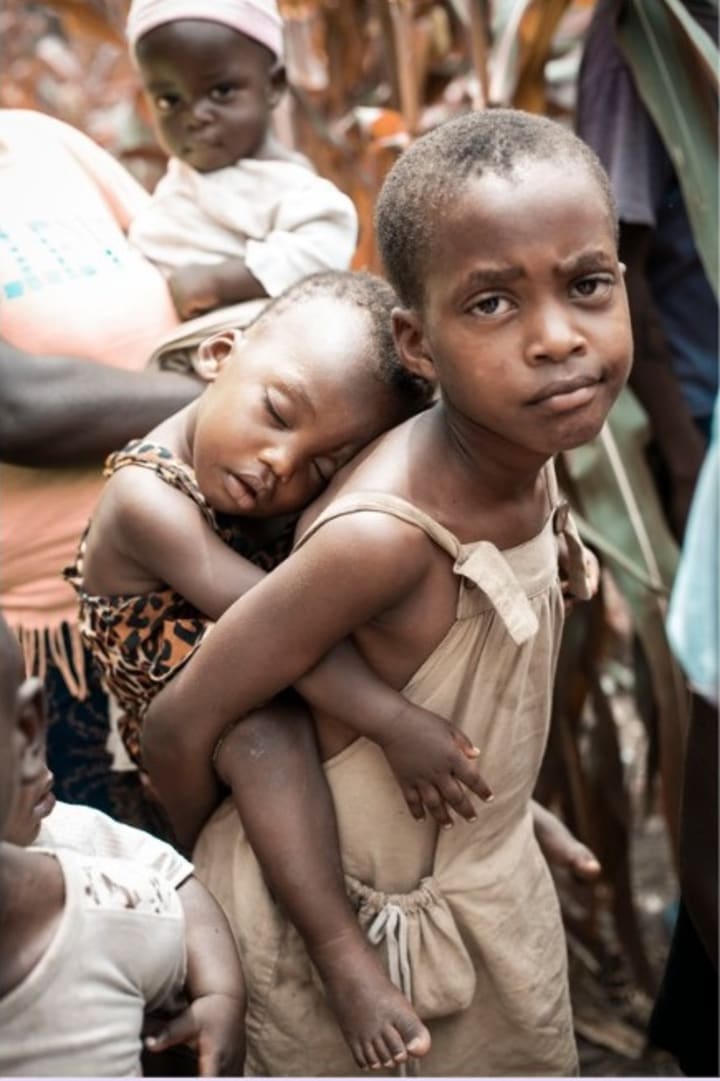
Given the existing economic struggles and various challenges faced by the continent, the AU must acknowledge the severity of the corruption pandemic in Africa and abandon ineffective approaches. It is imperative for the AU to hold leaders accountable for their failure to address government corruption. The establishment of credible continent-wide standards and independent surveillance mechanisms is necessary to promote democratic principles, popular participation, and good governance. Eradicating corruption is essential for political stability, the rule of law, economic growth, and poverty reduction in countries like Malawi, Nigeria, and South Africa.
The AU must demonstrate a strong commitment to combating corruption by implementing vigorous anti-corruption measures. Failing to take swift action could result in devastating consequences for economies across the continent. It is time for the AU to assert its independence and work towards mitigating the socioeconomic impact of bad leadership in Africa caused by corruption.
To effectively combat high-level corruption, the African Union must recognize the urgent need for change and move away from empty rhetoric. The current business-as-usual approach is inadequate in addressing the corruption pandemic. The AU should adopt a systemic approach that focuses on holding leaders accountable for their failures in stemming government corruption. This requires establishing continent-wide standards and implementing independent surveillance mechanisms to advance the anti-corruption agenda. Such measures will promote good governance, democratic principles, and popular participation.
Eradicating corruption is not only crucial for establishing adherence to the rule of law and political stability but also for fostering economic growth and reducing poverty. Countries like Malawi, Nigeria, and South Africa face significant socio-economic challenges that can only be addressed by tackling corruption head-on. The AU must display a renewed and active commitment to mitigating the consequences of bad leadership. By asserting its independence and taking decisive action, the AU can play a pivotal role in shaping a future Africa free from the devastating effects of corruption.
Failure to act swiftly and effectively against corruption could have severe consequences for African economies. The ongoing pandemic, compounded by economic struggles and external challenges, makes it even more imperative for the AU to prioritize the fight against corruption. The AU must demonstrate its determination to combat this deadly pandemic by implementing concrete measures and ensuring that leaders are held accountable. By doing so, Africa can pave the way for sustainable prosperity, improved democratic governance, and a better future for its citizens.
In conclusion, the high-level corruption plaguing Africa's economies cannot be overlooked or dismissed as normal. It undermines the delivery of essential services and hinders socio-economic development. African youth, recognizing corruption as a significant problem, demand action from their leaders. The AU and other regional institutions must go beyond mere rhetoric and take bold steps to combat corruption. By establishing robust anti-corruption measures, promoting good governance, and holding leaders accountable, Africa can overcome the corruption pandemic and unlock its full potential for the benefit of its people.
About the Creator
Joel Edward Gblee
Joel is an enigmatic wordsmith and a storyteller whose imagination knows no bounds. With his hands dancing across the keyboard, he weaves captivating tales that transport readers to exhilarating realms and leave them yearning for more.
Keep reading
More stories from Joel Edward Gblee and writers in Education and other communities.
Unleashing the Power of AI: A Glimpse into the Mind-Blowing Possibilities of 2023
In the realm of technological advancements, few innovations have captivated the world's imagination like Artificial Intelligence (AI). Since its inception, AI has rapidly evolved, transforming our lives in profound ways. As we step into the year 2023, AI is poised to break new barriers and push the boundaries of what we once thought was possible. In this article, we explore the mind-blowing capabilities that AI has achieved, revolutionizing various sectors and reshaping our future.
By Joel Edward Gblee3 years ago in Education
Natural Ways to Clear Blackheads and Whiteheads
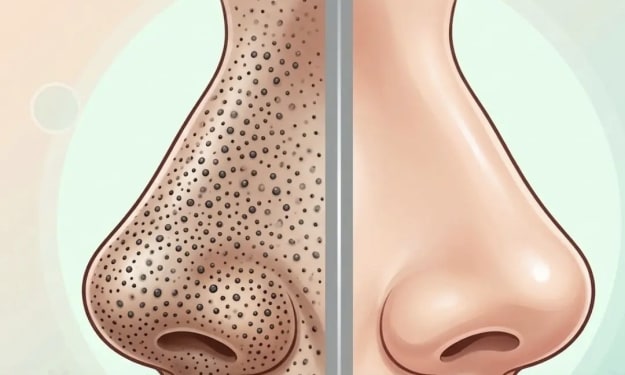
Blackheads and whiteheads are very common skin problems that affect people of all ages. They usually appear on the nose, chin, forehead, and sometimes on the cheeks. These small bumps form when the pores of the skin become clogged with oil, dead skin cells, and dirt. Blackheads appear dark because the clogged material inside the pore reacts with air and becomes oxidized, while whiteheads remain covered by skin, giving them a white or flesh-colored appearance.
By DigitalAddi6 days ago in Education
Peter Ayolov’s Publications
Peter Ayolov is a media theorist and lecturer at Sofia University 'St. Kliment Ohridski', Faculty of Journalism and Mass Communication. His research focuses on the political economy of communication, propaganda models, digital media, narrative structures, and the transformation of language in contemporary technological environments. His work examines how digital communication systems organise dissent, amplify outrage, and reshape the relationship between media, public opinion, and political power.
By Peter Ayolova day ago in Education



Comments
There are no comments for this story
Be the first to respond and start the conversation.