
The Unseen Currency: Understanding the Value of Time
How Every Moment Shapes Our Lives, Relationships, and Future


Time is often referred to as the most valuable resource, yet it is simultaneously the one that most of us take for granted. Every second, minute, and hour that ticks away is an opportunity to shape our lives, but it's also something that, once lost, can never be recovered. The value of time isn't just in its passing but in how we choose to use it. Whether it's spent pursuing a career, building relationships, or simply reflecting on the present, how we allocate our time often determines the quality and meaning of our lives.
The Relativity of Time
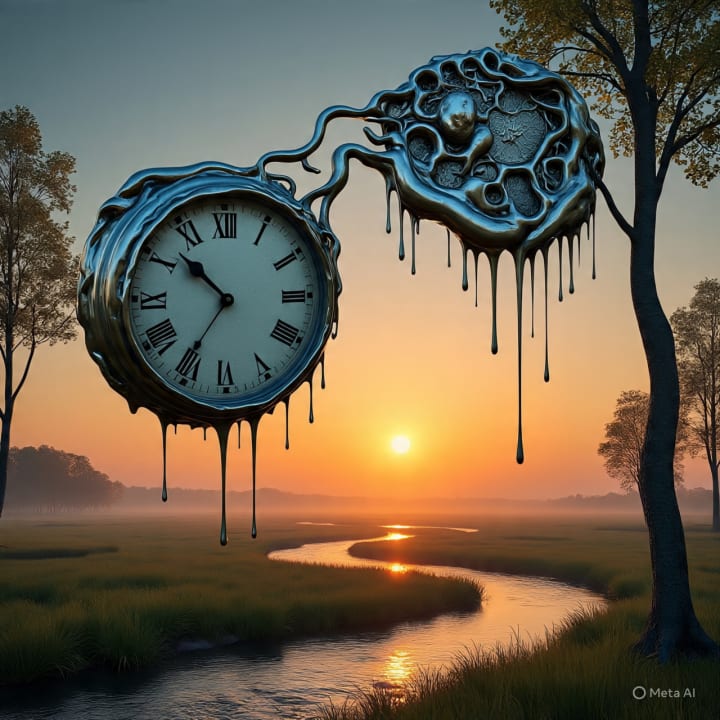
One of the fundamental aspects of time is its relativity. A minute can feel like an eternity when you're in discomfort, yet it can fly by when you're immersed in an activity you love. This subjective experience of time underscores its value—what you do with it influences your perception of it. Time can be stretched or compressed, depending on your focus and emotional state, but regardless of how it feels, it moves forward at a constant pace. As such, every moment, regardless of how we experience it, is precious because it is fleeting.
For example, a person who spends their time meaningfully—whether through work, learning, or connecting with others—might feel that time passes quickly, but they often look back and find that they have accomplished much. In contrast, someone who allows time to slip away through inactivity or unproductive habits may realize too late that they have not used their time well.
Time and Opportunity
The value of time is often tied to the opportunities it presents. Each moment carries with it a unique possibility that will never come again in exactly the same way. Whether it's an opportunity to learn, a chance to express love, or an idea that could shape your future, time is the platform on which these opportunities arise. The key is recognizing and seizing these moments before they pass.
One of the most powerful realizations is that time is the one thing we cannot accumulate. You cannot store it up for later use, nor can you exchange it for something else. The only way to “save” time is to use it wisely in the present, making the most of each moment so that when we look back, we do not feel we have wasted the most precious of resources.

Time and Relationships
While time is valuable in the individual sense, it also plays a crucial role in how we connect with others. The relationships we build throughout our lives are deeply intertwined with time—whether it’s the time we invest in family, friends, or romantic partners. We may be physically present with others, but it’s the quality of the time spent together that truly defines the relationship.
In today's fast-paced world, it’s easy to become distracted by work, technology, and other external pressures. But a true investment of time in relationships—whether through active listening, shared experiences, or mutual support—can be the difference between a connection that endures and one that fades away. In essence, time shared with loved ones is an irreplaceable currency that enriches our lives and leaves lasting memories.

Time and Productivity
In a world that often prioritizes efficiency and output, time is also viewed as a key metric of productivity. The amount of time we dedicate to a task or goal is often equated with its importance and success. However, the value of time in this context isn't just about how many hours are spent working or achieving something—it’s about how effectively those hours are used.
The concept of “time management” has become a crucial part of modern life, particularly as many of us juggle multiple responsibilities. Time management isn't about squeezing more work into less time; it's about prioritizing what truly matters, setting boundaries, and being present in each moment. In this way, time becomes an essential tool for creating a balanced life, where work, relaxation, and personal growth coexist.
One paradox of time is that the more we try to control it, the more elusive it becomes. Instead of focusing solely on efficiency, it may be more valuable to focus on effectiveness—doing the right things at the right time, rather than merely doing more things.
Time and Reflection
Finally, time holds intrinsic value in its ability to provide a space for reflection. We are often so caught up in the rush of daily life that we forget to pause and take stock of where we are. Reflection is an act that demands time—time to slow down, evaluate our choices, and consider our next steps. Without this reflective time, we may continue down paths that don’t align with our true desires or values.
This is where mindfulness and presence become important. By taking the time to reflect on our actions, choices, and goals, we can ensure that our future use of time aligns more closely with what we value. When we pause to reflect, we give ourselves the gift of insight and clarity that allows us to make better decisions moving forward.
Conclusion
The value of time cannot be overstated. It is the only resource that, once lost, cannot be regained. How we use time shapes our lives, our relationships, and our legacies. Whether we view time as a precious commodity or an inevitable passage, the way we spend it will ultimately define us. Time is the thread that ties all of life’s experiences together—connecting the past with the present and pointing toward the future. Thus, it is essential to treat time not just as a measure of the hours in a day, but as a tool for creating meaning and purpose in our lives.
About the Creator
Keep reading
More stories from MoneyOrbit and writers in Education and other communities.
Mastering Investment Strategies: A Comprehensive Guide to Building Wealth
Finance Academy Investment: A Comprehensive Guide Investing is a crucial aspect of personal and institutional finance, serving as a powerful tool for wealth growth, financial security, and future planning. The world of investments is vast, with countless options available for individuals and institutions to grow their money. In this guide, we explore the fundamentals of investment, the various asset classes, and strategies for building a diversified portfolio that aligns with individual financial goals.
By MoneyOrbit6 months ago in Education
How I Discovered Evan Roderick and Why His Work Stood Out
Sometimes, discovering a new actor feels like stumbling upon a hidden gem. That’s exactly how I felt when I first came across Evan Roderick. I wasn’t looking for anyone new to follow, and I had no idea who he was at the time. But as soon as I saw him perform, something clicked. His presence was different. His style was subtle but powerful. And as I explored more of his work, it became clear that Evan Roderick wasn’t just another rising actor—he was someone who brought something unique to the screen.
By Evan Roderick3 days ago in Education
Is the “Autopilot Millions” Dream Real? Unpacking the AI Side Hustle of 2026
Disclosure: This article contains affiliate links. If you choose to explore the training mentioned, I may earn a commission at no extra cost to you. I believe in researching every opportunity before investing.
By Mina Nabil7 days ago in Education



Comments
There are no comments for this story
Be the first to respond and start the conversation.