
The Unforgiving War: A Comprehensive Account of the Conflict in Ukraine
From Euromaidan to the Donbass Crisis and Beyond
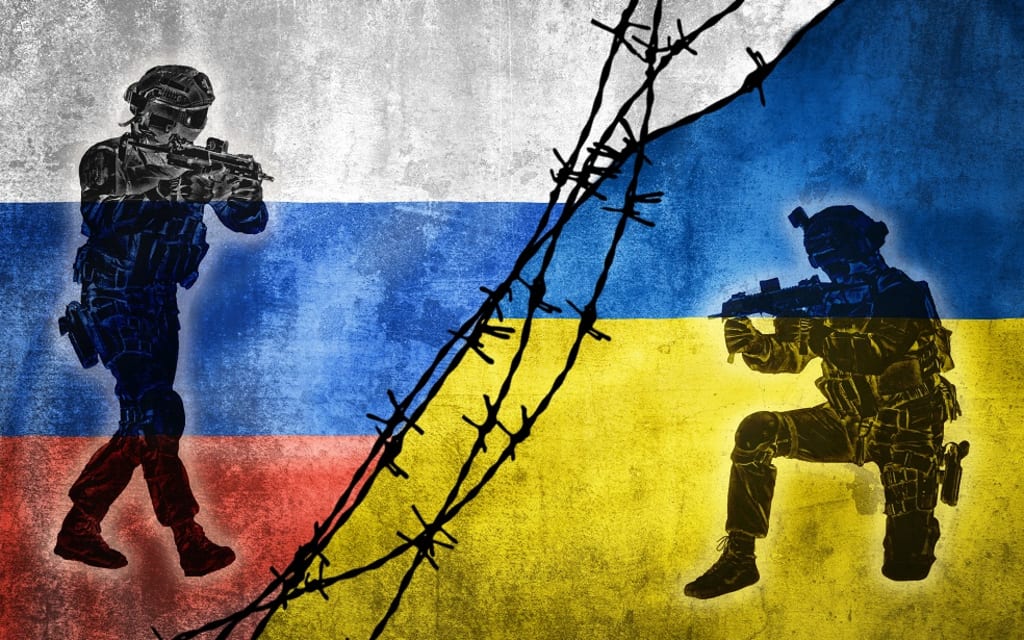
A Nation Divided
The roots of the conflict in Ukraine date back to the country's independence in 1991. Ukraine is a country divided between those who support closer ties with Russia and those who seek closer ties with the West. This division has been evident in Ukrainian politics since independence, but it came to a head in 2013 with the Euromaidan protests.
Euromaidan and the Fall of Yanukovych
Euromaidan was a wave of protests that began in November 2013, sparked by the decision of then-President Viktor Yanukovych to suspend negotiations with the European Union in favor of closer ties with Russia. The protests continued for months and eventually led to Yanukovych's ouster in February 2014.
Annexation of Crimea
In February 2014, Russian forces took control of Crimea, a region of Ukraine with a Russian-speaking majority. The annexation was condemned by the international community, but Russia refused to back down. The move was widely seen as a violation of Ukraine's sovereignty and territorial integrity.
The Donbass Crisis
The Donbass region of Ukraine, which includes the provinces of Donetsk and Luhansk, has been the epicenter of the conflict between Ukraine and Russian-backed separatists. In April 2014, separatists in the region declared independence and seized government buildings. Ukraine launched a military operation to retake the region, leading to ongoing fighting that has killed thousands of people.
Ceasefire Agreements and Peace Talks
Numerous ceasefire agreements have been reached since the conflict began, but none have held for long. Peace talks have also been held, but a lasting solution has remained elusive. The Minsk II agreement, signed in 2015, remains the most significant peace agreement to date, but its provisions have not been fully implemented.
Humanitarian Crisis and Refugees
The war in Ukraine has led to a humanitarian crisis, with thousands of people displaced and in need of aid. Both Ukrainian and separatist forces have been accused of human rights abuses, including the use of torture and summary executions. The conflict has also led to a large number of refugees, with many fleeing to neighboring countries.
International Response
The conflict in Ukraine has drawn international attention and condemnation, with many countries imposing economic sanctions on Russia in response to its actions. The United States and European Union have provided military aid to Ukraine, but have stopped short of direct military intervention. The conflict has also led to increased tensions between Russia and the West.
The Future of Ukraine
The conflict in Ukraine remains ongoing, with no clear end in sight. Ukraine has made progress in implementing reforms and strengthening its military, but the threat from Russia remains. The future of Ukraine is uncertain, but one thing is clear: the conflict has left deep scars on the country and its people.
Despite numerous efforts to end the conflict, including ceasefire agreements and peace talks, the fighting in eastern Ukraine continues. The conflict has resulted in a humanitarian crisis, with hundreds of thousands of people forced to flee their homes and seek shelter elsewhere. It has also led to a significant loss of life and has devastated the economy of Ukraine.
One of the major challenges in resolving the conflict is the role of external actors, particularly Russia. The Russian government has been accused of providing military support to the separatists in eastern Ukraine, including weapons, supplies, and even troops. This support has been a major factor in prolonging the conflict, and many see it as a violation of Ukraine's sovereignty.
The international community has responded to the conflict in various ways. Western countries, including the United States and European Union, have imposed economic sanctions on Russia in response to its actions in Ukraine. These sanctions have had a significant impact on the Russian economy, but they have not stopped the conflict from continuing.
Despite the challenges, there have been some positive developments in recent years. Ukraine has made progress in implementing reforms and strengthening its military, which has helped to stabilize the situation in the country. In addition, there have been some signs of progress in peace talks, including the 2015 Minsk II agreement. However, implementation of the provisions of this agreement has been slow, and the fighting in eastern Ukraine has continued.
Ultimately, the resolution of the conflict in Ukraine will require a concerted effort from all parties involved. This includes the Ukrainian government, the separatists, and external actors such as Russia. It will also require significant support from the international community, both in terms of political support and economic assistance.
In the meantime, the people of Ukraine continue to bear the brunt of the conflict. They have shown remarkable resilience in the face of adversity, but their lives have been forever changed by the war. It is crucial that the international community continues to support Ukraine in its efforts to end the fighting and rebuild its society. Only then can the country truly move forward from this devastating conflict.
Conclusion
The conflict in Ukraine is a complex and multifaceted issue that has been ongoing for years. It has led to thousands of deaths and displacement of people, as well as economic sanctions and political tensions. The resolution of the conflict remains elusive, but it is crucial for the international community to continue to support Ukraine in its efforts to end the fighting and rebuild its society.
About the Creator
Keep reading
More stories from writers in Education and other communities.
A Practical Guide to Choosing the Perfect Lens for Portrait Photography
Selecting the right lens is one of the most important decisions in portrait photography because it influences perspective, sharpness, background blur, and overall image style. A good lens enhances your creative vision and helps you capture flattering portraits that highlight the subject’s features. Beginners often feel overwhelmed by the many lens options available, but understanding how different focal lengths and lens types affect your results makes the choice much easier. With the right information, you can confidently choose a lens that supports your portrait goals.
By Jeremy Berman Findlay Ohio5 days ago in Education
What Caused the Big Bang?
Understanding the Big Bang Theory The Big Bang does not describe an explosion in space. Instead, it describes an expansion of space itself. At the beginning, all matter, energy, space, and time were compressed into an extremely small, hot, and dense state.
By shahkar jalal5 days ago in Education


Comments
There are no comments for this story
Be the first to respond and start the conversation.