

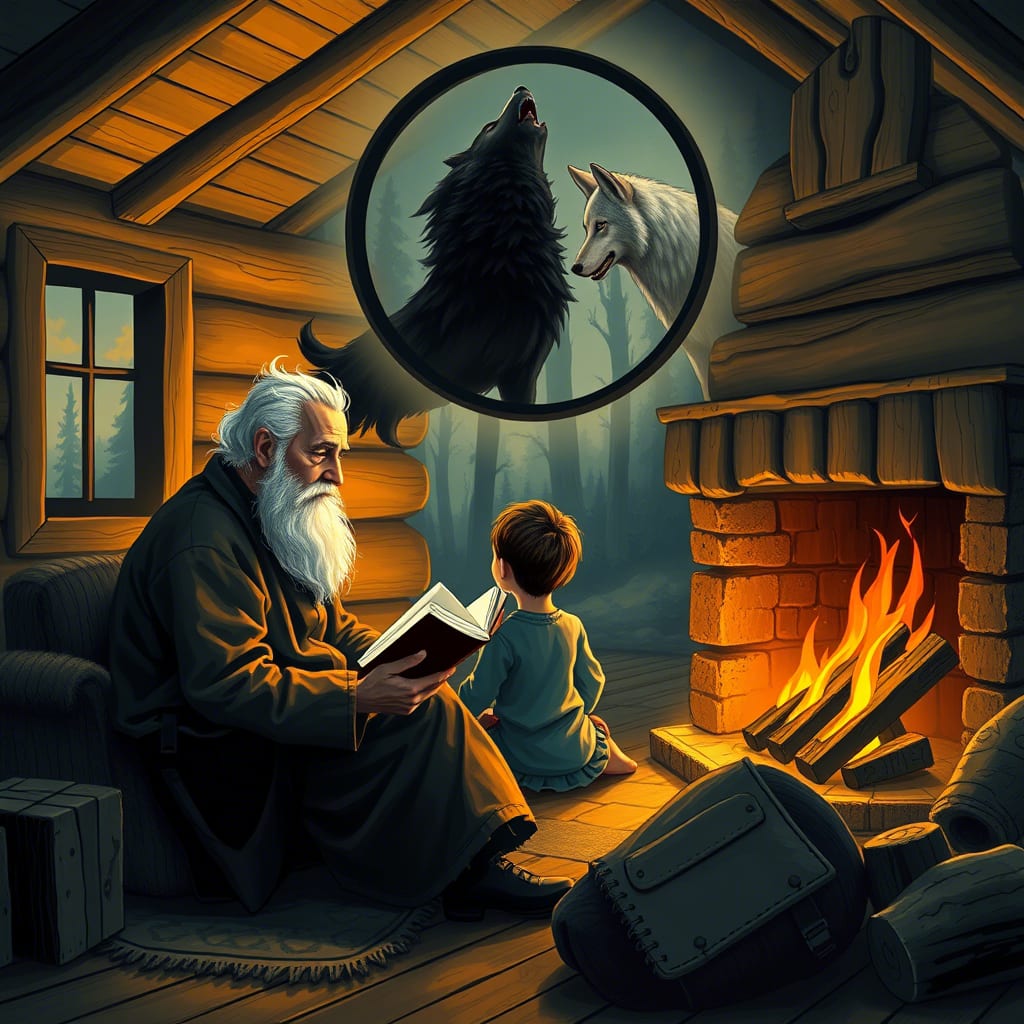
The Two Wolves: A Lesson in Choices
An old Cherokee man was teaching his grandson about life. He said, “There’s a battle going on inside me, a fight between two wolves. One is evil—the other is good.” The grandson, curious and eager to understand, asked, “Which wolf will win, Grandfather?”
The Cherokee man replied with a deep sigh, “The one you feed.”
This simple yet profound lesson carries with it a deep understanding of human nature, inner struggles, and the power of our choices. The two wolves represent the contrasting forces within every person. One wolf embodies all the negative traits and emotions that can cloud a person’s life—anger, jealousy, regret, pride, selfishness, and bitterness. These dark feelings often grow stronger when fed, pulling the individual into a cycle of negativity and despair.
On the other hand, the good wolf represents the positive emotions that bring joy, peace, and fulfillment. This wolf is a symbol of love, kindness, patience, forgiveness, and hope. When nourished with good thoughts, positive actions, and compassion for others, the good wolf thrives, filling the individual with a sense of inner peace and purpose.
This battle inside us is constant. Every day, we face situations where we must choose between these two wolves. Life presents challenges that stir up anger and frustration or moments that give us the opportunity to express love and kindness. In these moments, we are faced with decisions that can either feed the evil wolf or the good wolf.
For instance, when someone cuts us off in traffic, the evil wolf might urge us to react with anger and impatience. The rush of irritation can make our hearts race, and it’s easy to let this emotion take control. But the good wolf suggests a different response. It whispers to us to breathe, to let go of the urge to lash out, and to remember that the other driver might be dealing with struggles of their own. Choosing the path of calm and understanding may not come naturally in that moment, but it is the path that strengthens the good wolf within us.
Similarly, when someone betrays us or hurts us, the evil wolf might want us to hold onto resentment, to plot revenge, or to nurse a grudge. These feelings of hurt and bitterness can linger in our hearts, stealing our joy and peace. But the good wolf encourages us to forgive, to release the hold that anger has on us, and to recognize that forgiveness doesn’t condone the hurtful action—it frees us from its grip.
In another scenario, we might be tempted to compare ourselves to others. The evil wolf feeds on envy and jealousy, telling us that we are not enough and that we must have what others have. It creates feelings of inadequacy and dissatisfaction. The good wolf, on the other hand, reminds us that everyone’s journey is unique. It teaches us to appreciate our own strengths, to be grateful for what we have, and to celebrate the success of others rather than feeling threatened by it.
The battle between the two wolves is not an easy one to fight. Life is full of distractions and pressures that can make it difficult to stay on the path of goodness. In a world that often values success, appearance, and material wealth, the evil wolf can easily be fed. Yet, feeding the good wolf is a conscious choice. It requires awareness, intention, and the strength to resist the easy path of negativity.
One of the most powerful aspects of this story is the reminder that we have control over which wolf we choose to feed. We are not helpless victims of our emotions. While we cannot always control the circumstances we face, we can control how we respond. Our thoughts, words, and actions are what ultimately feed the wolves inside us.
When we feed the good wolf, we make the conscious decision to cultivate love, patience, and peace. We choose to look for the silver lining in difficult situations. We choose to forgive instead of holding onto grudges. We choose to focus on the positives rather than dwelling on the negatives. In doing so, we create a life that is rich in joy and fulfillment.
On the other hand, when we feed the evil wolf, we choose a path of anger, resentment, and fear. We let negative emotions take hold of us, dragging us into despair and frustration. The more we feed the evil wolf, the stronger it becomes, making it harder for the good wolf to thrive. Eventually, we may find ourselves trapped in a cycle of negativity, unable to break free.
It’s important to note that this story doesn’t imply that we should ignore or suppress negative emotions. Emotions like anger, fear, and sadness are natural and part of the human experience. The key is not to allow these emotions to control us. It’s about acknowledging them, understanding their roots, and choosing how to respond in a way that doesn’t feed the darkness within.
This lesson also applies to how we treat others. Our interactions with people can either feed the good wolf or the evil wolf in them. When we speak kindly, show empathy, and offer support, we are nurturing the good wolf. But when we criticize, belittle, or act out of selfishness, we are feeding the evil wolf. By choosing to feed the good wolf in others, we not only help them but also strengthen the positive energy in our own lives.
In the end, the battle between the two wolves is ongoing. Some days we may feel stronger, more aligned with the good wolf. Other days, we may struggle and find ourselves feeding the darker side. The important thing is to recognize the power of our choices and strive to feed the good wolf whenever we can. With each small victory, we become more connected to the positive energy within us, and the good wolf grows stronger.
Moral: The wolf that wins is the one you choose to feed. By consciously choosing love, kindness, patience, and peace, we can create a life that is fulfilling and joyful. Every choice we make feeds one of the wolves inside us. What will you feed today?
About the Creator
Keep reading
More stories from VISHWANATHA and writers in Education and other communities.
The Golden Seed
Once upon a time, in a small village surrounded by mountains and rivers, there lived a humble farmer named Hari. He was known throughout the village for his honesty and hard work. Hari owned a small piece of land where he grew rice and vegetables. Though he didn’t have much, he was content with his simple life.
By VISHWANATHA10 months ago in Education
Rabbi Ilan Glazer on the Ethics of Belonging, Conflict, and Community in Jewish Life
Rabbi Ilan Glazer is a Jewish clergy leader whose work centers on community, ethics, and ritual life. He has served in congregational settings, including a synagogue in Memphis, Tennessee, and has also worked in non-congregational rabbinic roles. Drawing on experience in Israel and the United States, he reflects on how communities balance welcome and boundaries, manage conflict, and build accountability. Glazer speaks candidly about power dynamics, professional burnout, and the pressures of constant digital access. He emphasizes Shabbat as an anchor of Jewish time and highlights b'tzelem Elohim as a guiding ethic of human dignity in contemporary synagogue life today.
By Scott Douglas Jacobsen5 days ago in Education



Comments
There are no comments for this story
Be the first to respond and start the conversation.