
Rabbi Ilan Glazer on the Ethics of Belonging, Conflict, and Community in Jewish Life
How do Jewish communities balance welcome, boundaries, and accountability while sustaining belonging amid polarization and clergy burnout?

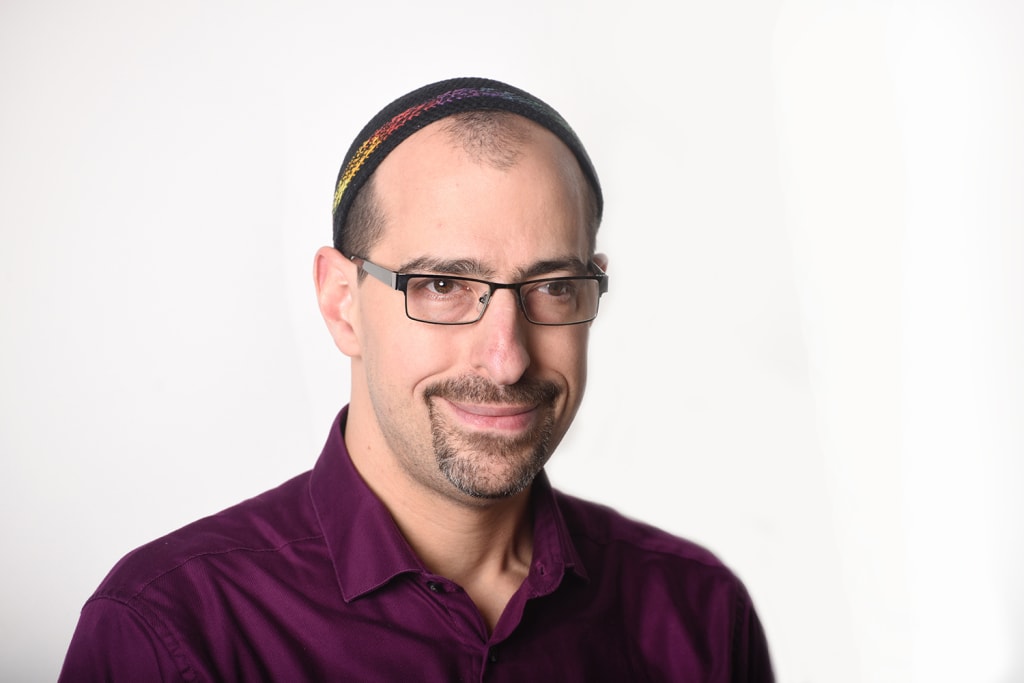
Rabbi Ilan Glazer is a Jewish clergy leader whose work centers on community, ethics, and ritual life. He has served in congregational settings, including a synagogue in Memphis, Tennessee, and has also worked in non-congregational rabbinic roles. Drawing on experience in Israel and the United States, he reflects on how communities balance welcome and boundaries, manage conflict, and build accountability. Glazer speaks candidly about power dynamics, professional burnout, and the pressures of constant digital access. He emphasizes Shabbat as an anchor of Jewish time and highlights b'tzelem Elohim as a guiding ethic of human dignity in contemporary synagogue life today.
Scott Douglas Jacobsen interviews Rabbi Ilan Glazer on the ethics of belonging in Jewish life. Glazer describes religion's core tension: welcoming all while maintaining communal norms. He argues healthy communities require humility, room for disagreement, and relationships strong enough to survive polarizing issues such as Israel, antisemitism, and politics. They discuss accountability, rabbinic ethics, and safeguards against abuses of power, alongside structural pressures on clergy: board dynamics, constant digital access, and burnout amid rabbinic shortages. Glazer also explores ritual joy—Passover, Yom Kippur, Shabbat meals—and closes with b'tzelem Elohim as a mandate for dignity and a vision of shared Jewish time.
Scott Douglas Jacobsen: What are the ethics of belonging in your tradition?
Rabbi Ilan Glazer: The first thing I will say is that it depends on whom you ask and which part of the Jewish world you are referring to. Every religion has a conflict at its core. On one hand, everybody is welcome to pray, love, worship, and connect with us. We want to be a broad tent and attractive to everyone. On the other hand, every religion and every denomination also has to say, "This is how we do things." And if you are not going to do things this way, then maybe this is not the right place for you.
There is always tension around how wide our doors should be. Every community has to ask: What are our core values? Are we trying to get everyone to share those values? Are we actively trying to spread them outward, or are we willing to hold them more loosely to bring more people in?
This tension makes it difficult to create communities where people feel welcome, even when they do not agree with one another. In today's Jewish world, talking about Israel can divide communities. Talking about antisemitism and politics can do the same. We end up with too many communities where everyone thinks alike, or where those who disagree remain silent because they know it is not worth speaking up. I think that is very unhealthy for our communities.
Ultimately, the Torah teaches that it is not good for a person to be alone (Genesis 2:18), and there is tremendous value in community. The challenge is how to live in community without losing our values or driving one another crazy. This is a question we have been wrestling with for thousands of years, and I expect we will continue to do so.
Jacobsen: How do you handle inter-community conflict when ideological differences are profound, whether immediate or long-standing, and how do you reduce tension?
Glazer: Everything is situational. It depends on what the conflict is about, who is involved, and what my relationship is with the people in question. It also depends on whether I am the person they want to help resolve the conflict. Wherever possible, it is our responsibility to calm the waters and remind people that everyone makes mistakes, everyone is human, and everyone struggles.
It is acceptable to struggle differently. That does not make someone a bad person. It does not mean they hate you. It means they have a different answer to the same difficult question. I try to normalize healthy disagreement. I tell people that they do not have to agree with every sermon or every teaching I give. In fact, I may disagree with something I said a few weeks earlier.
I model humility in intellectual life because when we believe we know everything, there is no room for learning. My goal is to create a community where people can learn and grow together. That requires acknowledging that we do not have all the answers. It needs saying, "That is an interesting perspective. Tell me how you arrived there." Let me explain how I arrived at my view, and let us see where we overlap and where we differ.
The world would be a much better place if we were more humble. It is very easy to tear someone down, end a friendship, or say, "I no longer belong here." It is much harder to build community and belonging. But when we do that work, we feel more connected.
That is what most people want: a community that feels like home, where people know us, and where we know that, no matter what, these are our people.
I think most of our communities can do a better job of this—my own included.
Jacobsen: Part of being in community is that everyone gets to know each other very well, sometimes more than is comfortable for some people. Embedded in that kind of intersubjective agreement is accountability. Will someone follow through on a task? Will they do what they say they will do? If they make a mistake, do they own it—whether they are leaders or members of the community? That raises questions about what accountability looks like for leaders and for members, according to religious ethics and communal standards.
Glazer: There has been a great deal of conversation over the last several years around rabbinic ethics and behaviour. In the Jewish community, this has surfaced most prominently around sexual ethics and violations of what people consider appropriate rabbinic conduct—and, in some cases, conduct that is clearly illegal. Unfortunately, there have been too many cases in which individuals have been charged, arrested, and prosecuted for criminal sexual abuse, not only of minors but also of adults. That behaviour must be addressed directly, and we need to think much more carefully about how to prevent it in the first place by implementing stronger safeguards.
That has been one central area of conversation in the Jewish world in recent years. Another ongoing discussion concerns what we actually mean by "ethics." I raise this because I am on many rabbinic listservs, and even discussions around Israel have become deeply polarizing. Many social justice–oriented activists want to frame everything as an ethical issue. Countless rabbinic petitions are circulating, and if you sign one, you are assumed to be against another. People become very agitated over who signs which petitions.
My response has been to sign almost none of them. Many are performative rather than practical, and they often do little actual good. They are also highly polarizing, and I do not want to provide ammunition for people to label me as "for" or "against" something based on a signature.
The fact that even speaking about Israel has become so polarizing is itself telling. Of course, Israel is an ethical issue for many of us. But the discourse around it has become so ethically degraded that it is increasingly complex for people to act ethically in public without facing intense backlash.
We are living in complicated times. Seminaries, in my view, have not always done an adequate job of teaching about power dynamics, confidentiality, and how rabbis and congregants can become messily entangled. This can lead to unhealthy relationships between rabbis and synagogue boards.
There is also a structural challenge. Unlike much of the Christian world, rabbis are typically free agents from a contractual standpoint. We negotiate our own contracts unless we hire someone to do so. We report directly to synagogue boards, and many members feel that because they pay dues, they are the rabbi's employer. On some level, that is true—and it can get strange.
I do not think any community has fully figured out how to address this well. There are inherent tensions, and community building is messy. Rabbis are people like everyone else. We make mistakes. We say the wrong thing. We do foolish things at times.
It is a hard job to be a congregational rabbi, and it is a hard job to be a non-congregational rabbi. I have done both, and I am doing both now. There are many projections placed onto rabbis, as is true for clergy in other faith traditions as well.
I had a congregant recently who wanted something urgently. They sent me an email on Friday at four o'clock. The Sabbath begins at 4:30. I was preparing for Shabbat and was not checking email. I then saw them at services and again the next morning at the synagogue, and they asked why I had not responded to their email. I said, "You emailed me at four o'clock on Friday. Shabbat began at 4:30." I had other obligations at that moment, and checking email was not one of them.
The following day, they sent three more emails to make sure I had seen the original message. I understood that the issue was essential to them, and I was able to address their concern. But this reflects a broader misunderstanding about what clergy actually do and how we spend our time. There is often an assumption that the rabbi works for me and must be available whenever I need them. That is a difficult expectation to manage.
Sometimes there are legitimate pastoral emergencies, and in those cases, people should absolutely call us, and we will be as available as we can be. But if I am with someone else in a hospital, I cannot respond to an email at the same time. Someone will have to wait. We do not live in a very patient culture. Creating community is hard work. It is hard, it is messy, and it is entirely worth it.
There is significant research on burnout among Christian clergy, and similar patterns exist among rabbis. There is a real shortage of people willing to enter the rabbinate today. Among those who do, there is a particular shortage of people willing to serve as congregational rabbis. That is mainly because people know how demanding the work is. There is minimal separation between work and personal life; the hours are exhausting; family time is limited; and some synagogue workplaces are profoundly unhealthy. As a result, many synagogues struggle to find rabbis.
At the same time, fewer synagogues in some regions may partially offset these trends. Still, this is not a decisive moment for rabbinic recruitment. The job has become harder, and there does need to be greater understanding from community members, especially given contemporary expectations shaped by technology.
People increasingly expect constant availability—twenty-four hours a day, six days a week—as though the rabbi were another app on their phone. Instant access, always available. It has absolutely gotten harder. People call, text, email multiple addresses, message on WhatsApp, and reach out through every possible channel. There are too many communication modes.
Some rabbis choose not to give out their personal cell phone numbers, and I completely understand that. At the same time, telling a community member, "You only get access to me in this limited way," can create real hurt. I do not think there is a perfect solution. The job has never been more challenging.
We have also had to become experts in Zoom, live streaming, and now artificial intelligence—skills that were never taught in rabbinical school. We have always had to adapt, but the community's shape has changed dramatically. Every rabbi and every community had to navigate enormous challenges during COVID. More recently, the rise in antisemitism has taken a significant toll on the Jewish world.
As a collective—not uniformly, but broadly—the Jewish community is exhausted, grieving, and worn down. It has been a long and challenging period, and there is no question that it has left a profound impact.
Jacobsen: Let's talk about more positive ground. In your experience, what parts of ritual do people tend to enjoy most? Which yearly celebrations tend to be people's favourites, judging by attendance? Let's go to the community.
Glazer: It depends on whether you are asking about the rabbi's favourite rituals or the community's favourite rituals. I will say this. Years ago, when I was a rabbi at a synagogue in Memphis, Tennessee, I led a weekly lunch-and-learn group, mostly with seniors. It was a wonderful group, and I really enjoyed studying with them. As we approached Rosh Hashanah, the Jewish New Year, I asked everyone to go around the table and say what they were most looking forward to about the holiday.
There were around twenty people in the room, and every single person mentioned seeing family, being together, sharing meals, cooking, and spending time with loved ones. After everyone had spoken, I said, "Isn't it interesting that not a single one of you mentioned the synagogue services themselves?" They all attended services—do not get me wrong—but it was striking.
There is a distinction between public ritual and what happens in the home, and we need both. Many people are deeply invested in food. There is a saying that the largest denomination in Judaism is not Orthodox, Conservative, or Reform, but gastronomic Judaism. Every holiday has foods associated with it, and many people feel very attached to those traditions.
By far, the most widely observed Jewish holiday is Passover. The second is Yom Kippur, the Day of Atonement. Passover's prominence makes sense to me because its central purpose is to tell the story of going from slavery to freedom. That is a message people continue to resonate with year after year. The Passover Seder—the ritual meal—includes many engaging elements. Families create their own Haggadot, develop traditions, sing songs, and make it their own. It is intensive to prepare, but it is also deeply meaningful and often joyful.
Hanukkah, which just passed recently, is also a fun holiday for many people. When it comes to life-cycle events, people often love bar and bat mitzvahs, seeing children step into Jewish adulthood. Weddings are usually joyous occasions. Baby namings are almost always happy events.
I personally have a deep appreciation for funerals. Different rabbis gravitate toward different life-cycle moments, and I often find funerals especially meaningful. There is a poignancy there that is sometimes less present in other moments, though I value baby namings, bar and bat mitzvahs, and weddings as well.
Some people are drawn to joyous holidays, while others are drawn to them primarily during times of grief. It depends very much on the individual.
I will add that Shabbat has long been a central anchor of Jewish life. Even people who are not deeply connected to Jewish practice will often light candles on Friday night, recite blessings, and share a Shabbat meal. For many, the Shabbat dinner is the core of their religious observance—and, in many ways, that is precisely as it should be.
Jacobsen: Are there certain holidays that people consider more optional? You mentioned mainstays and favourites with high attendance. Some holidays function as community anchors, while others are more selective. For example, some people might celebrate Christmas, but not attend Christmas Eve services every year.
Glazer: Among rabbis and other Jewish clergy, we sometimes talk about "three-days-a-year Jews"—those who attend on Rosh Hashanah and Yom Kippur, the Jewish New Year and the Day of Atonement. Some are really "two-days-a-year Jews," coming for one day of Rosh Hashanah and one day of Yom Kippur, and that feels sufficient for them.
When I was in rabbinical school, I participated in several interfaith fellowships, and my Christian colleagues used to talk about "Christers"—people who come only on Christmas and Easter. I am not here to judge that. Everyone gets to decide what level of religious engagement works for them.
One of the blessings—and challenges—of contemporary Jewish life is that no one is forcing anyone to participate. We are no longer living in enclosed communities where religious observance is socially enforced. Today, most Jews are, in a sense, Jews by choice. People decide what level of observance they want or need. That freedom is a gift, but it also makes community building more difficult.
Synagogues today are not just competing with the synagogue down the street. They are competing with Netflix, YouTube, social media, sports practices, and everything else that fills people's time. That was not the case in the same way decades ago.
When communities invest in building genuine relationships, those relationships are what keep people coming back. Not everyone will observe every holiday, and that is okay. People make their own choices.
Yom Kippur in Israel is a good example of how community can look different. Many people go to the beach on Yom Kippur. While in rabbinical school in Jerusalem, I was involved in a local community. After the evening Yom Kippur service ended, my teacher told me to walk down the hill rather than go home. I did, and around eight o'clock at night, the streets of Jerusalem were full of people. No cars were driving. People were sitting together, talking, even playing games in the middle of the street.
They sometimes call it Chag HaOfanayim—the "Holiday of the Bicycle"—because it is the one day of the year when children can safely ride bikes in the streets without traffic. What creates community is not only whether people attend services, but whether there is a shared sense of Jewish time and a willingness to be together. Sometimes it happens in synagogues, and sometimes in public spaces.
It is easier to experience that shared sense of Jewish time in Israel than in the United States, though it is undoubtedly possible in both places. Community can take many forms. What happens inside the synagogue matters, and so does what happens outside it. If we are willing, we can create a community anywhere.
Jacobsen: A few basic questions to close things out. One that feels especially important: what makes a community?
Glazer: I have two answers. One is that I am a child of the 1980s. If you remember the television show Cheers and its theme song—"Everybody knows your name, and they're always glad you came"—that is actually what community means to me.
The other answer is this: a community is a place where we are seen, valued, and cared for. It is not just that people know our names, but that we know others will be there for us when we need them. We do not have to call and ask for help; people show up. A real community takes care of itself, and that is powerful.
Jacobsen: Is there a favourite Hebrew concept or word that captures that idea for you?
Glazer: One concept that comes directly from our sources is b'tzelem Elohim—the idea that every person is created in the image of God. When we genuinely believe that, we have to recognize that every person we encounter is special, holy, and deserving of dignity.
If we treated everyone we met as though they were royalty, imagine how different the world would be. That is a very high bar, and it is not always easy to live up to it. Some days, we wake up on the wrong side of the bed. We get frustrated. We lose patience. But I choose to believe that every person is sacred, and that belief shapes how I try to move through the world.
Jacobsen: Thank you very much for your time today.
Glazer: My pleasure. Thank you. If there is anything else I can do, do not hesitate to reach out.
Scott Douglas Jacobsen is the publisher of In-Sight Publishing (ISBN: 978-1-0692343) and Editor-in-Chief of In-Sight: Interviews (ISSN: 2369-6885). He writes for The Good Men Project, International Policy Digest (ISSN: 2332–9416), The Humanist (Print: ISSN 0018-7399; Online: ISSN 2163-3576), Basic Income Earth Network (UK Registered Charity 1177066), A Further Inquiry, and other media. He is a member in good standing of numerous media organizations.
About the Creator
Scott Douglas Jacobsen
Scott Douglas Jacobsen is the publisher of In-Sight Publishing (ISBN: 978-1-0692343) and Editor-in-Chief of In-Sight: Interviews (ISSN: 2369-6885). He is a member in good standing of numerous media organizations.
Keep reading
More stories from Scott Douglas Jacobsen and writers in Education and other communities.
Joydip Ghosh on Measurement, the Wave Function, and Hilbert Space: What Quantum Mechanics Really Says About Reality
Joydip Ghosh is a quantum physicist with more than 17 years of experience spanning defence, aerospace, automotive innovation, and academia. He is the Founder and CEO of Owlyard and previously served as Quantum Computing Lead at Ford Motor Company and as a Staff Transformational Physicist at Northrop Grumman. Ghosh’s work focuses on quantum computing, quantum information, and the translation of foundational physics into real-world applications. He is internationally recognized for contributions to quantum control, error correction, and for advancing the interface between theory, industry, and science education.
By Scott Douglas Jacobsen14 days ago in Education
Top 10 SEO Experts In Pakistan In 2026
Introduction Search optimization in 2026 no longer revolves around keywords or isolated ranking tactics. Google’s AI Overviews, entity-based indexing, and answer-first systems have changed how visibility is earned. Search engines now evaluate meaning, credibility, and contextual authority rather than mechanical signals.
By Sajid Ali Shar4 days ago in Education
Colors and Such
Before I retired in 2020, I worked as a Nursing instructor in one of the nation's largest community colleges. It was a job I thoroughly enjoyed for fifteen years because I had a heart for the students and genuinely wanted to invest in them and their futures.
By Shirley Belk5 days ago in Education



Comments
There are no comments for this story
Be the first to respond and start the conversation.