
The Two Types of "The Other Woman" - Which One Is She?
Examining Infidelity Dynamics and "The Other Woman" Role

In every tale of infidelity, there is that third character, "the other woman." Not very often very clearly defined, this plays a very critical role in an affair's dynamic. However, not all "other women" are the same. Broadly, they come into two general categories: willing participant and unwitting accomplice. These types can cast a light into the complexities surrounding relationships marred by betrayal.
1. The Willing Participant
This kind of "other woman" is aware of the committed relationship, yet still surrenders herself to the partner. Her reasons and activities are usually a culmination of factors:
Reasons of the Willing Participant
Emotional Attachment: She feels an emotional attachment to the partner, as she feels their attachment can cross all lines in life.
Power dynamics: The challenge of winning over a committed partner is exciting for some women. It gives them the intoxicating sense of power and validation by being "chosen."
Lack of empathy: The willing participant might lack empathy for the betrayed partner. She sees it as only her and the involved partner.
Perception of Superiority: She may feel that she is better suited for the partner and justify her actions as being in line with "true love."
Behavioral Characteristics
Openly rejects the partner's current relationship.
Tries to become a part of the partner's life openly or secretly.
She may demand an ultimatum, asking the partner to leave his or her existing relationship.
2. The Unwitting Partner
On the other hand, the unknowing accomplice is ignorant of the committed relationship of the partner. She goes into the affair under false pretenses, as she believes the partner is single or available.
Motivations of the Unknowing Accomplice
Deception: The partner may deliberately withhold information about their existing relationship, presenting themselves as unattached.
Naivety: In some cases, the unknowing accomplice may fail to recognize red flags or inconsistencies in the partner's behavior.
Desire for Love: She does not even start asking the honest credentials of her lover until too late.
Behavioral Characteristics
Dumbstruck and broken heart when found to be truthful
Most likely end the relationship instantly when discovering about the lies.
Confronts her lover, even the person cheated on if in pursuit of resolution.
How "The Other Woman" Afflicts Relationships
The involvement of "the other woman"—willing or not—can affect relationships, people, and families profoundly. Consider the following aspects:
1. Emotional Turmoil
The partner who is being betrayed often feels inadequate, angry, and heartbroken about knowing an affair exists.
The person involved in the affair may experience guilt, confusion, and divided loyalties.
2. Erosion of Trust
Trust, the cornerstone of any relationship, is often irreparably damaged. Rebuilding it requires time, effort, and mutual commitment.
3. Impact on "The Other Woman"
For the Willing Participant: She may face societal judgment and internal conflict, especially if the affair ends without fulfilling her expectations.
For the Unknowing Accomplice: She may feel betrayed herself, grappling with the realization that she was unknowingly part of a dishonest dynamic.
4. Collateral Damage
Children, extended family, and even friendships are all impacted by the repercussions of infidelity. Often the ripples move far beyond the immediate relationship.
Why Do These Roles Exist?
The role of "the other woman" can often serve as a manifestation of deeper problems in the relationship. These can include:
Unmet Needs: There is an emotional or physical need not being met in the relationship.
Communication Gaps: Failure to communicate candidly and honestly with each other can cause misunderstandings and resentment.
Personal Insecurities: The inability to resolve past traumas or low self-esteem may drive individuals to seek validation outside the committed relationship.
Life After Infidelity
The presence of "the other woman," whether she was willing or unknowing, requires introspection, communication, and effort from all parties involved.
1. For the Betrayed Partner
Self-care and emotional healing.
Consider therapy to work through feelings of betrayal and regain confidence.
2. For the Cheating Partner
Own up to your actions and their consequences.
Agree to openness and rebuilding trust, if reconciliation is desired.
3. For "The Other Woman"
Consider the part played and the repercussions of the affair.
Seek closure and focus on personal growth to not repeat the same patterns.
Preventing Infidelity and the Involvement of "The Other Woman"
While no relationship is immune to problems, taking proactive steps can reduce the chances of infidelity:
Communicate: Regularly discuss feelings, concerns, and expectations with your partner.
Maintain Intimacy: Spend quality time for emotional and physical intimacy to maintain a good bond.
Tackle Issues Early: Don't let small issues turn into major problems.
Set Boundaries: Define what behavior is acceptable within your relationship.
Seek Help When Needed: Couples therapy can provide valuable tools for navigating challenges and strengthening bonds.
Conclusion
The concept of the "other woman," whether a willing participant or unknowing accomplice, can bring one into the deeper aspects of an affair. Such an understanding could open up new ways to communicate honestly and solve underlying issues in building relationships, one based on trust, respect, and mutual commitment. To rebuild after the event or avoid it in the first place, understanding, accountability, and commitment are key.
About the Creator
Keep reading
More stories from Biltu Chakraborty and writers in Education and other communities.
Sign on the dotted line, and you have yourself an affair
Trust, love, and commitment are the foundations on which relationships are built. But at times, hidden unspoken agreement or a silent decision may lead the one person, or even both, astray. In this respect, it may be considered "signing on the dotted line," which would refer to someone's moment entering an emotional or physical affair, not knowing where the consequences may lead. This paper attempts to discuss factors that lead to infidelity, the impact on relationships, and how to rebuild trust again.
By Biltu Chakrabortyabout a year ago in Education
Traphall Romance
Traphall Romance: The Global Love Sound Quietly Redefining Modern Music Genres rarely announce themselves. They show up gradually — in playlists, in late-night listens, in songs people can’t stop replaying but struggle to describe. Traphall Romance is one of those sounds. It isn’t a trend pushed by labels or an algorithmic invention. It’s a feeling that’s been building across continents, shaped by artists who live between cultures and write about love the way it actually feels now — complicated, intense, intoxicating, and often unresolved.
By K.y.e Dynasty Records4 days ago in Education
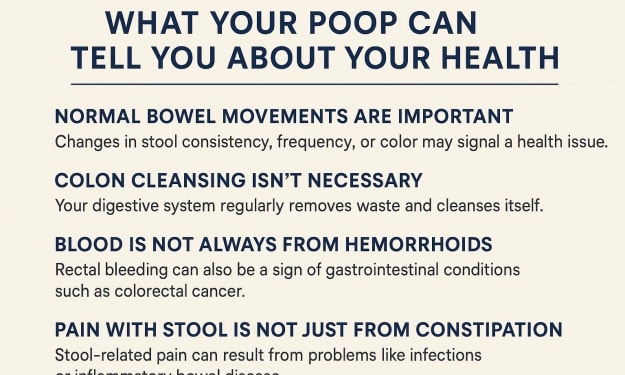
What your poop can tell you about your health
The average person poops out approximately 11,030 kilograms of cumulative waste. That's the equivalent of more than six SUVs. Now, oftentimes, that poop is brown. But why is that, considering all the colorful comestibles one consumes? And what's going on when poop appears in different colors and textures? Say you’re eating a beautiful, rainbowy salad. Your teeth and saliva first help break down the food and add lubrication. Each bite enters your esophagus and sequential muscle contractions push it towards your stomach.
By Munesh Yadavabout 10 hours ago in Education



Comments
There are no comments for this story
Be the first to respond and start the conversation.