
The Top 10 Most Deadliest Poisonous Animals in the World
Here is a artical about 10 most poisonous animals...

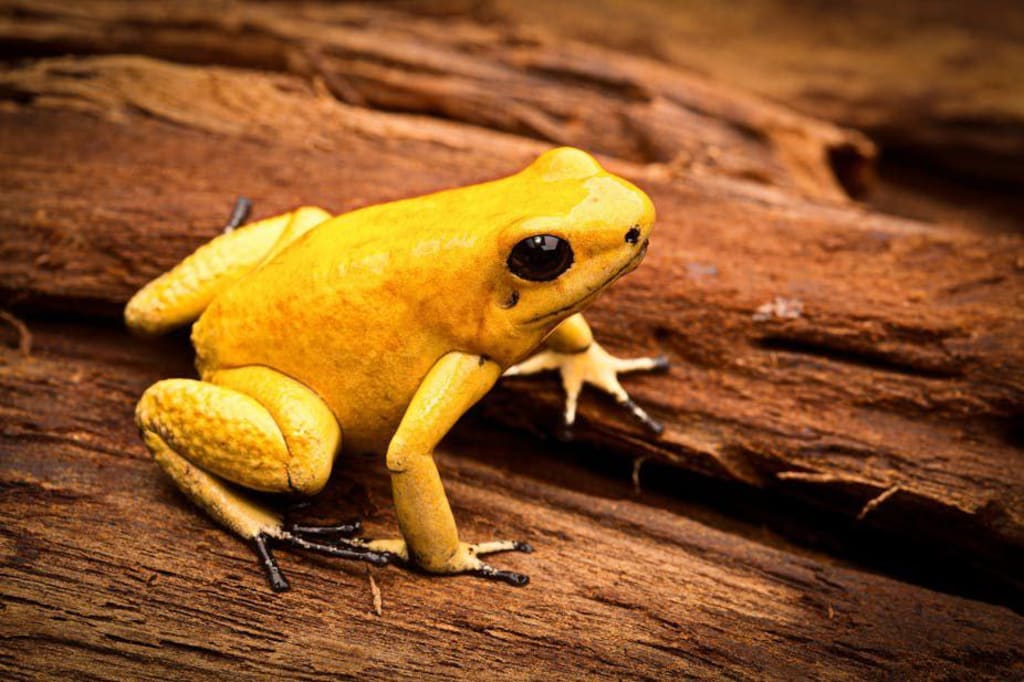
In the natural world, some animals have toxins that can incapacitate or even kill a person with just one sting or bite. These animals hunt, defend themselves, or protect their territory with their poisons. Poisonous animals typically release toxins when touched or ingested, in contrast to venomous animals, which inject toxins through bites or stings. The biology, habitats, defense mechanisms, and scientific explanations of the top ten poisonous animals are examined in this article. 1. Phyllobates terribilis, also known as the golden poison dart frog Habitat: Rainforests of Colombia
Batrachotoxin is a toxin. For humans, the lethal dose is two micrograms. Up to ten adult humans or two African elephants are the estimated kill capacity. Overview:
Perhaps the most lethal animal on Earth is the golden poison dart frog. This diminutive amphibian, which rarely exceeds two inches in length, carries enough toxins in its skin to infect multiple adult humans. Indigenous tribes in Colombia used the frog’s potent toxins to tip blow darts for hunting, giving the frog its name.
How the Toxin Is Made: Batrachotoxin disrupts nerve signal transmission by locking open sodium channels in cells. This causes paralysis, cardiac failure, and eventually death if untreated. The toxin's irreversible binding to nerve tissues makes it especially dangerous. Protection Mechanism: The bright golden color of the frog serves as an aposematism, or warning sign, to potential predators. It does not produce the toxin itself; rather, it acquires it through a diet of specific ants and beetles in the wild.
2. Pitohui with a hood (Pitohui dichrous) Papua New Guinea is its habitat. Batrachotoxin is a toxin. Lethal Dose: Not known to humans but found to be toxic Mode of Poison: Skin and feathers
Overview:
One of the few known poisonous birds in the world is this unassuming bird. Indigenous people refer to it as a "garbage bird" because of its unpalatability and toxic flesh.
How the Toxin Is Made: The skin and feathers of the hooded pitohui, like those of the golden poison dart frog, contain batrachotoxins. Ingestion can be fatal and contact can result in numbness or burning in humans. The pitohui, like the frog, gets the toxins from the food it eats. Defense Mechanism:
These birds are avoided by predators due to their unpleasant taste and their immediate numbness upon contact. The bright plumage of the bird is another aposematic warning.
3. Hapalochlaena's Blue-Ringed Octopus Habitat: Coral reefs and tide pools in the Indian and Pacific Oceans Tetrodotoxin is a toxin. 1-2 mg is the lethal dose. Capacity of Estimated Killing: One octopus and 20 to 30 humans Overview:
Even though it is only about the size of a golf ball, the blue-ringed octopus is one of the world's most dangerous sea creatures. It becomes especially recognizable when threatened, flashing bright blue rings as a warning.
How the Toxin Works:
Tetrodotoxin blocks sodium channels in nerves, causing muscle paralysis, respiratory failure, and death within minutes. There is no known antidote; treatment is purely supportive (e.g., artificial respiration).
Protection Mechanism: The toxin is not produced by the octopus itself. Instead, bacteria in its salivary glands produce it. When agitated, its vibrant blue rings appear, serving as a visual warning to predators. 4. Poison Dart Frogs (Genus: Dendrobates, other than P. terribilis)
Habitat: South and Central America Toxins: Various alkaloids including pumiliotoxins and histrionicotoxins
Dosage that kills: varies by species. Depending on the species, the estimated kill capacity is several humans. Overview:
In addition to the golden dart frog, there are numerous poison dart frog species that pose a threat. They come in blue, green, red, and yellow, all of which indicate their toxicity. How the Toxin Works:
The nervous or muscular systems are affected by a variety of alkaloid types that are carried by each species. Some inhibit the functions of neurotransmitters, while others cause muscle spasms or respiratory failure. Defense Mechanism:
Predators are alerted to their toxic skin by its bright coloration. Their toxicity comes from the alkaloid-rich ants and mites that they consume in the wild, like their golden cousins. 5. Pufferfish (Tetraodontidae family) Habitat: Tropical oceans worldwide Tetrodotoxin is a toxin. 1 mg is the lethal dose. Estimated Kill Capacity: 30+ humans per fish
Overview:
Pufferfish, known in Japan as fugu, are considered a delicacy, but require expert preparation due to their deadly tetrodotoxin. Even trace amounts of the toxin can be fatal.
How the Toxin Is Made: Tetrodotoxin disrupts neural transmission by binding to sodium channels, paralyzing muscles and stopping the heart and lungs. The victims are conscious, but they are unable to move or breathe. Protection Mechanism: They are a high-risk meal due to the added punch of tetrodotoxin, but their primary defense is the ability to puff up and repel predators. The liver, ovaries, eyes, and skin are where toxins are most concentrated. 6. Newt with a Rough Skin (Taricha granulosa) North American habitat (Pacific Northwest) Toxin: Tetrodotoxin
The lethal dose is very low, and the exact amount varies. The newt's estimated kill capacity is 25 adult humans. Overview:
Despite its seemingly harmless appearance, this diminutive amphibian is one of the most toxic terrestrial vertebrates. It produces sufficient tetrodotoxin to cause the death of several adult humans. How the Toxin Is Made: Blue-ringed octopuses and pufferfish share the same mechanism. The toxin causes nerve and muscle failure, respiratory paralysis, and death.
Protection Mechanism: When ingested, the toxin acts as a deterrent because it is secreted through the skin. It is interesting to note that some species of garter snake have developed resistance to it, setting off an evolutionary arms race. 7. Snail with a cone (Conus) Habitat: Warm and tropical seas worldwide
Toxin: Conotoxins (mixture of neurotoxins)
Dosage that kills: varies by species. Maximum Estimated Human Killing Capacity: Up to 20 (in larger species) Overview:
The cone snail is a deadly marine predator despite its stunning shell. It injects venom into its prey, typically small fish or other mollusks, with a tooth resembling a harpoon. How the Toxin Works:
Conotoxins quickly paralyze the victim by affecting ion channels and receptors in the nervous system. Symptoms include numbness, vision loss, and respiratory failure.
Protection Mechanism: Cone snails are primarily used for hunting, but they can also sting to defend themselves. Stings from larger species, like the geography cone (Conus geographus), can be fatal to humans.
8. Malo kingi, a type of Irukandji jellyfish, is the Common Kingslayer. Habitat: Northern Australian waters
Irukandji toxin, also known as a complex neurotoxin Lethal Dose: Not well documented
Estimated Kill Capacity: Several humans per sting (untreated)
Overview:
Irukandji syndrome is a debilitating and sometimes fatal condition brought on by the sting of this tiny jellyfish, which can be less than a cubic centimeter in size. How the Toxin Works:
The toxin triggers an intense surge of catecholamines, which can cause severe pain, muscle cramps, nausea, problems with the heart, and even death. It acts quickly and often unpredictably.
Protection Mechanism: The jellyfish is nearly invisible in water, making avoidance difficult. It primarily uses its potent toxin to capture prey, but accidental human encounters frequently result in fatalities. 9. The Tylototriton spp. Chinese newt Asia, particularly China and Southeast Asia, is the habitat. Tetrodotoxin and other alkaloids are toxins. Dose That Kills: Various The estimated number of people it can kill is several. Overview:
Chinese newts are less famous than their American cousins, but they are just as dangerous. Many species secrete toxic mucous as a defense.
How the Toxin Is Made: Tetrodotoxin acts by halting nerve impulses, leading to paralysis and death. These toxins can be ingested or absorbed through the skin. Protection Mechanism: The newt raises its back and shows off its brightly colored belly when threatened, indicating that it is poisonous. Skin contact can cause tingling or numbness in humans.
10. Brazilian Wandering Spider (Phoneutria spp.)
Habitat: South America, especially Brazil
PhTx3, a neurotoxin cocktail, is the toxin. Lethal Dose: Small doses can be fatal
Estimated Kill Capacity: 5+ humans per spider (theoretical)
Overview:
Although this spider is more commonly referred to as venomous, it also excretes toxins from its body that can be absorbed through small wounds or mucous membranes. It is included here due to its unique mode of toxin release, which overlaps with poisonous characteristics.
How the Toxin Works:
The toxin causes muscle paralysis and pain, and in severe cases, respiratory arrest. Victims often experience severe symptoms such as priapism, seizures, and intense burning sensations.
Defense Mechanism:
It is naturally aggressive and assumes a threatening posture when approached. It is used to instantly immobilize prey due to its toxic nature, which deters most predators. The Science Behind Poison in Nature
The development of poison in animals is an evolutionary marvel. It often arises in environments where predation is high or competition for food is intense. Many poisonous animals acquire their poisons through their diets or symbiotic relationships with bacteria rather than being born toxic. Poisons of all kinds: Neurotoxins, such as tetrodotoxin and batrachotoxin, affect the nervous system. Cytotoxins: Destroy cells and tissues
Toxins that target the function of the heart Conclusion
There are many animals in the natural world whose beauty belies their danger. In order to survive, poisonous animals have evolved in a variety of ways, from tiny frogs and birds to snails and octopuses. Understanding these animals not only fosters respect for nature but also aids in the development of medical treatments. Painkillers and treatments for neurological diseases are among the many poisons being studied for pharmaceutical use. Respect, not fear, is the key. Always exercise caution when encountering wildlife, particularly in exotic settings. The bright colors, distinctive markings, and distinctive behaviors of nature's most toxic creatures frequently serve as clear warnings for survival.
About the Creator
Krypton
Be happy,Be calm,Be Better,Be honest,Be Strong,Be faithful,Be Loving,Life is journey&I am a traveler.
From Despair to Hope: How Animal Rescue Efforts Rebuild Broken Lives
Animal rescue efforts stand as a powerful response to suffering that often goes unseen. Across towns, cities, and rural areas, animals face neglect, abandonment, injury, and fear every day. Many are left without food, shelter, or medical care. Others are harmed by abuse or natural disasters. Without help, their future is uncertain. Through patience, care, and action, animal rescue efforts transform despair into hope and give animals the chance to heal and live safely.
By Brenda McGrane4 days ago in Education




Comments
There are no comments for this story
Be the first to respond and start the conversation.